Rubyfruit Jungle Gallery
Celina Eceiza views every museum collection as her own collection: not just an archive of art, but also of culture, tradition, and knowledge. By making copies of artworks by hand, she gets to know and understand them. She describes this process as a form of soft cannibalism: by taking an artwork apart and remaking it, she absorbs some of its qualities.
Her gallery of remakes at Marres brings together a rich web of connections, ideas, and visions between her own work and that of other artists. She chose some works because she was immediately drawn to them, and others because of where she encountered them. For Eceiza, an artist’s appeal often goes beyond the artwork itself. She is also interested in their ideas and position within the art world. Many of the artists represented here wrote manifestoes, founded artist collectives, or helped start new movements.
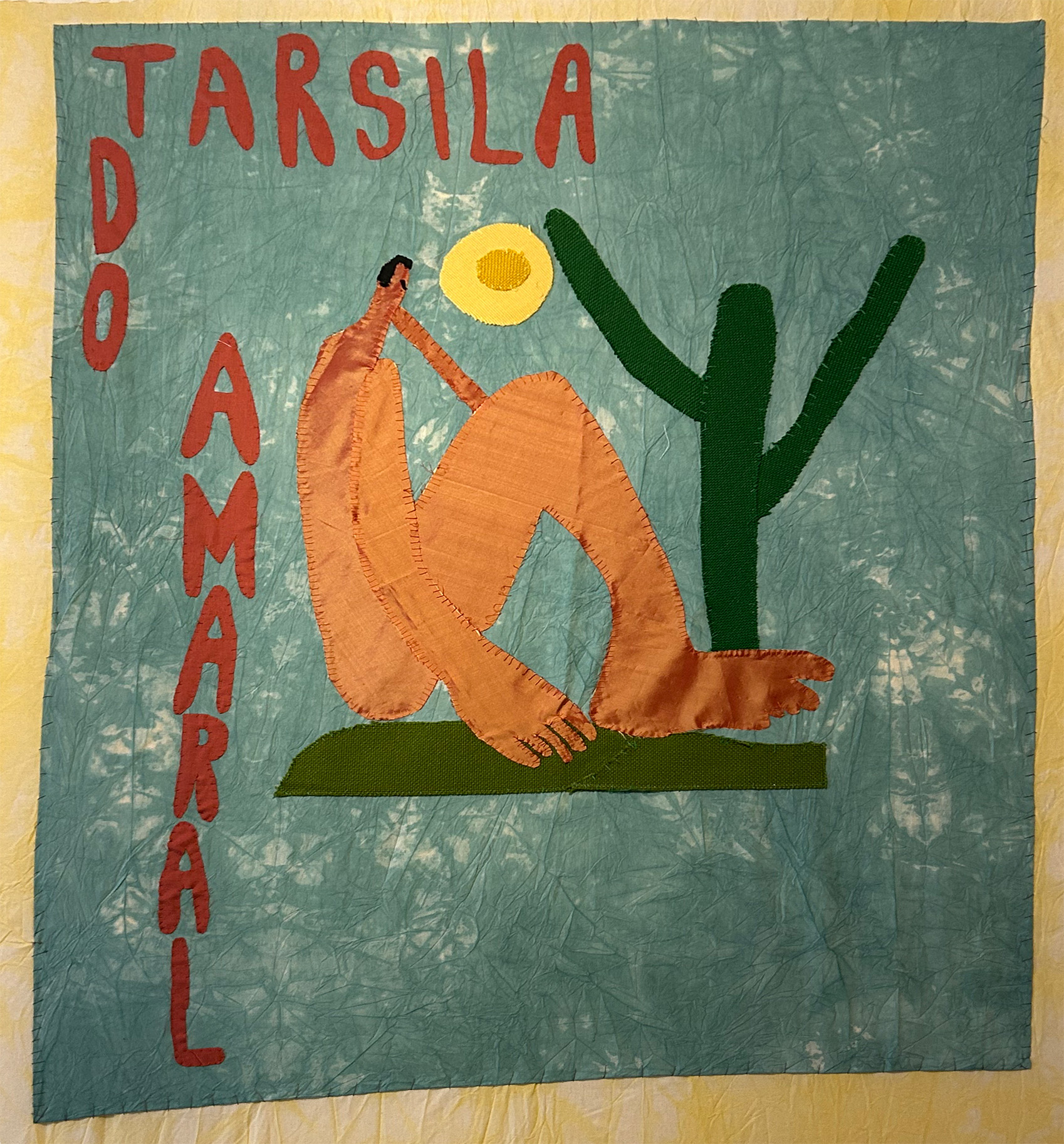
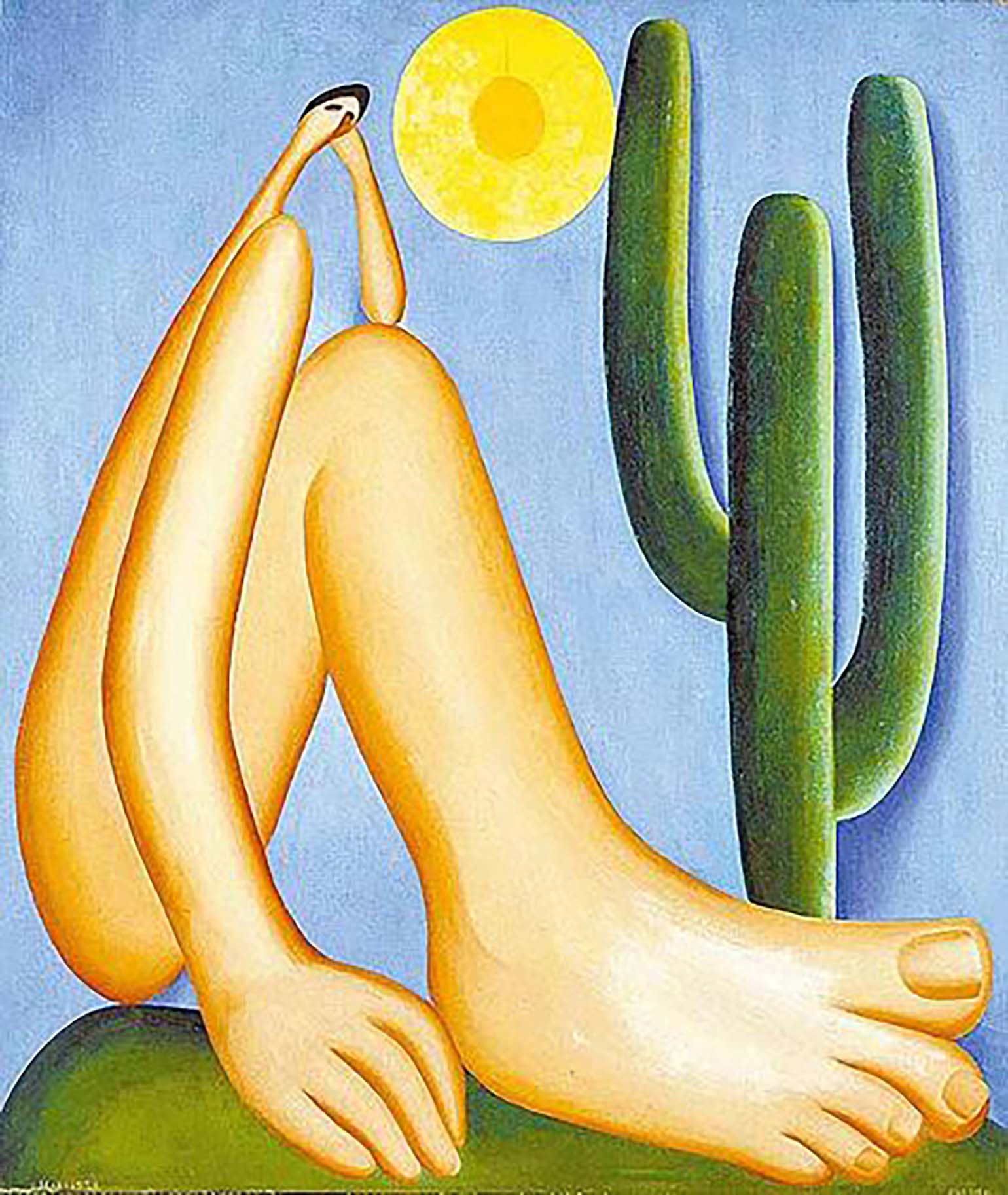
Abaporu, 1928
Tarsila do Amaral (Brazil, 1886-1973)
Amaral played a central role among the 20th-century modernist painters of Sao Paulo. She introduced a new visual language by reinterpreting and repurposing the influences of European modernist styles. The title Abaporu stems from the Tupí-Guaraní language, and means “the man who eats human flesh”. Amaral painted the work in the colors of the Brazilian flag, and presented it as a birthday present to her then husband Oswald de Andrade. He subsequently printed it on the cover of the first issue of the avant-garde magazine Review of Anthropophagy (1928-1929). The painting (and its metaphor of man-eating) became a symbol of the emancipation of Latin American art from European modernism. For Eceiza, this painting is the Mona Lisa of Latin America.
Oil on canvas
85 x 73 cm
MALBA, Museo de Arte Latinoamericano de Buenos Aires
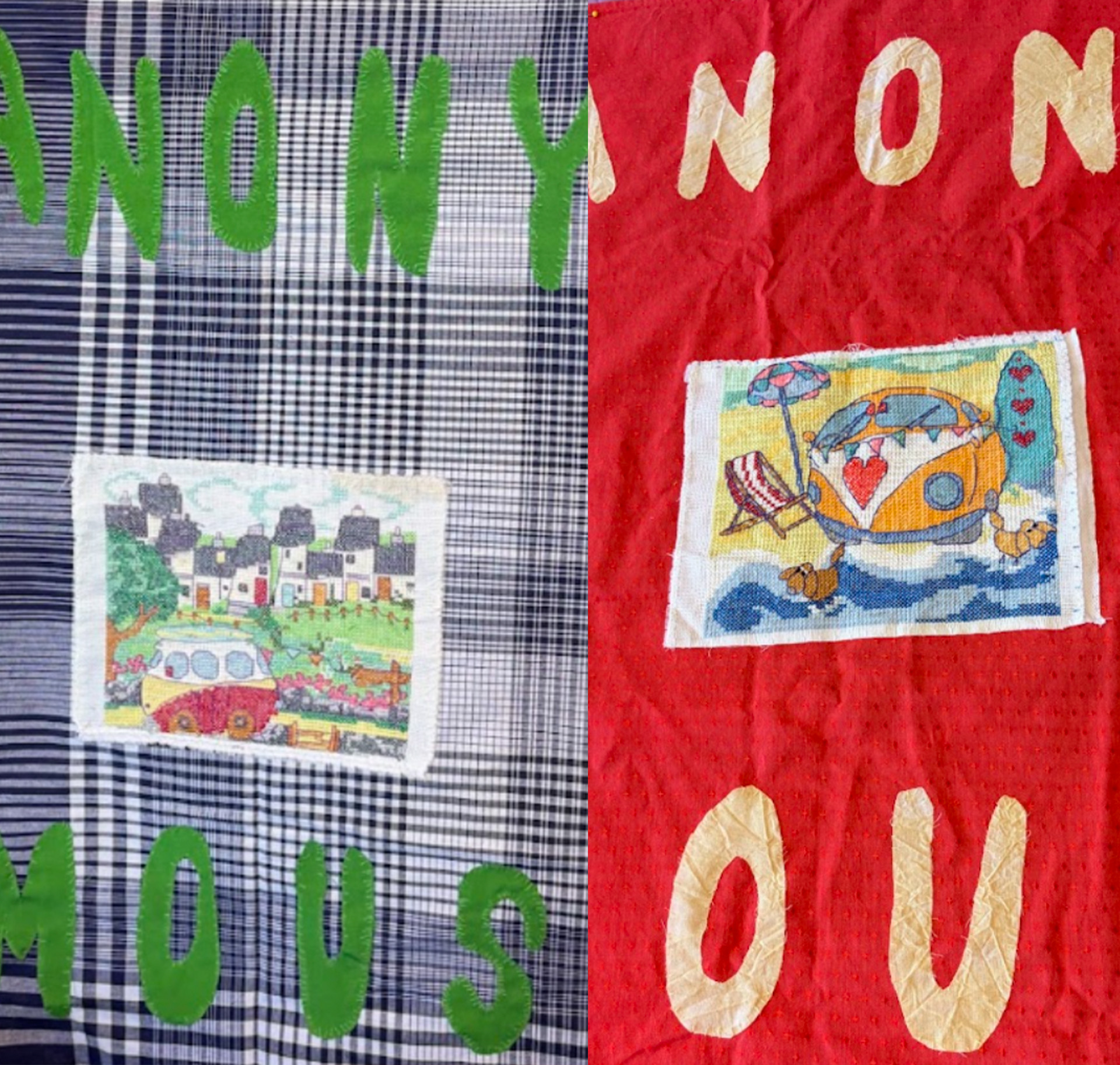
Anonymous
Anonymous
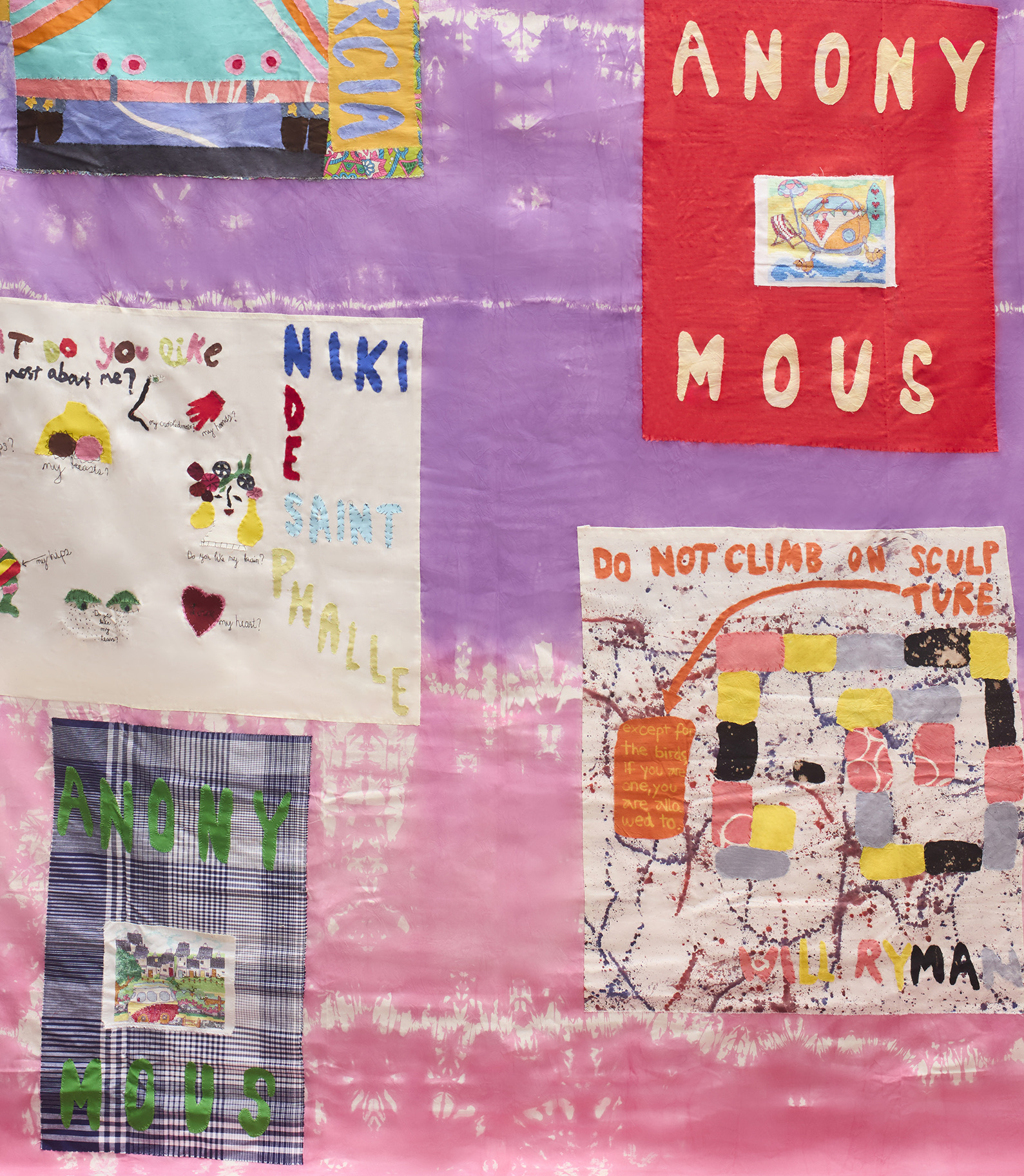
Celina found these two art pieces in the Werkhuis, Maastricht, where she worked with a team of volunteers to prepare the Rubyfruit Jungle exhibition. She was attracted to the shape of the pictures and imagines them the product of an artist named Anony Mous.
Werkhuis Maastricht
Orange Functional, 2022
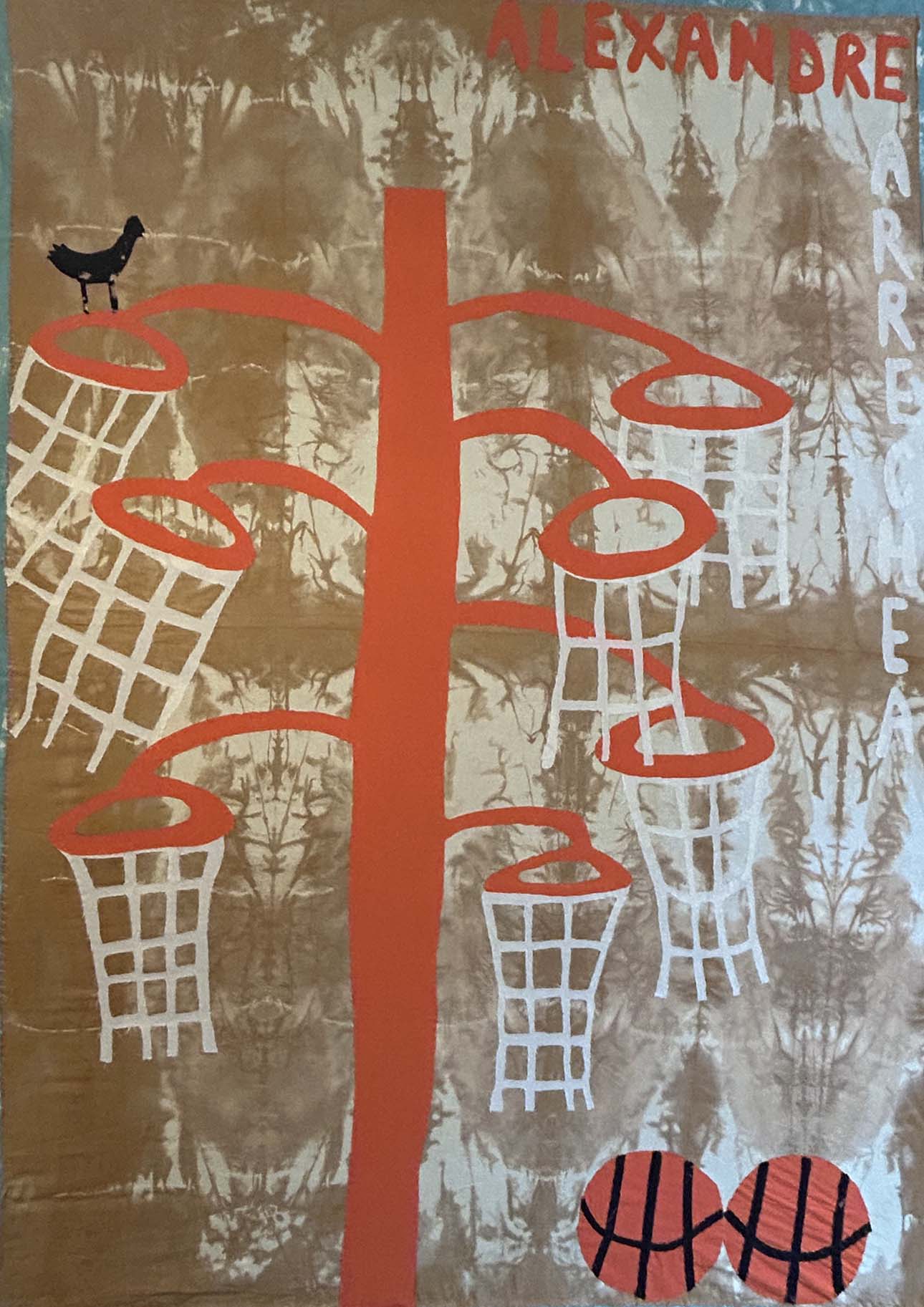
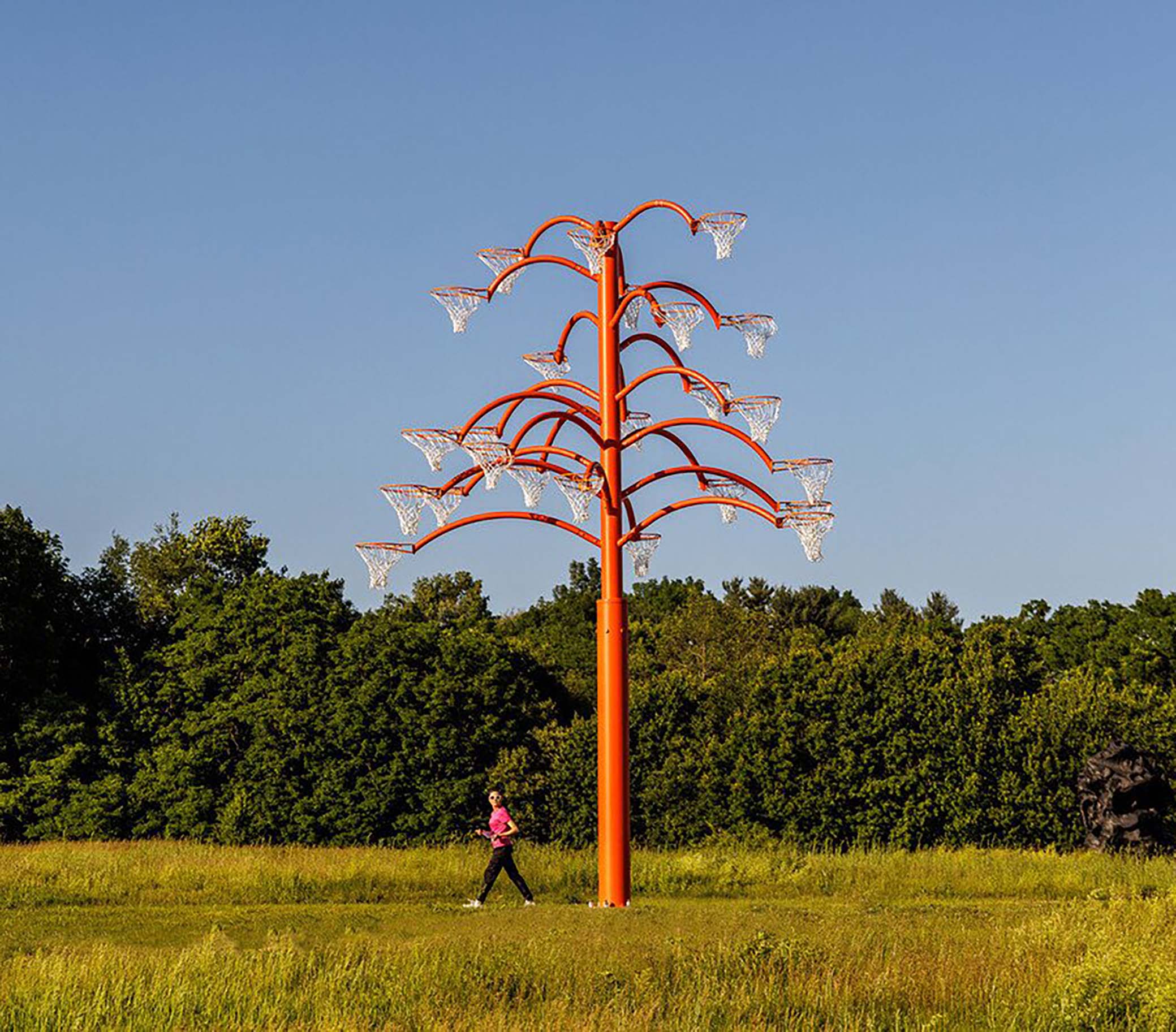
Alexandre Arrechea (Cuba, 1970)
Arrechea’s 20-foot-tall sculpture resembles an orange tree, with branching metal structures that “blossom” into 25 functional basketball hoops. The piece reflects the artist’s two decades of research into the symbolism and politics of basketball courts and public gathering spaces. Visitors are invited to bring their own basketballs to shoot hoops. Missed balls fall from the rims to the grass like falling oranges. Eceiza found this work during her residency at the Art Omi Soft Sculpture Museum and loves it for its call to action.
Steel, basketball nets, tnemec paint
Art Omi
© Alon Koppel
Tarjeta de felicitación
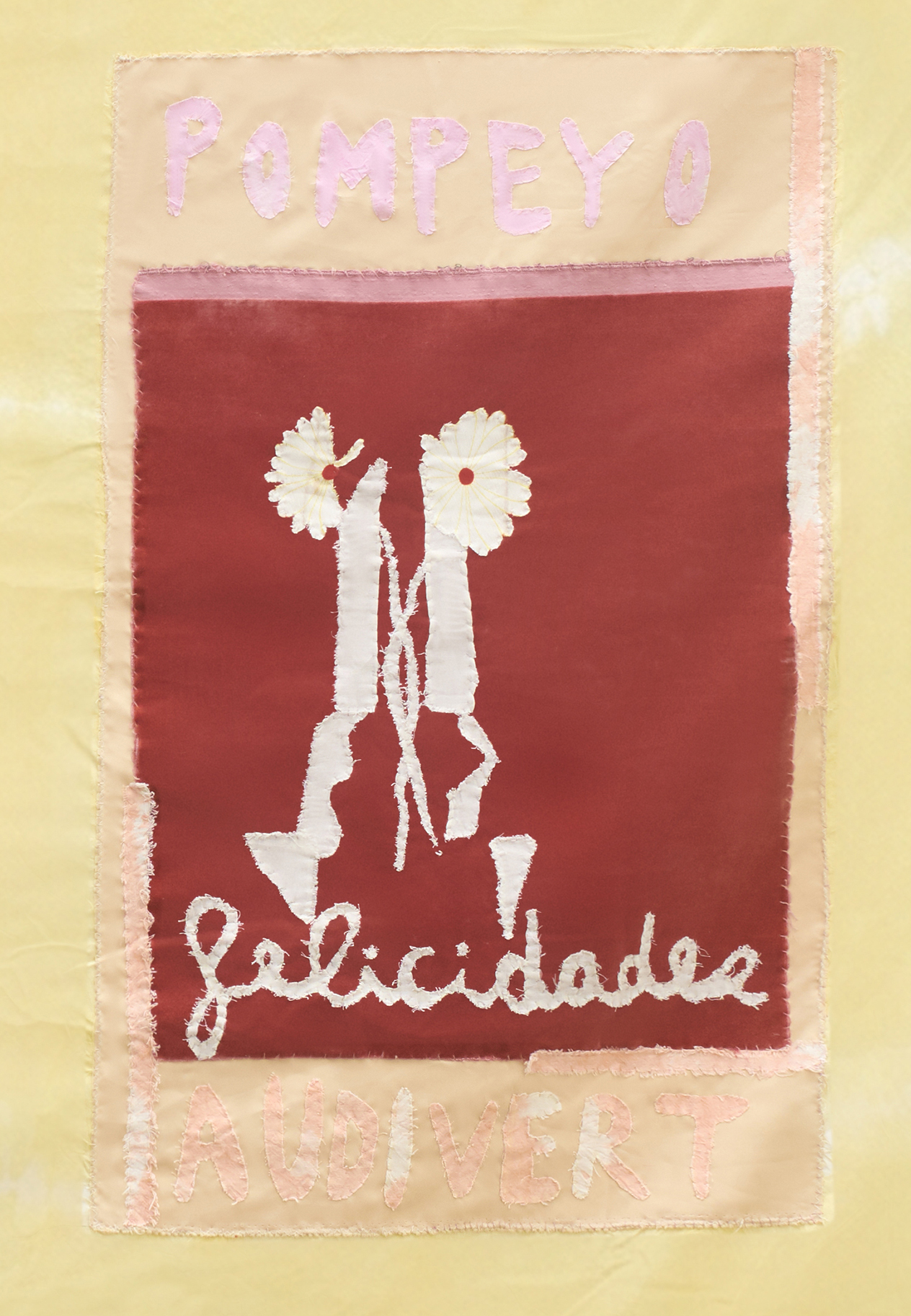
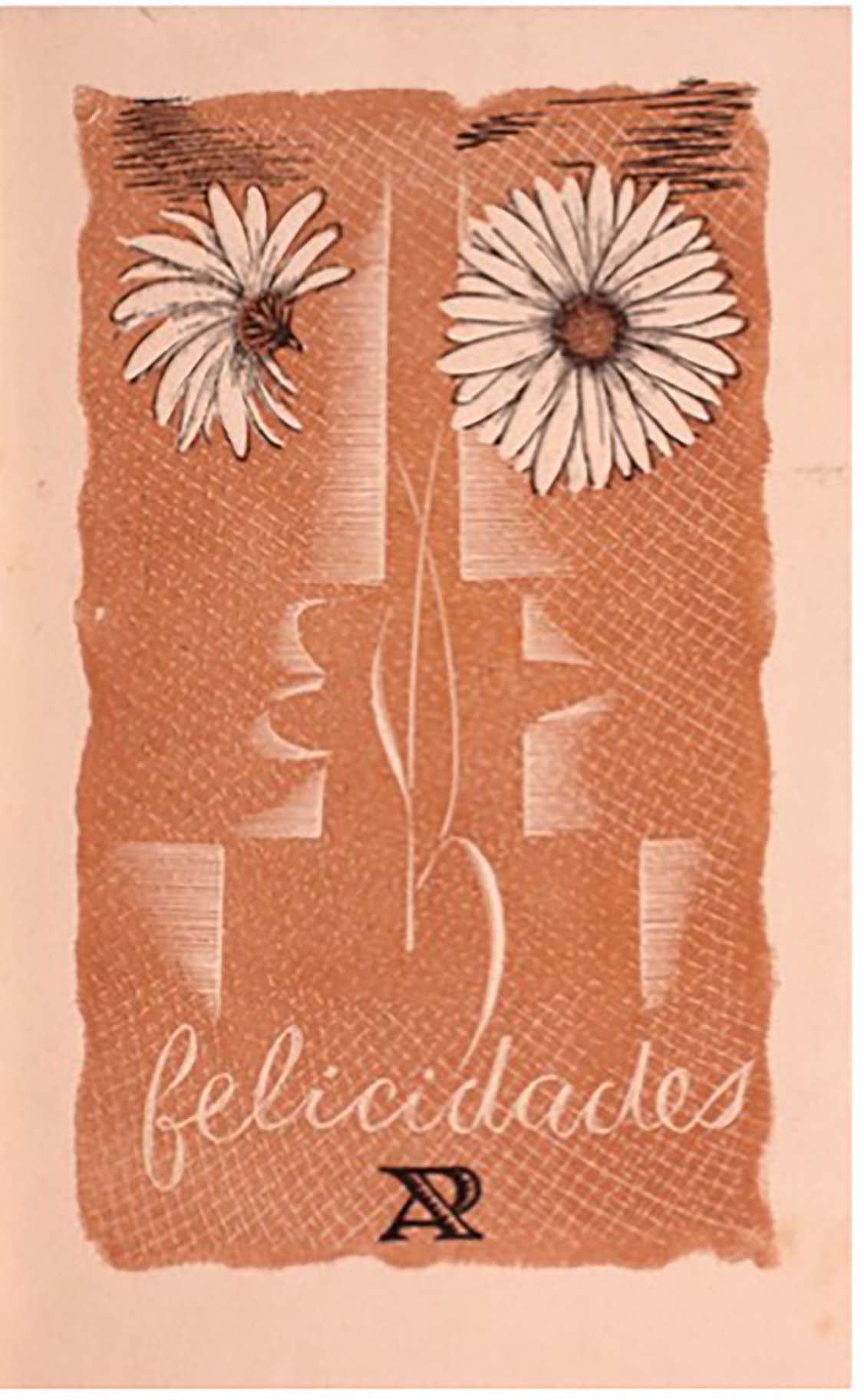
Pompeyo Audivert (1900 – 1977)
Born in Spain, Pompeyo Audivert moved to Buenos Aires at a young age and became a central figure in Argentine printmaking. He specialized in wood engraving (xylography) and illustration with solid figures and sharp black-and-white lines. His art focused on social protests, human figures, and antifascist political causes. A prominent critic once wrote that Audivert produced “storms.” Eceiza selected this work for its festive and humoristic character.
Mixed techniques
15,5×19,5 cm
Museo de Arte Moderno de Buenos Aires archive.metromod.net/viewer.p/69/2950/object/5138-11020225
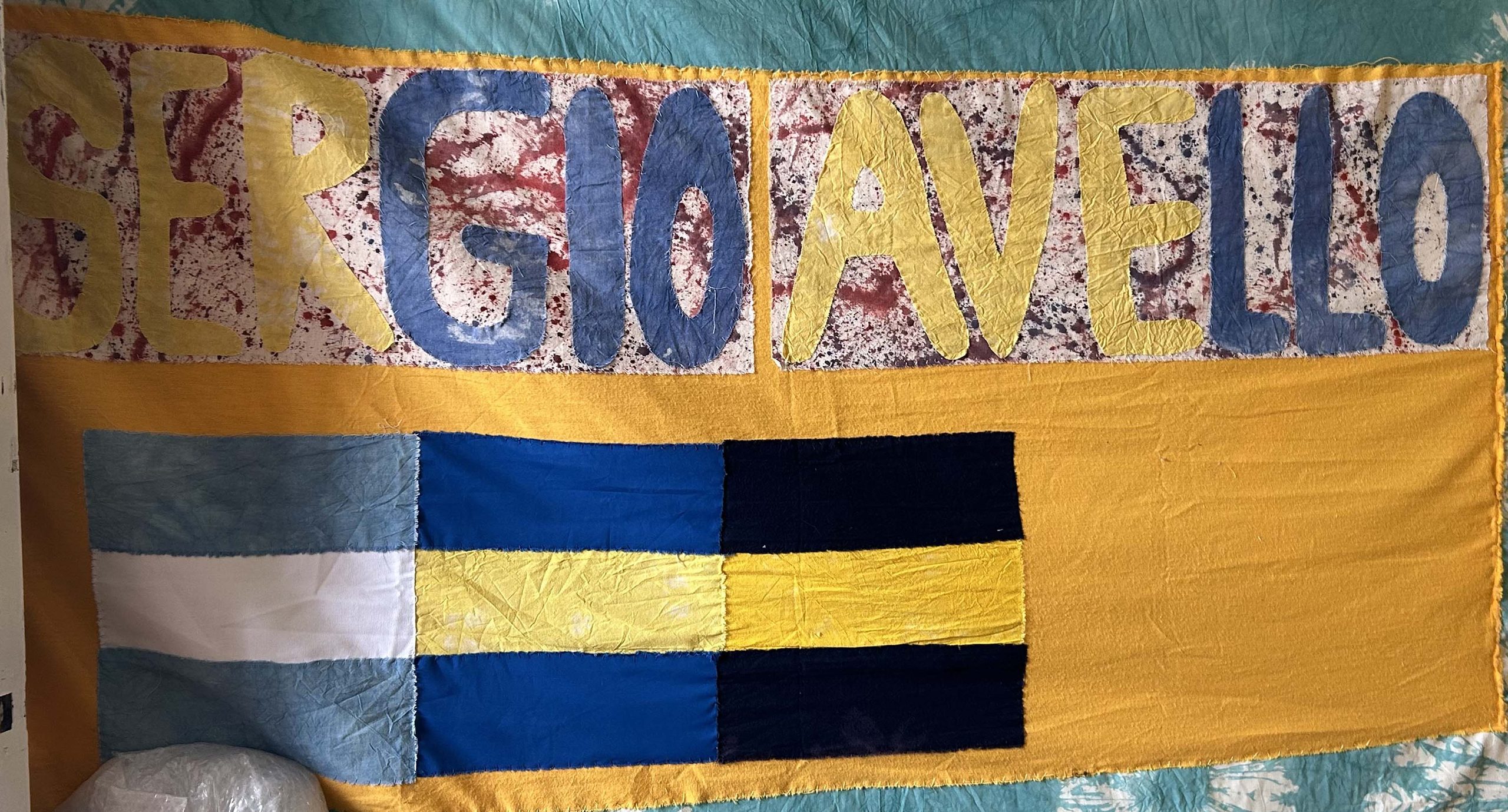
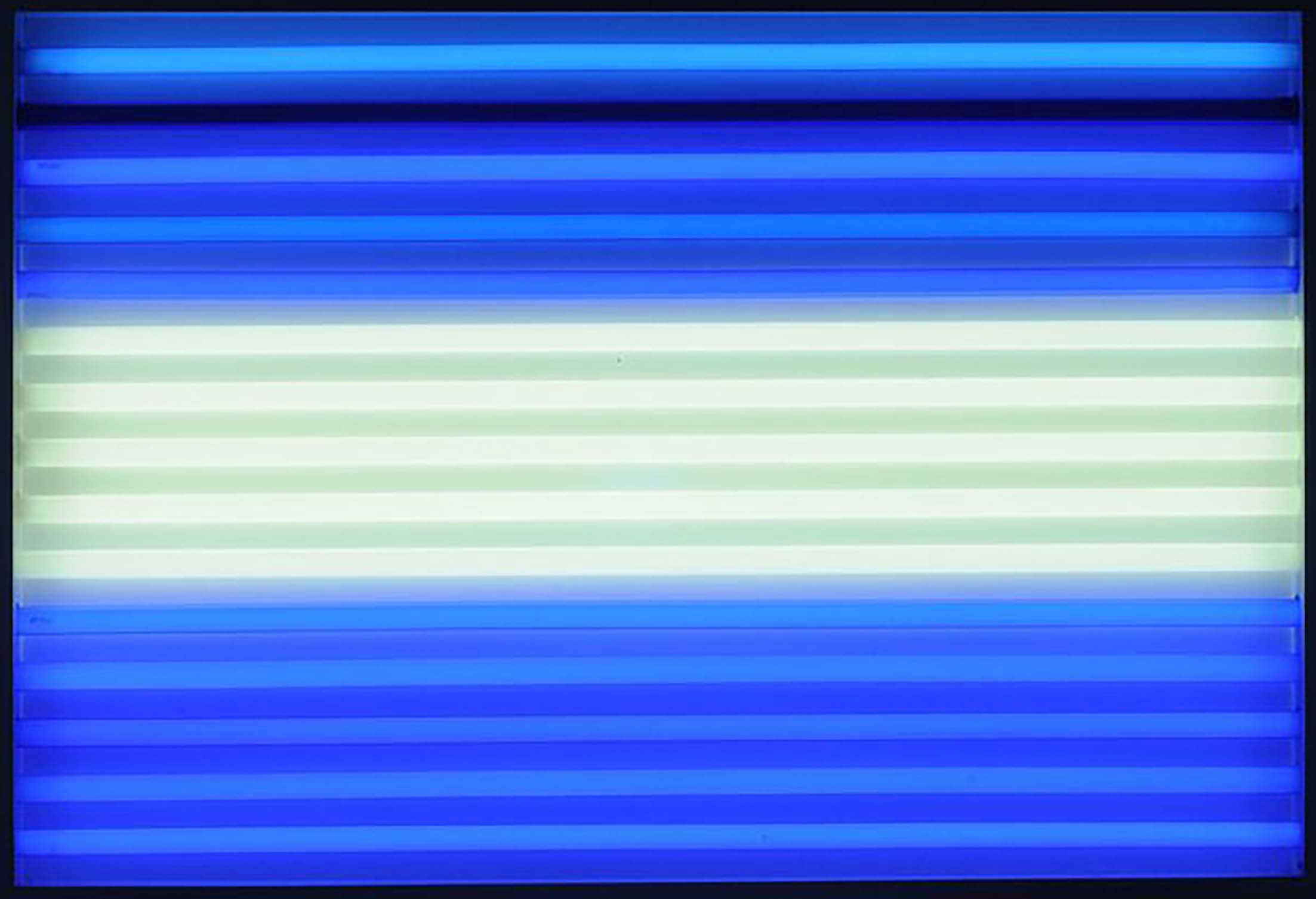
Bandera, 2003 – 2007
Sergio Avello (Argentina, 1964 – 2004)
Sergio Avello was a prominent Argentinian contemporary artist, abstract painter, set designer, and occasional DJ, renowned for his versatile, multidisciplinary approach to art and life in Buenos Aires. His work seamlessly bridged the gap between post-minimalist abstraction, light art, and the underground cultural scenes of Argentina spanning from the 1980s through the 2000s. Avello’s art often featured bright colors, striking geometric patterns, and experimental materials. Avello’s iconic neon and light installations—such as his minimalist reinterpretation of the Argentine flag using fluorescent tubes—became high-profile symbols of his ability to merge political commentary with sleek, immersive geometry. At the beginning of the new century, his playful abstraction began to address patriotic symbols. The Argentine and US national flags would appear again and again in different materials such as leather, enamel, tubes of light and songs that Avello couldn’t get out of his head. The Bandera (flag) was a kinetic light installation made of electronic sequencers and fluorescent light tubes that recreated the light-blue and white stripes of the Argentine flag. The lights are programmed to flicker dynamically, brightening up and fading down to the point of almost turning off before looping back on. This design serves as a political metaphor for the social and economic volatility, resilience, and constant ups and downs of Argentina.
Light tubes and microprocessors.
276×608 cm
Museo Nacional de Bellas Artes
Todo afuera adentro
Mercedes Azpilicueta (1981)
Mercedes Azpilicueta is a visual and performance artist living and working in Amsterdam and Buenos Aires. Her artistic practice brings together various characters from the past and the present, who manifest as voices, shapes, texts, traces and memories into her multi-layered works. Calling herself a “dishonest researcher”, Azpilicueta navigates through multiple references and fields of knowledge, from art history to popular music, literature to street culture, falling in love with dissident figures and trajectories — feminist, queer, migrant, exiled individuals — who haunt her scripts, performances and videos. Yet, her work never indulges into cold reverence or archival fascination. By engaging the body with all its flaws and potentials — her own body, that of her muses and collaborators, that of the spectators, but also fantasized ones — Azpilicueta embraces its fragility as well as its capacity for resistance and care. Todo afuera adentro (All Outside Inside) is a hypnotic and provocative sound collage focused on the human voice, language and the boundary between the inner and outside world. Everyday fragments, conversations and sounds that reach our ears on a random day are translated and brought together. As a result, the boundary between inside and outside blurs. Developed in collaboration with Christian Galarreta, the installation was brought to life by a choir of 12 performers.
Performative Installation
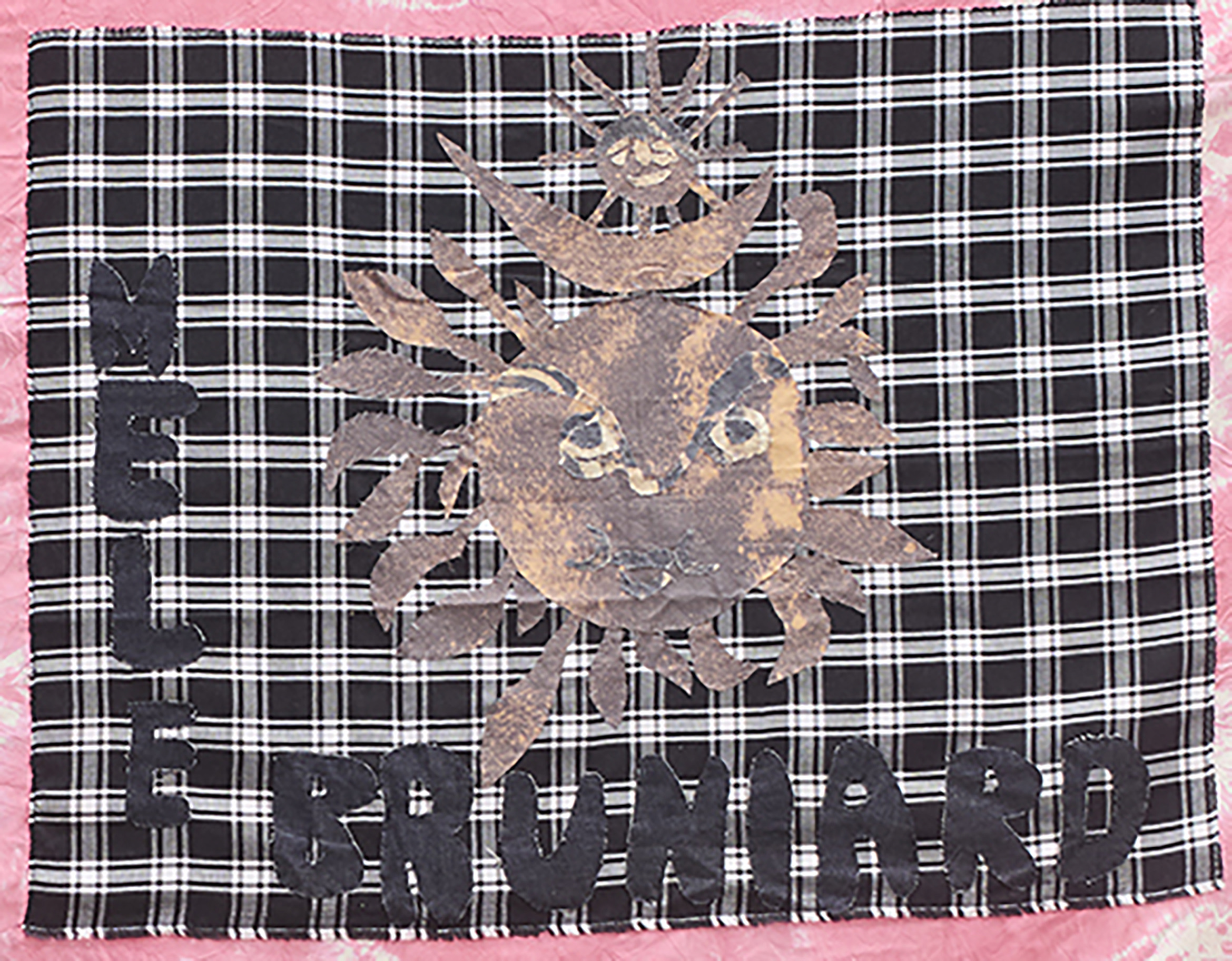
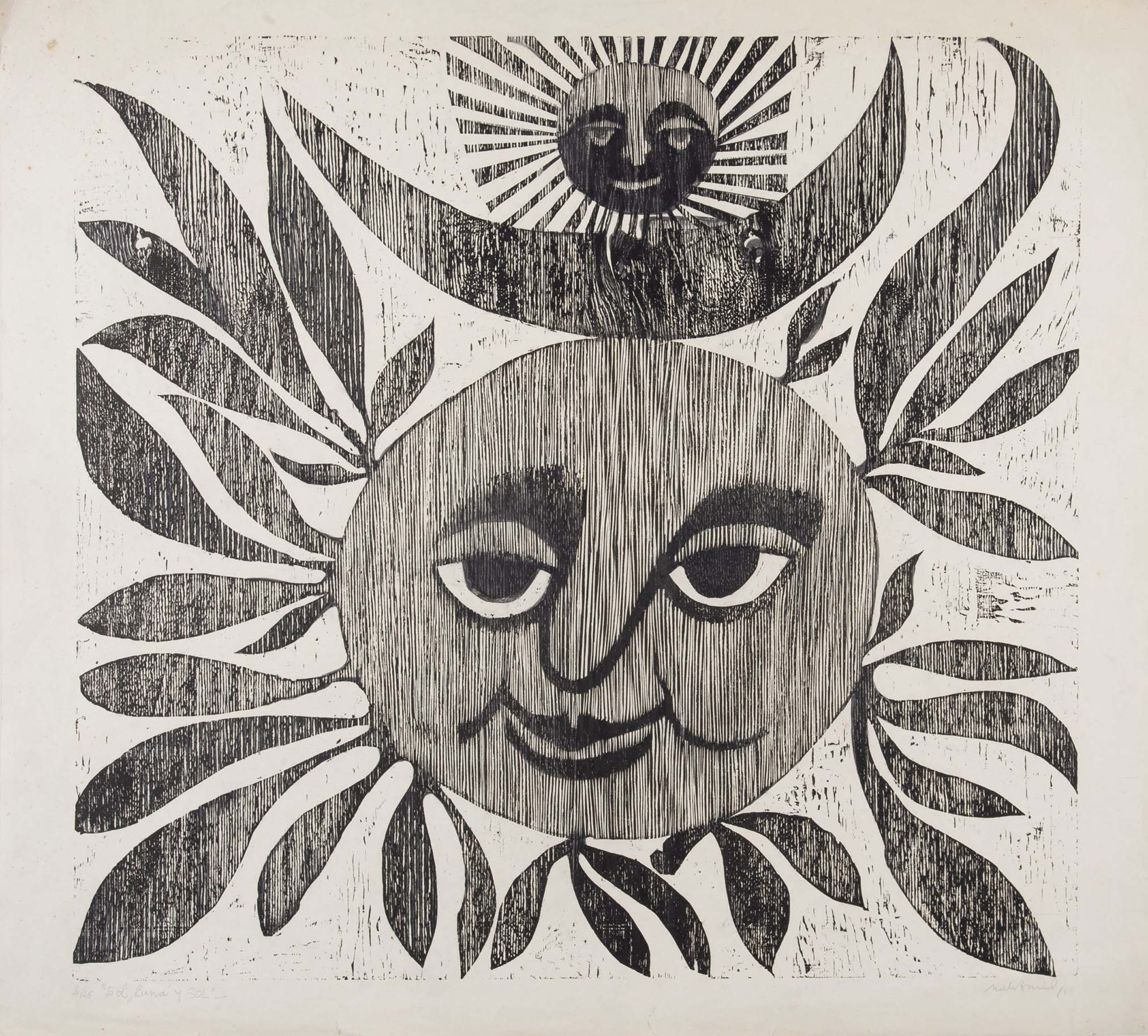
Sol, Luna y Sol, 1965
Melé Bruniard (Argentina, 1930 –2020)
Melé Bruniard was a renowned Argentine wood engraver and draftsman. She studied at the Instituto Superior de Bellas Artes in Rosario (Argentina) and trained in the workshop of the artist Juan Grela. Rooted in childhood memories and creative imagination, her work is characterized by sharp lines, symbolic figures and labyrinths of characters. Its images of plants, the moon, and the sun combine expressive imagery with a deep tenderness. Bruniard’s woodcuts were exhibited widely in Argentina and abroad, earning her a series of prestigious awards. Bruniard was also a poet, who wrote in A Network of Gazes:
A network of gazes
Holds the world together
Keeps it from falling
My eyes search for that which makes us take off our shoes
to see if there is something else holding us up beneath them
or invent a bird
to find out if air exists
or create a world
to know if there is a god
or put on our hat
to make sure that we exist.
Woodcut, black ink on paper
Museo de Arte Moderno de Buenos Aires coleccion.museomoderno.org/index.php/Detail/works/17630
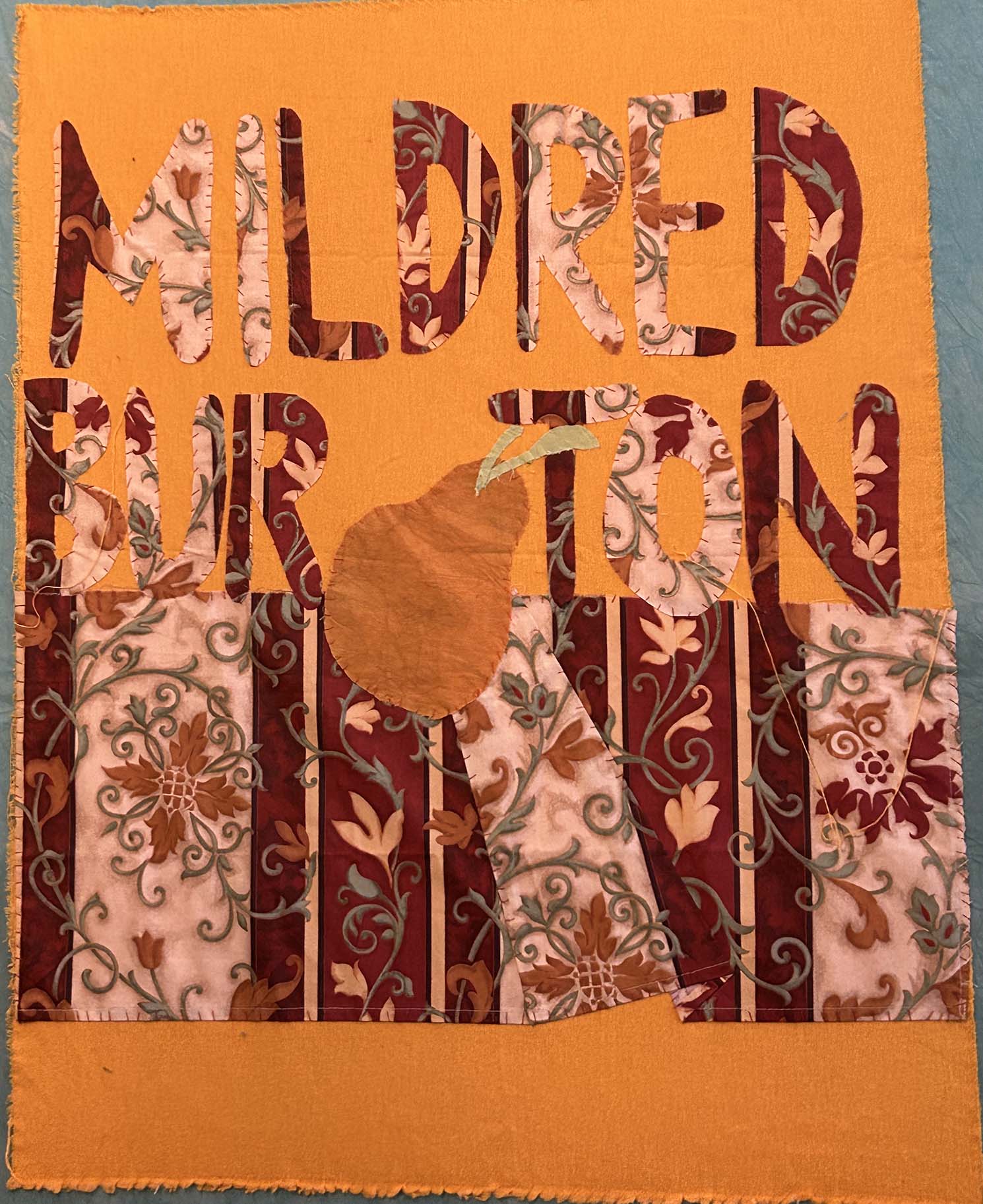
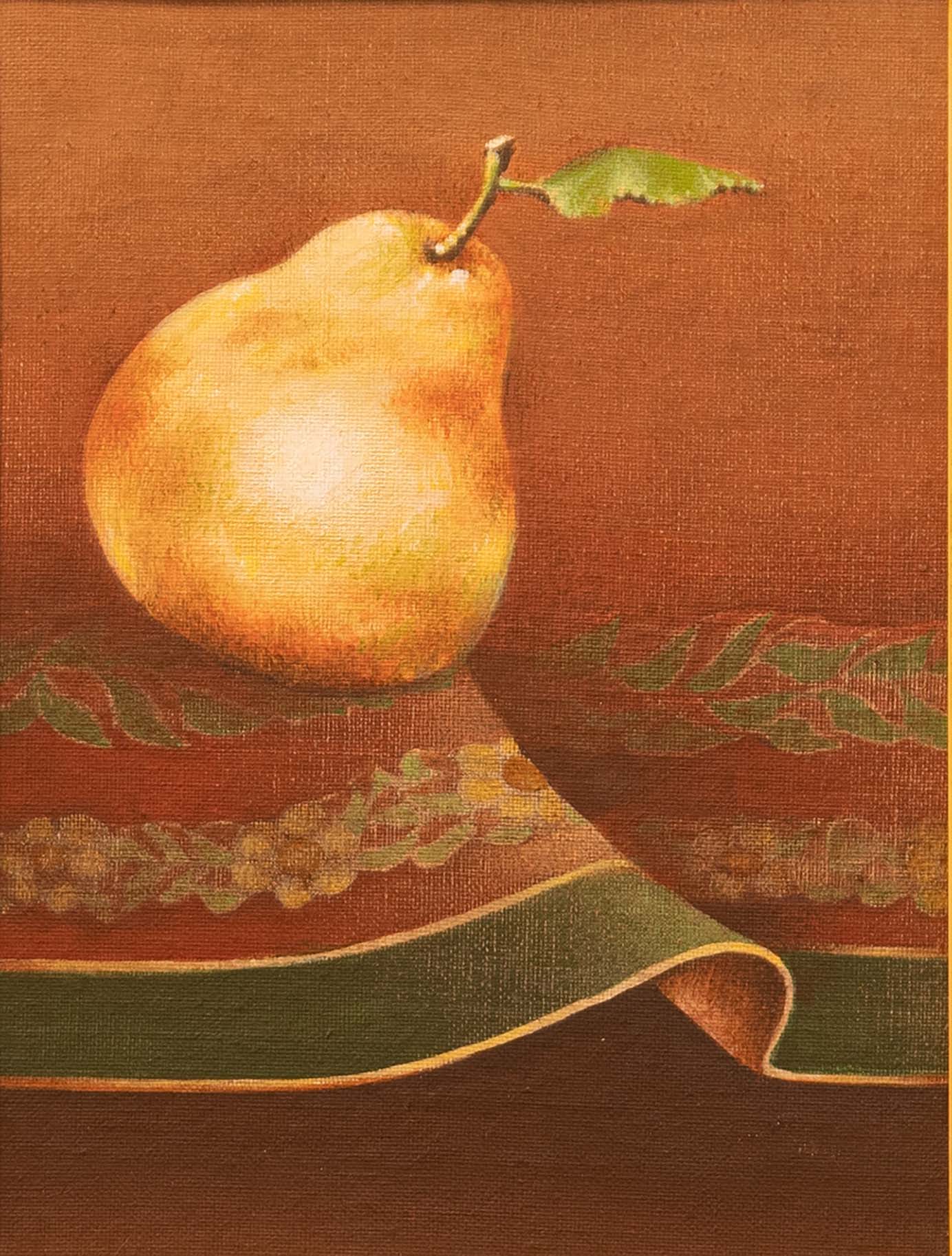
La huella fatal, 1979
Mildred Burton (Argentina, 1942–2008)
Mildred Burton was a prominent Argentine painter, draftswoman, printmaker, and performance artist known for creating a surreal, oppressive, and deeply symbolic visual universe. Her practice often involved projecting her imagination onto everyday spaces and objects. Burton’s images recreate her childhood in Paraná, a lush, tropical town in the center of Argentina, and the domestic environments in which she grew up, injecting fantastical life into furniture, family portraits and different corners of her home. The artwork La huella fatal features a signed still life depicting a pear resting on an intricately ornate, patterned surface. True to Burton’s signature style, the piece subtly transforms an everyday domestic setting into something slightly uncanny and enigmatic, representing her quest to escape what could often be an oppressive domestic world and transform it into something fantastical and dreamlike. Even though her style was reminiscent of the French surrealists, she refused the title and stated simply “I am myself,” thereby emphasizing that she felt misrepresented as an epigone to European artists. Her output from the 70s and 80s contains echoes of the repressive regime established by the military dictatorship at the time. Burton drew from the fantasy literature she read and her own imagination to create monsters in forcibly enclosed spaces that evoked the political situation.
Oil on canvas
24×18 cm
Private Collection
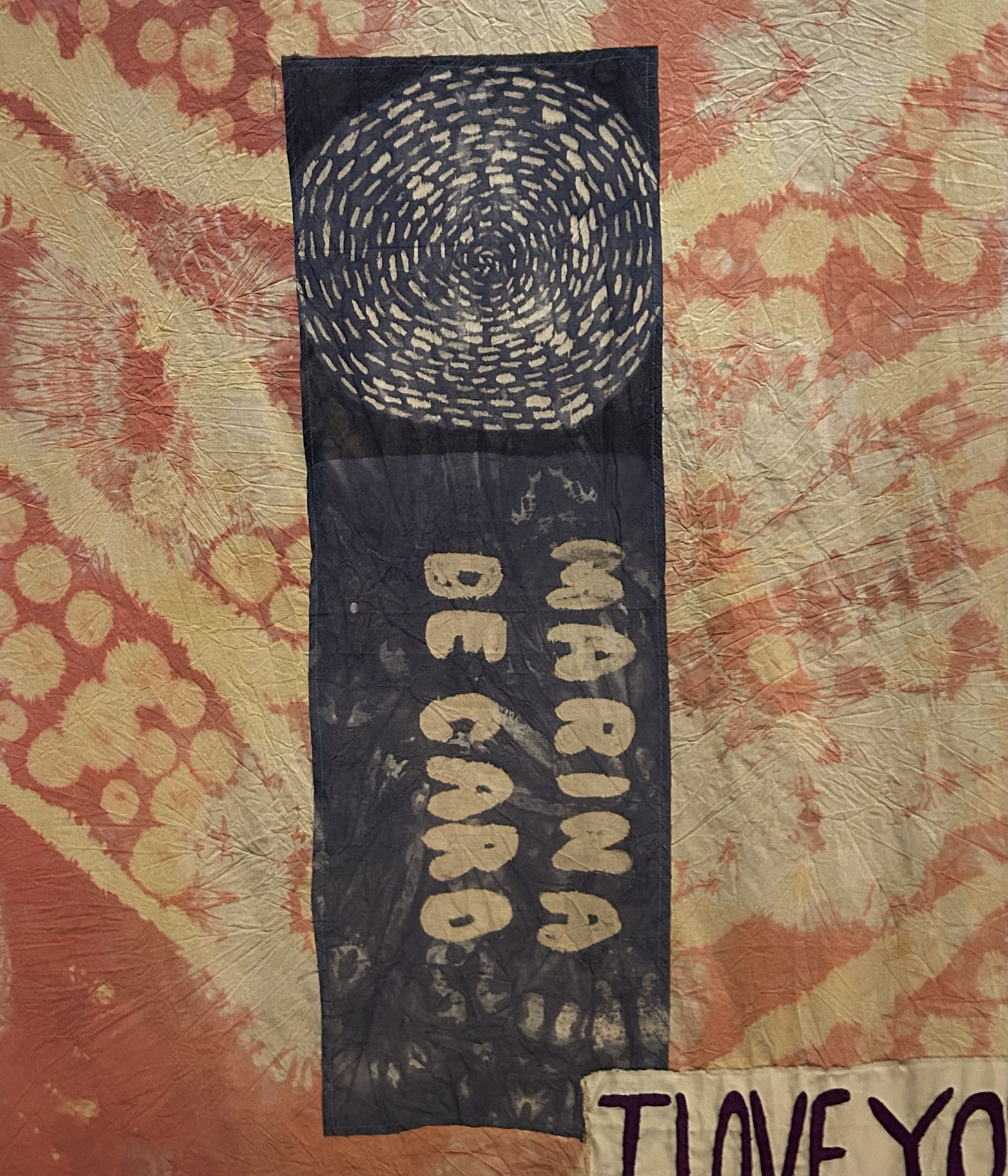
El universo en un hilo (The universe on a thread), 2017
Marina de Caro (Argentinië, 1961)
Marina De Caro is een invloedrijke Argentijnse beeldend kunstenaar die zich vrij beweegt tussen tekeningen, textiel, installaties, sculpturen, keramiek, video’s en performances. Ze maakt draagbare geweven werken en soft sculptures die de bewegingen van het lichaam veranderen, waardoor de drager de ruimte op een sterk gestileerde, dramatische manier ervaart. Haar grootschalige installaties maken gebruik van felle kleuren, soepel textiel en opvallende vormen om poëtische, alternatieve werkelijkheden op te bouwen. Meesterwerken zoals Tragedia Griega (Greek Tragedy, 2005) zijn rechtstreeks geworteld in performance- en theatertradities. The universe on a thread benadrukt haar focus op de directe lichamelijke ervaring, waarbij fysieke materialen worden gebruikt om onzichtbare persoonlijke of sociale scripts in kaart te brengen.
Een opera in drie delen en twee tussenspelen
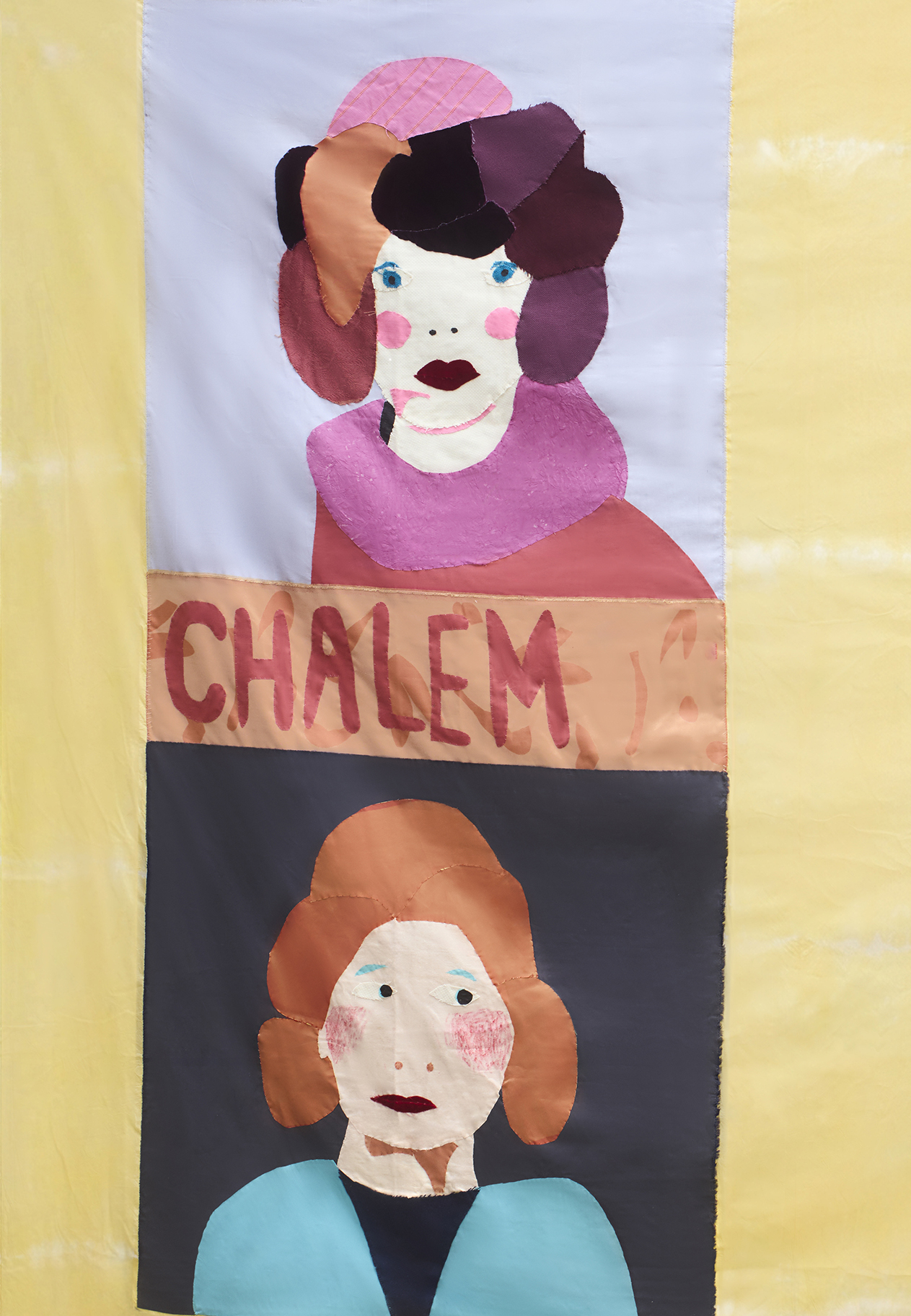
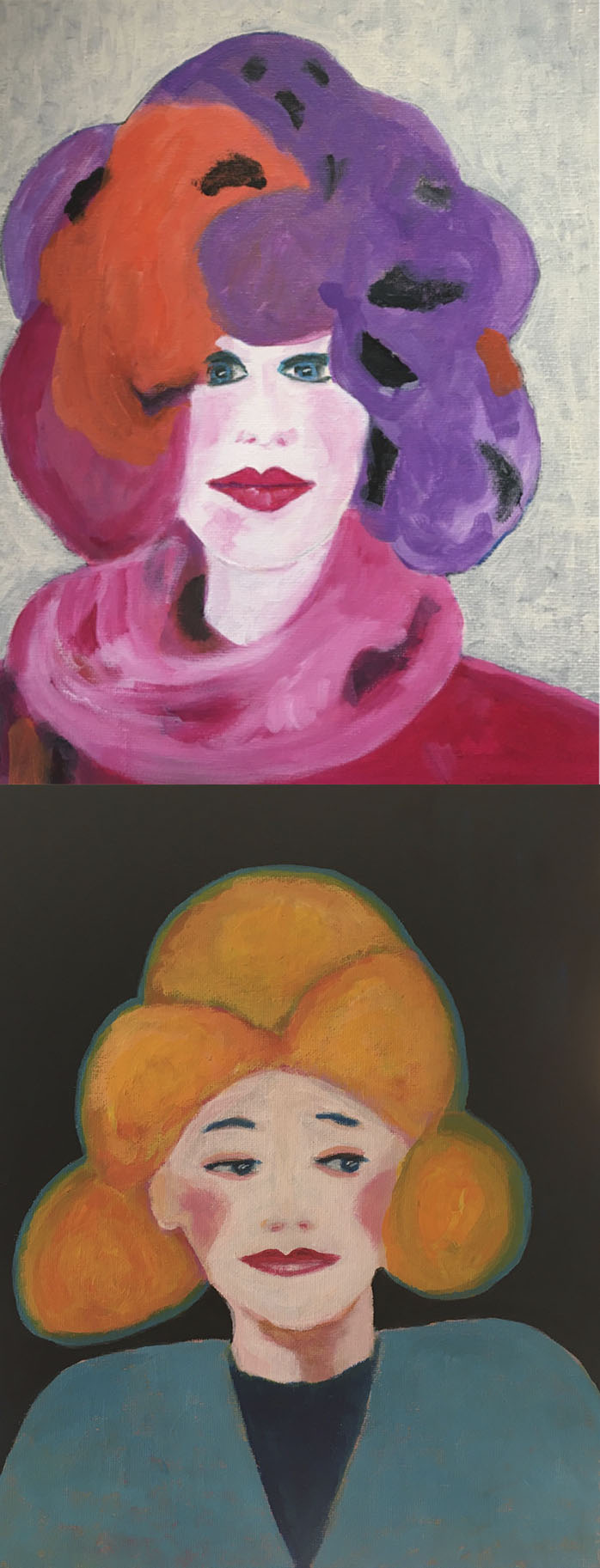
Carnaval in het zuiden & Els, 2023
CHALEM (Chantal Lemlijn)
Eceiza particularly liked these two portraits because they mediate something universal in their use of colors and tactile design. They were painted by a local artist, who works outside the professional art world. Although she goes by her real name as an author, Chantal Lemlijn compresses her full name to the pseudonym CHALEM in her visual work. Carnaval in het zuiden and Els (2023) were exhibited during the Limburg Biënnale in 2024. They were selected from a series of 200 applications that were portraits.
Limburg Biennale, Marres, 2024
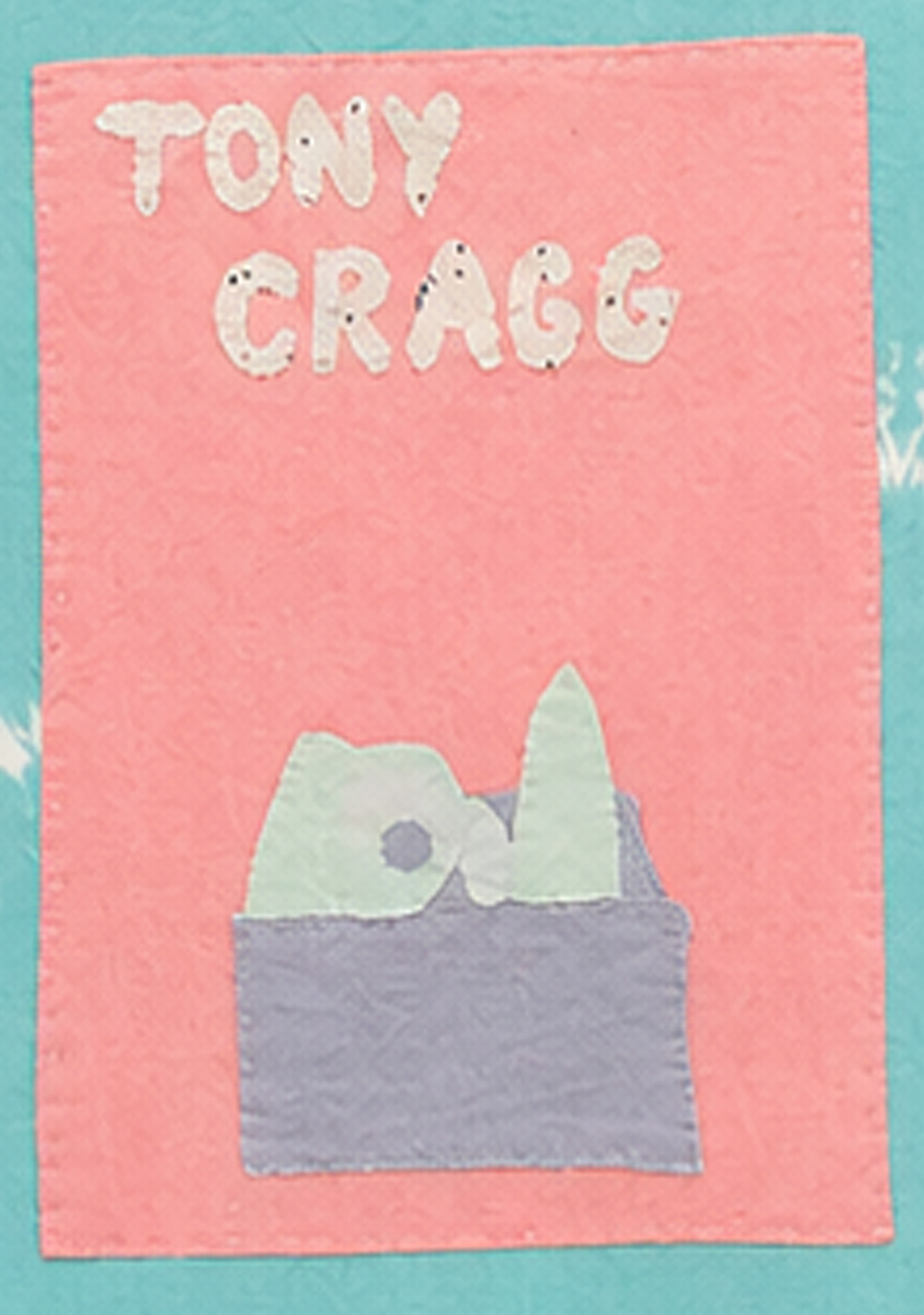
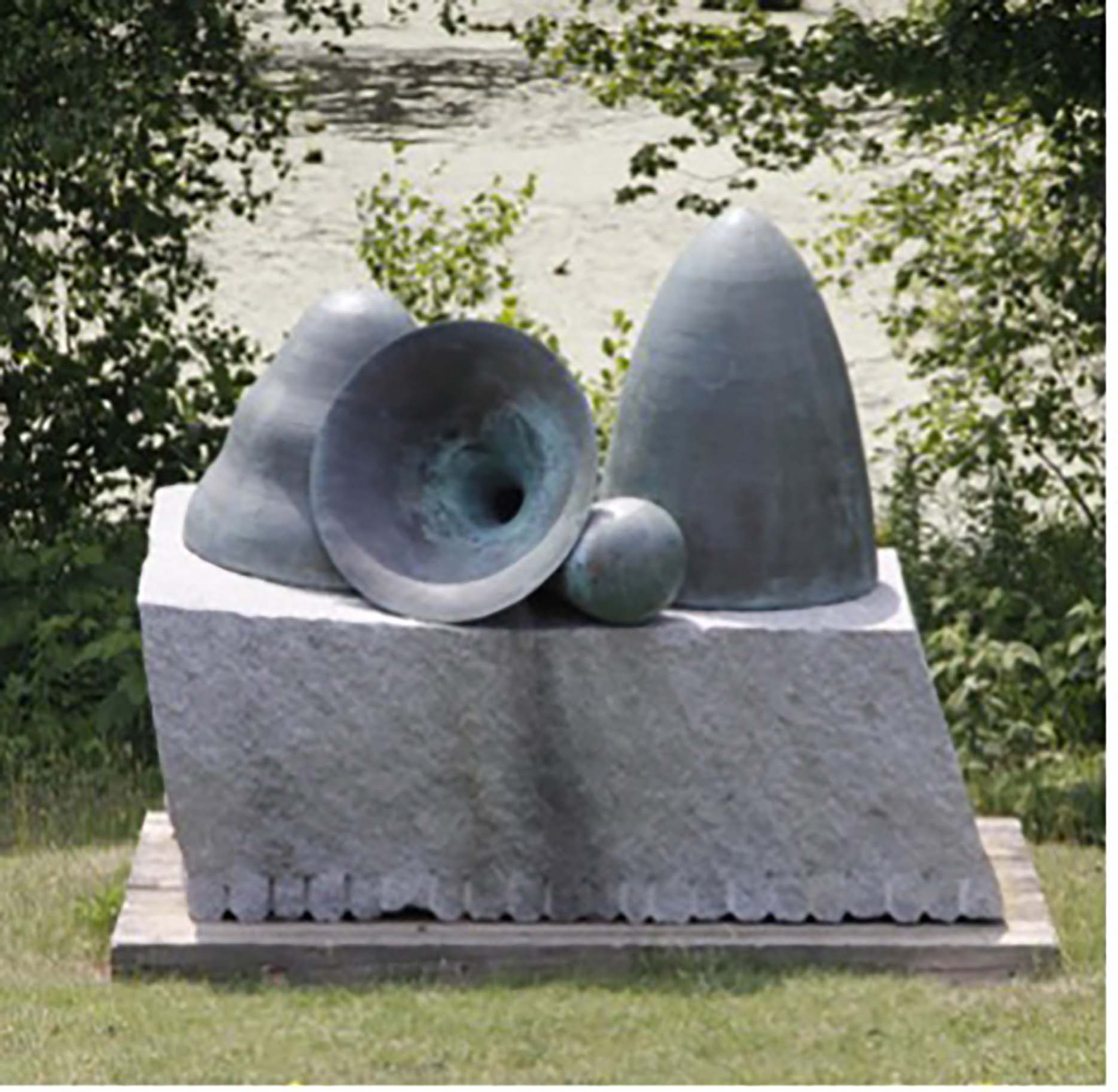
Untitled, 1987
Tony Cragg (UK, 1949)
Tony Cragg is one of Britain’s foremost sculptors. He works with stone, wood, found objects, aluminum, cast bronze and iron. His works range from repetitive stacks to witty floor arrangements of objects. He was originally trained as a scientist and worked as a lab technician. This piece contains several cast bronze components on a marble base. The forms are ambiguous and can be related to natural vessels, but also man-made objects. Eceiza views it as a portrait.
Cast bronze components resting on a leaning marble base with a wood foundation
210 x 210 x 285 cm
Art Omi
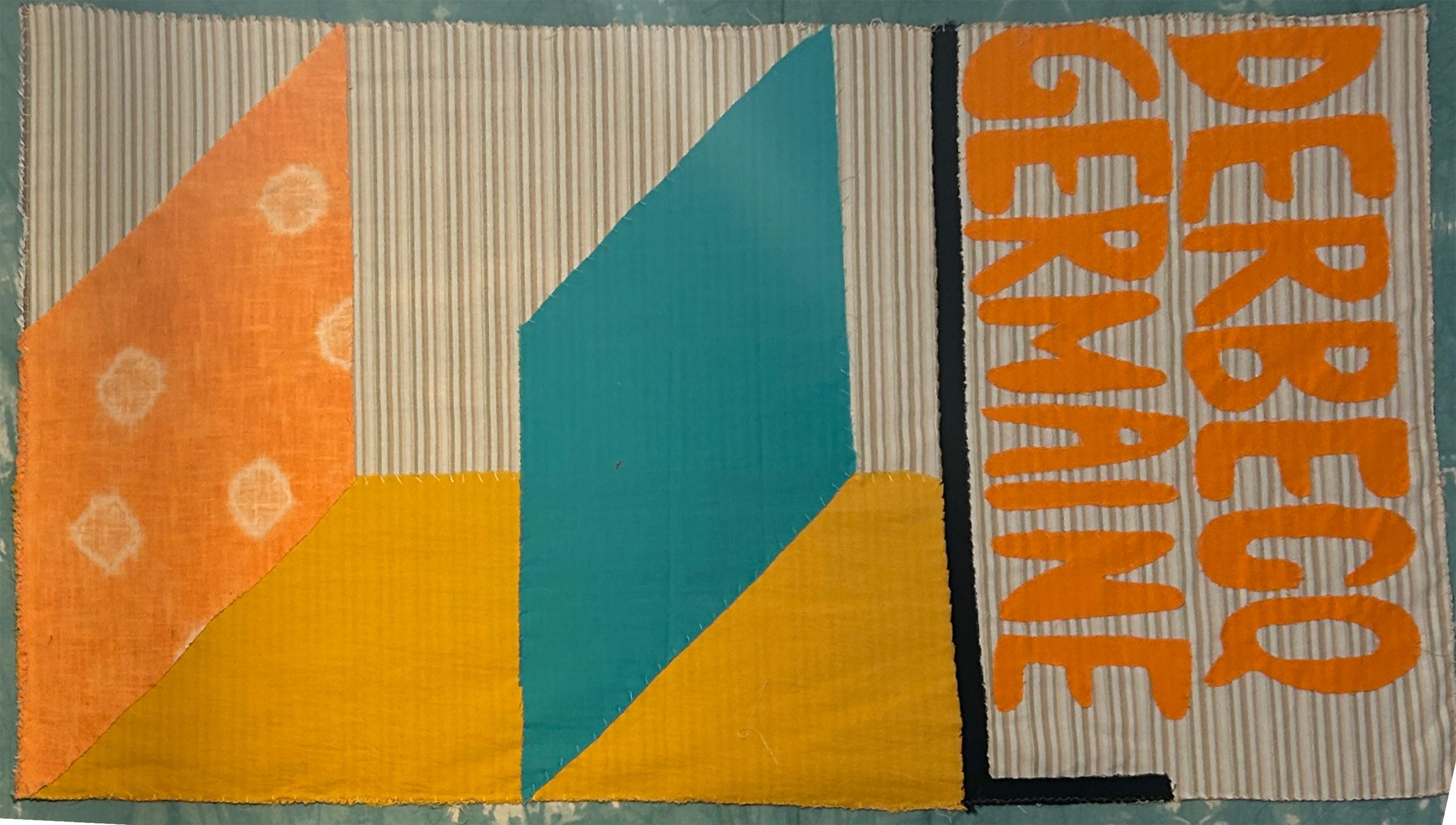
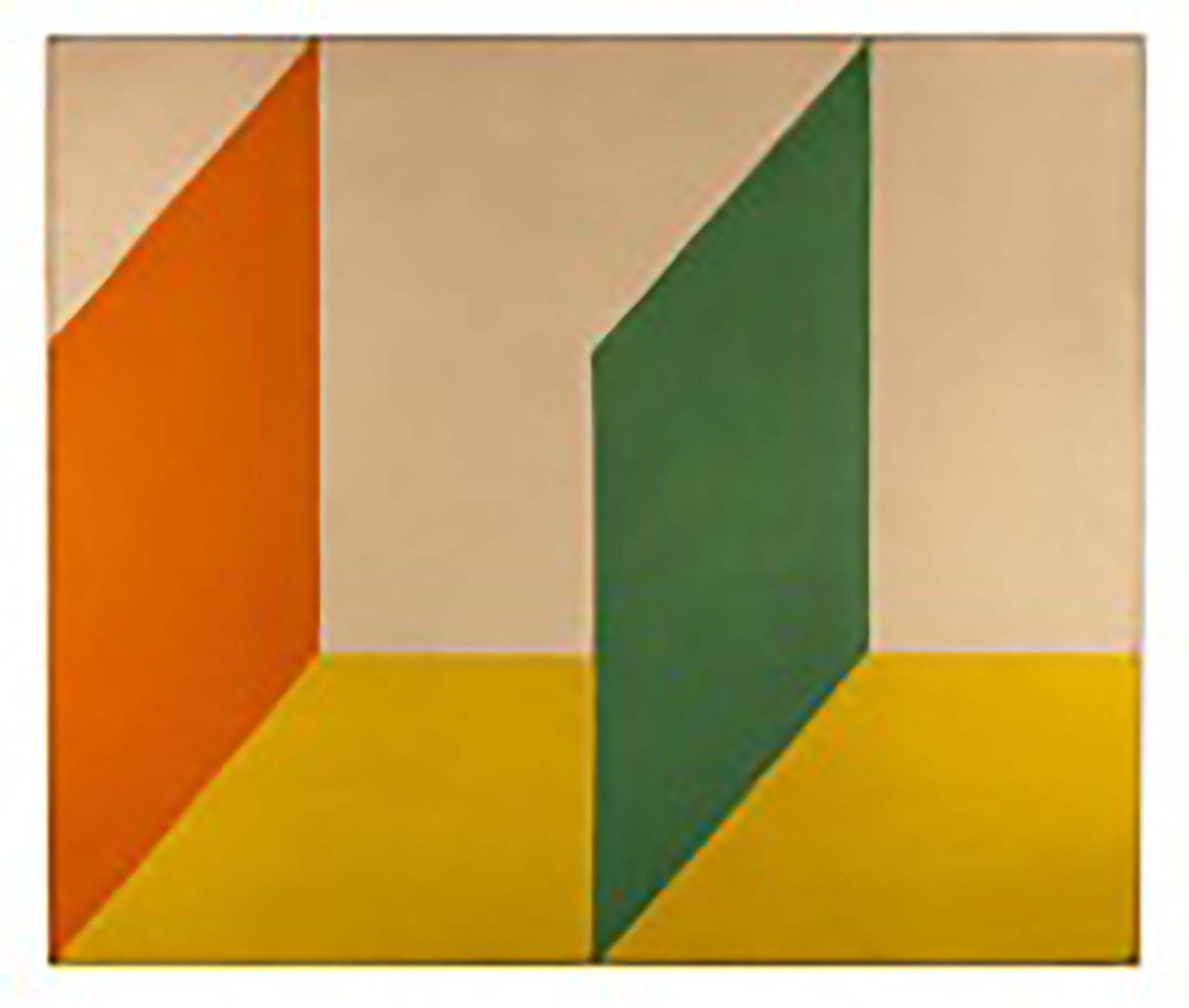
Juana, 1968
Germaine Derbecq (France, 1899 – 1973)
Germaine Derbecq was a prominent French-Argentine artist, art critic, and curator who played a foundational role in promoting modern and avant-garde art in Argentina. Known as a visionary ‘talent hunter,’ she promoted the careers of a whole generation of young Argentine artists during the 1960s. In Buenos Aires, Derbecq shifted her focus toward shaping the local art scene. She became the art critic for the French-language newspaper Le Quotidien for nearly twenty years. From 1960 to 1963, she directed and curated the legendary Galería Lirolay. In 1970, she co-founded the influential contemporary art magazine Artinf. She wrote: “The spiritual messages of art are far more necessary to the masses than is commonly believed, just as necessary as consciousness and the great human feelings. Art is not the privilege of a few, of a particular culture, or of a certain level of understanding; it is a human necessity for people who have a soul. And when it is claimed that art is not for the people, it is an admission that the people have no soul. It is unimaginable that an era that prides itself on being intelligent should harbor such absurdities.” As a painter, Derbecq’s style evolved significantly throughout her career. Her early works featured figurative compositions, which later transitioned into a distinct form of lyrical and geometric abstraction. Her mature series, such as her Pinturas múltiples, relied heavily on geometric rhythm, optical repetition, and bold color palettes. Her paintings are eminently reproducible. Eceiza viewed this as an invitation to reproduce Derbecq’s work herself.
Oil on canvas
144×168 cm
Museo de Arte Moderno de Buenos Aires. Acquisition, 1968.
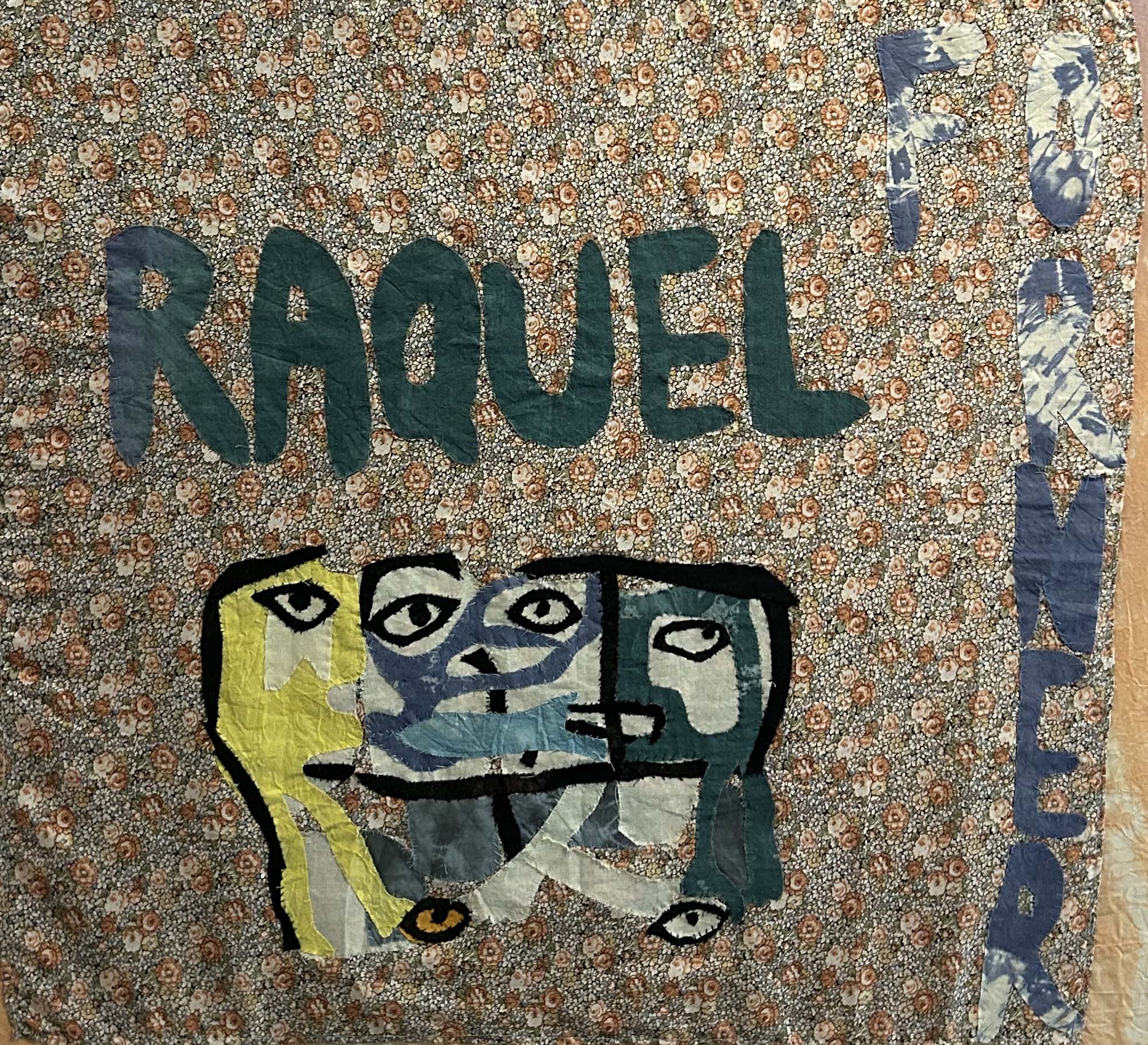
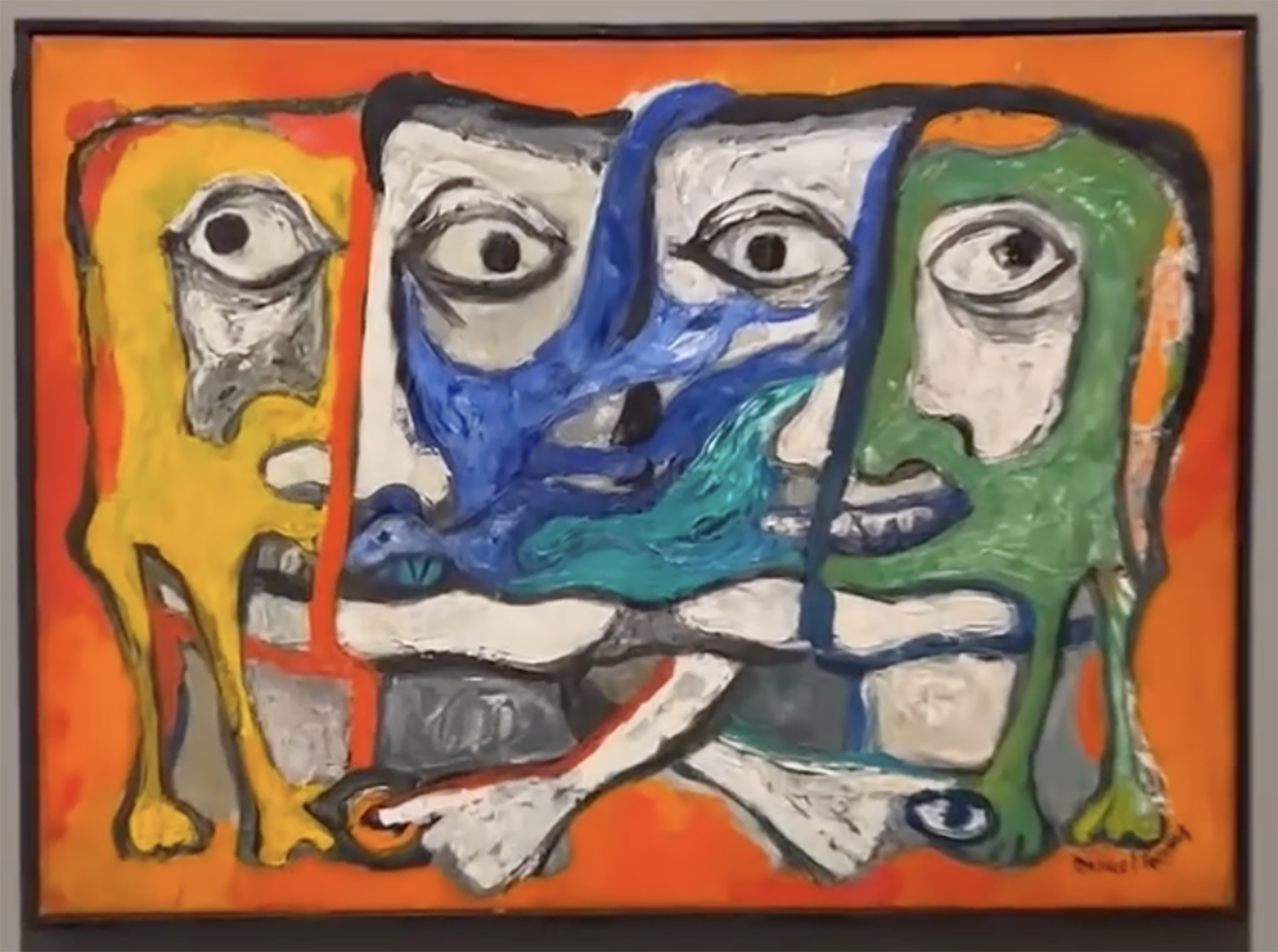
Astromutacion, 1969
Raquel Forner (Argentina, 1902 – 1988)
Forner completed her studies at the National Academy of Fine Arts in Buenos Aires in 1923. Her work demonstrated an interest in current events. From the beginning of the Spanish Civil War in 1936, it took a dramatic and tragic tone. She borrowed ideas from surrealism during the 1940s, adapting its esthetic of distortion without seeking to reproduce a dream state. She could be better be characterized as a magician or alchemist. Through most of the 1950s, she produced several series on tragic themes in a primarily expressionist mode. Forner often portrayed strong female figures, but not as specific explorations into gender norms. In 1957, Forner’s attention turned to imagined scenes of interplanetary travel. With her Space Series, which earned her recognition in Europe, she became one of the earliest fine artists to portray scenes of outer space.
Oil on canvas
72.5×100 cm
Museo de Arte Moderno de Buenos Aires
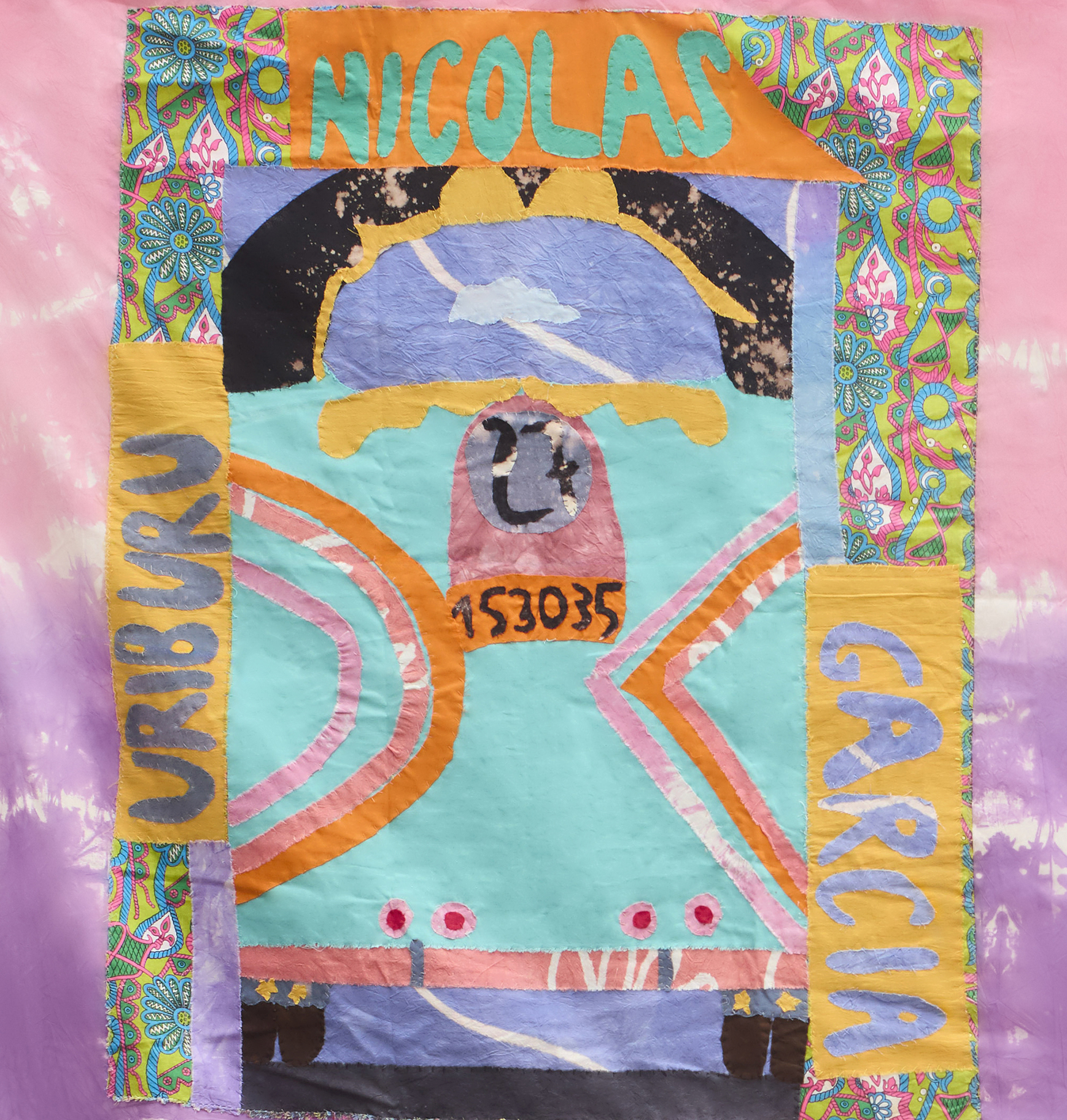
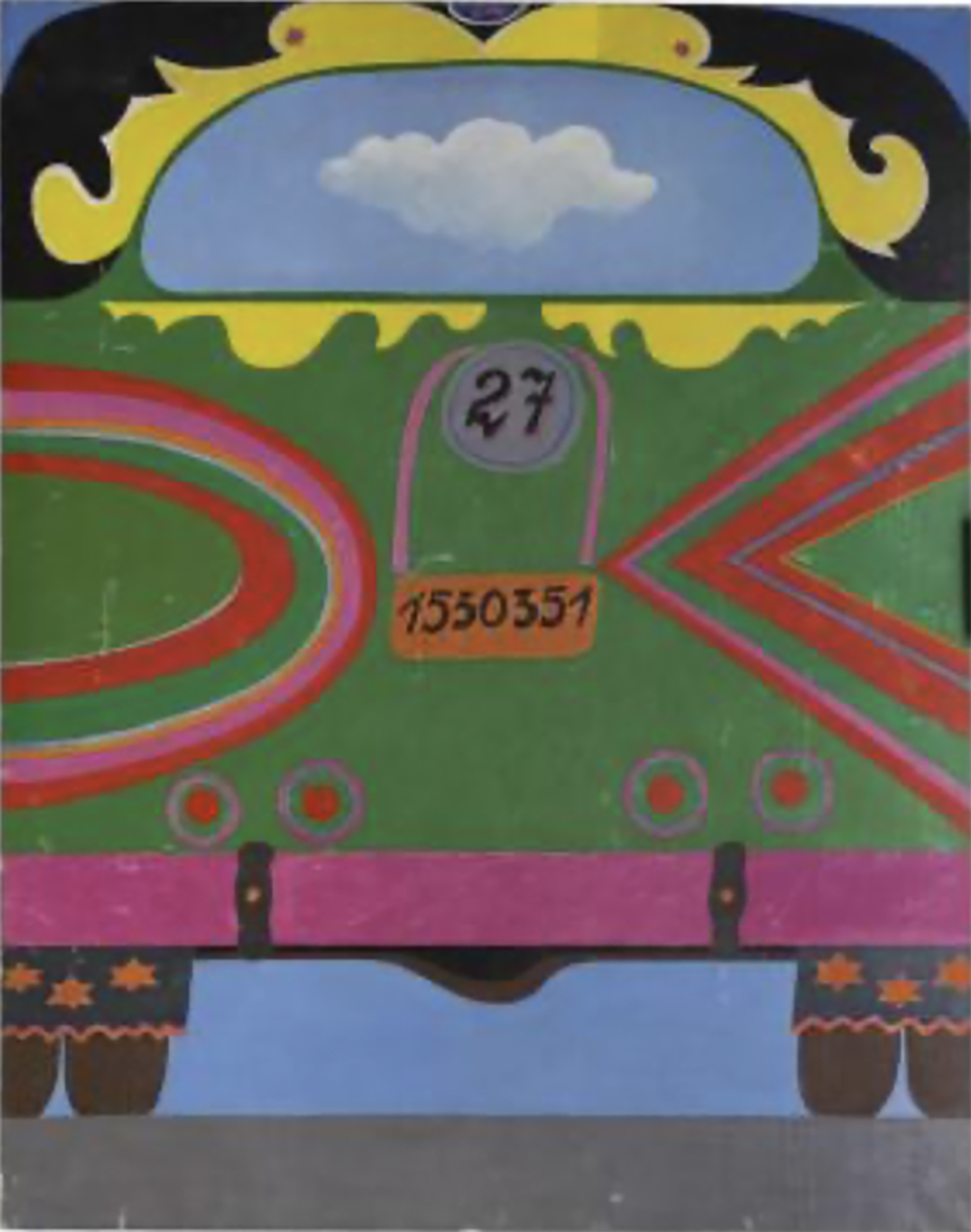
Autobus 27, 1966
Nicolas Garcia Uriburu (Argentina, 1937 – 2016)
The Argentinian artist, architect, and pioneer of land art Nicolas Garcia Uriburu is famous for his big public art pieces in which he raised environmental and natural concerns. He caught Celina’s interest with this rare small painting: Autobus 27 (1966). It is an ordinary city bus of Buenos Aires in the 60s and 70s. As many of his artworks, the most famous of which was his coloring the Venetian Canals for the Biennale of 1968, the bus glows in a vibrant green.
Oil on canvas
160,5×128,5 cm
Museo de Arte Moderno de Buenos Aires nicolasuriburu.com.ar/en/nicolas-garcia-uriburu-eng
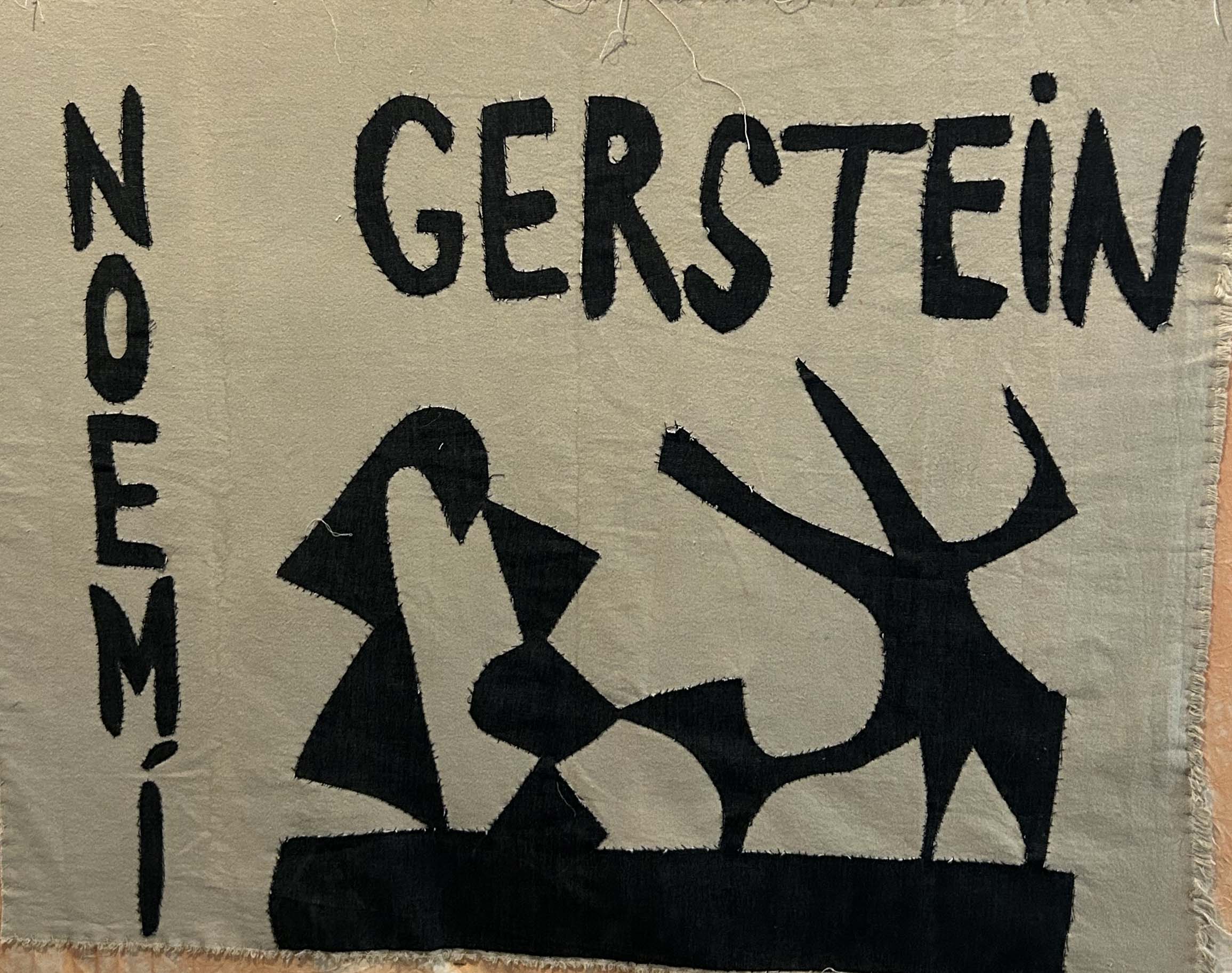
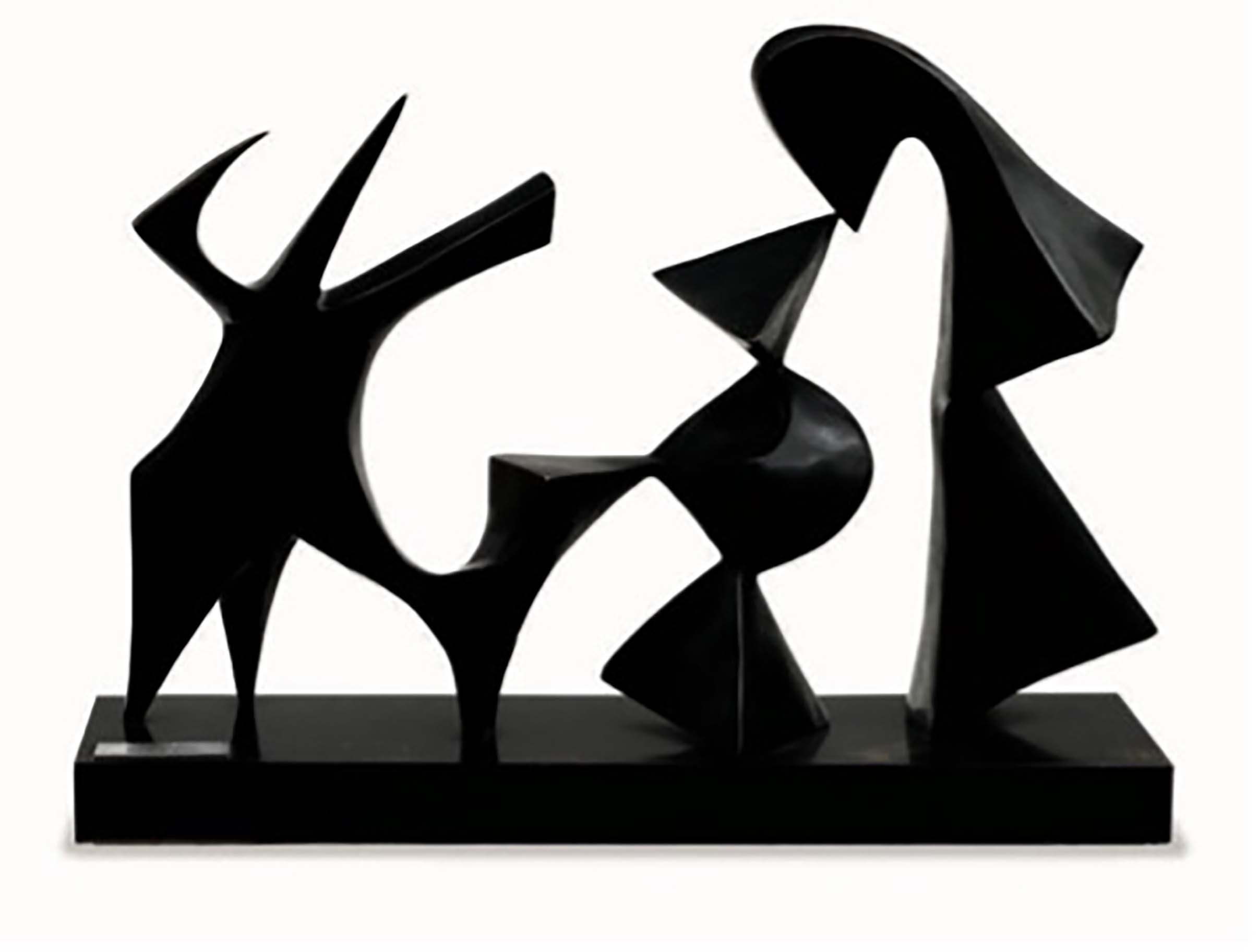
La Familia, 1960
Noemí Gerstein (Argentina, 1910 – 1996)
Noemí Gerstein was trained as a science teacher – a profession that paid for her art studies. She attended the Escuela Superior de Bellas Artes and the Club de Mujeres de Buenos Aires, one of the first local feminist groups, where she began to take up sculpture. Starting in 1934 she studied at the studio of Alfredo Bigatti (1898–1964). After a solo show at the Galería Peuser in 1948, she travelled to Paris on a scholarship from the French government. She attended the Académie des beaux-arts and the sculpture studio led by the Cubist Ossip Zadkine (1888–1967) at the Academie de la Grande Chaumière. Her first abstract metal piece brought her international acclaim: she won the competition for Monument to The Unknown Political Prisoner organized by the London Institute of Contemporary Arts. Its maquette was shown at the Tate Gallery (1953). At that point she fully positioned herself as a non-figurative artist. Gerstein’s works were predominantly abstract, and she had a preference for metallic constructions that required great force. Eceiza admires her for using her entire body in the making process.
Black bronze
61 x 91 x 23 cm
Museo de Arte Moderno de Buenos Aires. Acquisition, 1961
Sunflowers, 1888-1889
Vincent van Gogh (1853-1890)
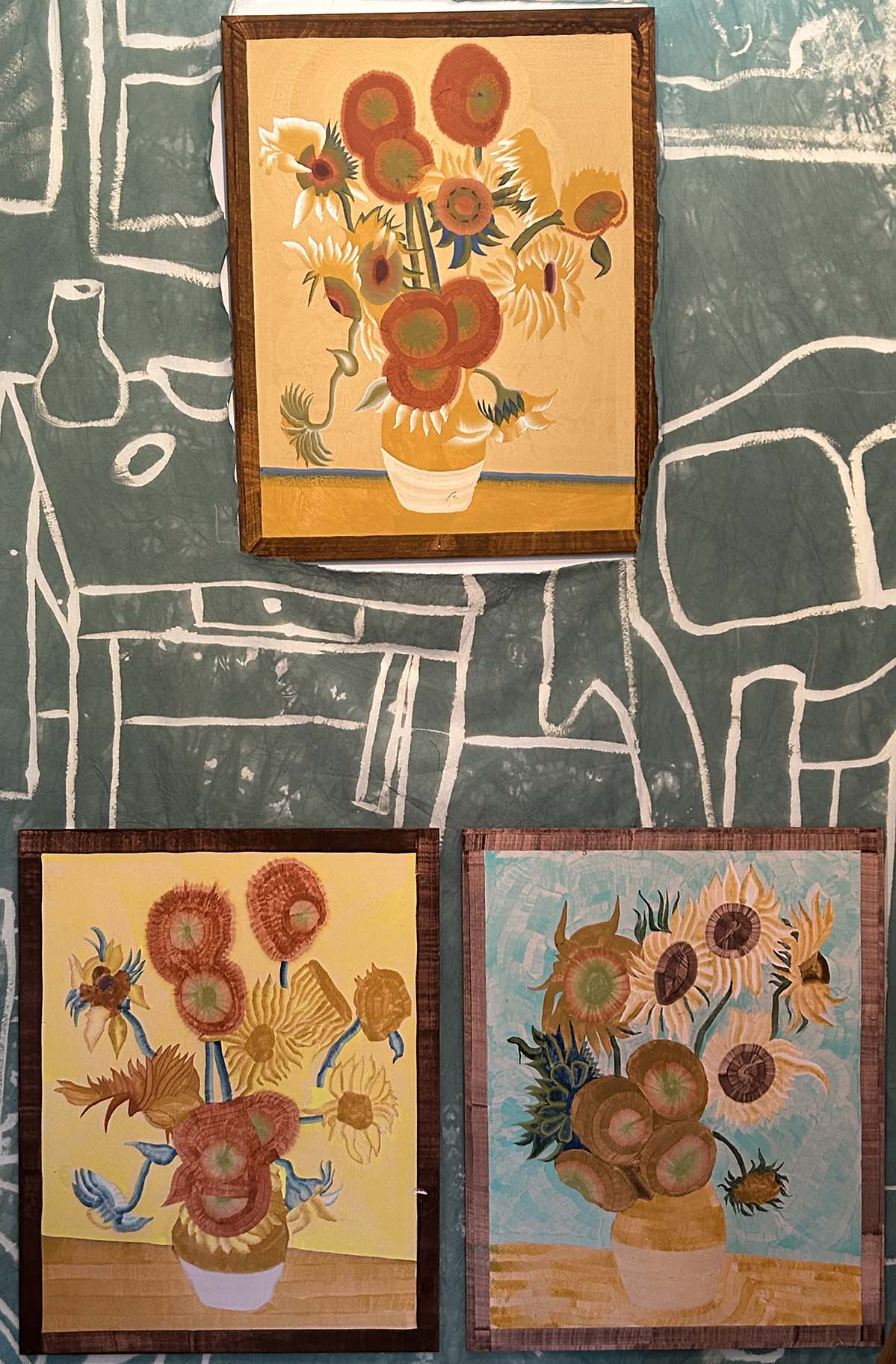
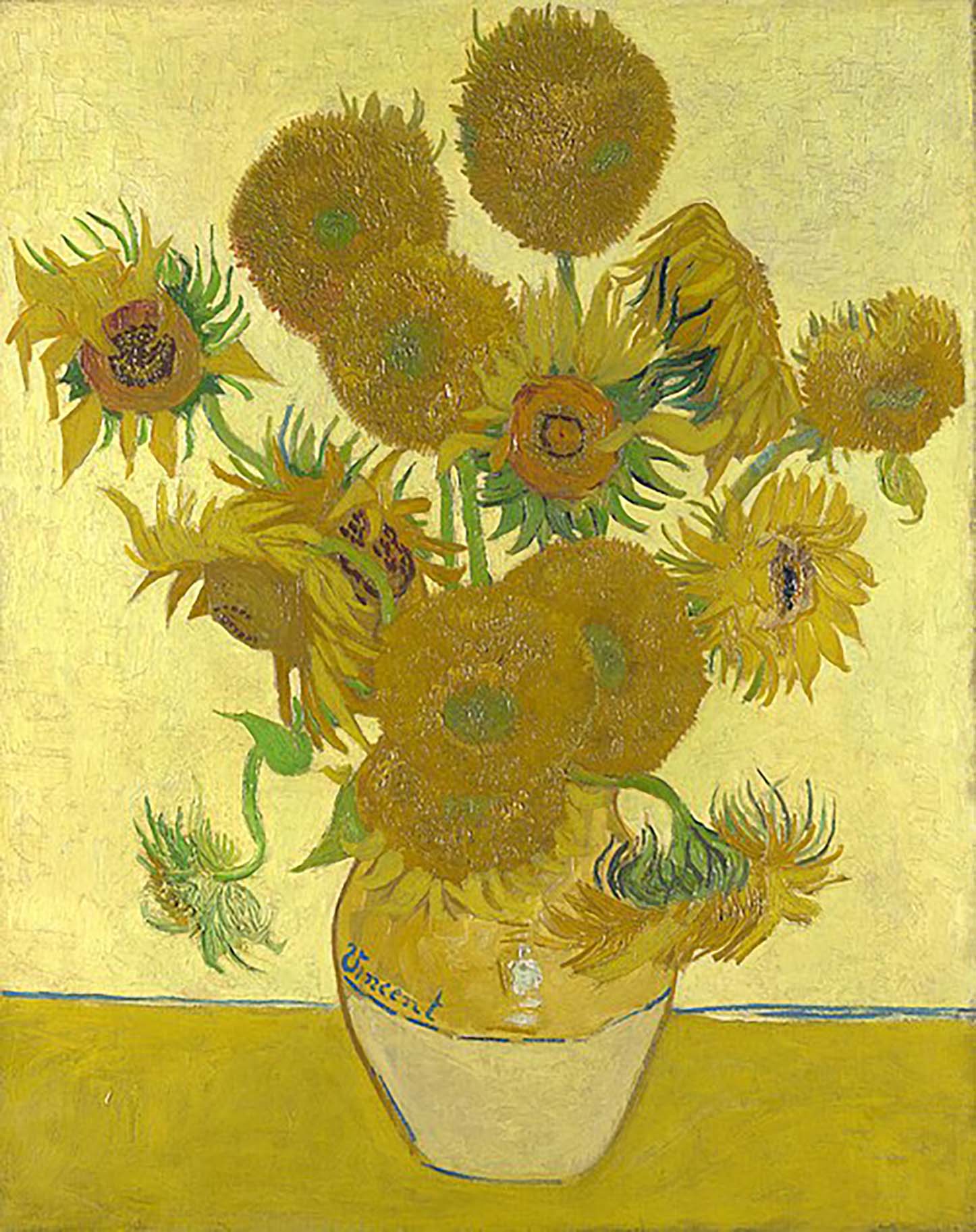
Vincent van Gogh’s Sunflowers belong to the most iconic paintings in the world. It is a famous series of still-life paintings created in two major sets: four in Paris (1887) showing flowers lying on the ground, and a second series in Arles (1888–1889) showing bouquets of sunflowers in a vase. The latter series consisted of seven paintings Van Gogh made while living in the south of France. He created them to decorate the guest room at the Yellow House in Arles ahead of a visit from his friend and fellow artist Paul Gauguin. Van Gogh applied thick layers of paint using his signature impasto technique to create vivid texture, movement, and a sense of life. He only used three shades of yellow to prove that a powerful image could be made with variations of a single color. He wrote that the flowers communicated “gratitude” and symbolized friendship. The sunflowers and bed (with Gauguin sleeping in it) shown here, are painted by the Frieling family (Gijs, Anne and Eva) with the assistance of Afra Eisma and Karin Nurnberg. The backdrop is a version of Van Gogh’s bedroom in Arles (1888), burned into textile with chloride by Celina Eceiza.
Oil on canvas

Chito y Peca, 1968
Juan Grela (Argentine, 1914 – 1972)
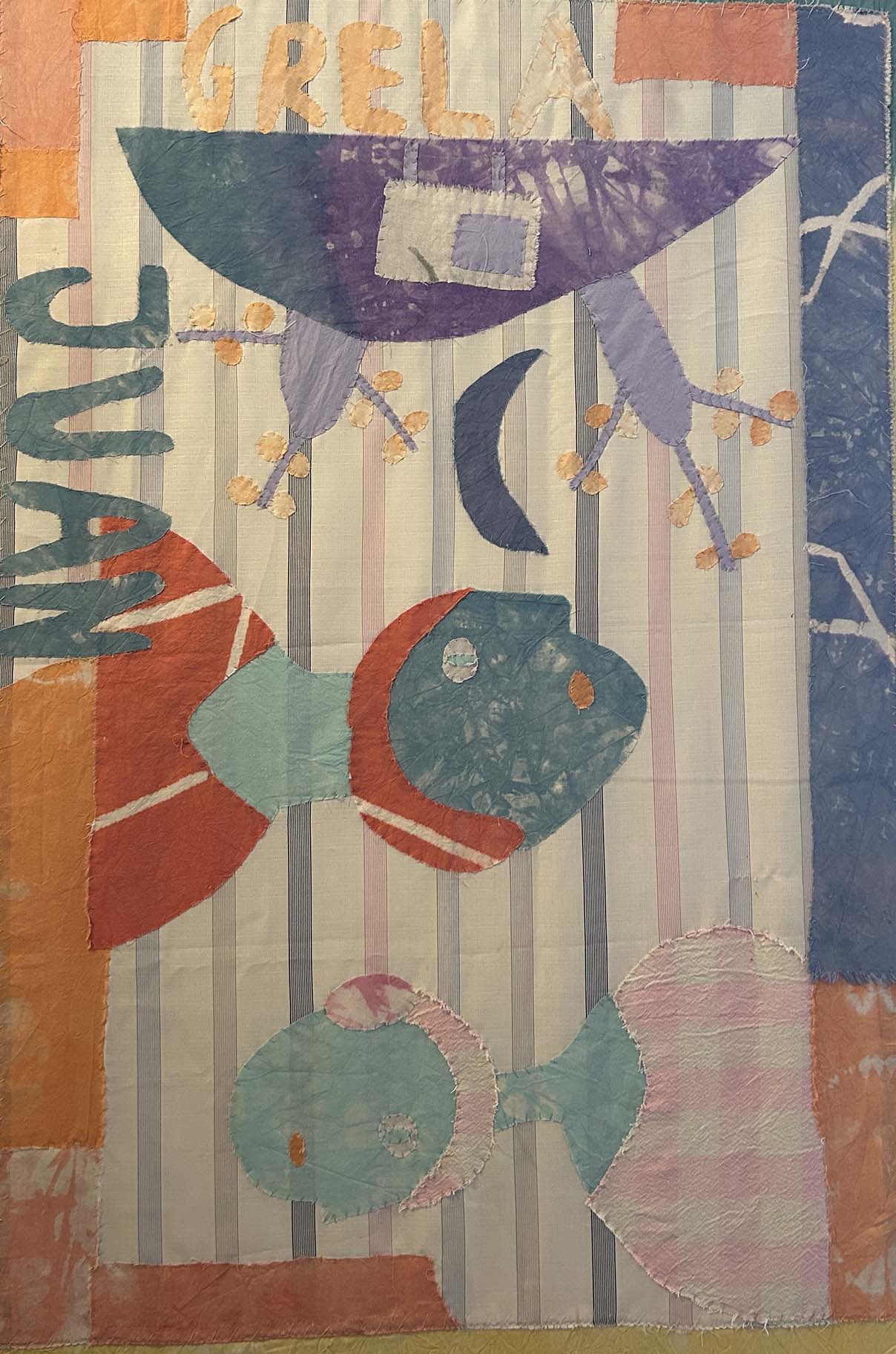
Juan Grela was a highly influential, self-taught Argentine painter, graphic artist, and engraver who became a central figure in 20th-century Argentine art. He spent most of his life in Rosario and built a lasting legacy as both a regional master and a prominent art educator. Though primarily self-taught, Grela was deeply shaped by his interactions with leading figures of the Argentine avant-garde, including the social realist Antonio Berni, José Planas Casas and Joaquin Torres García. In 1948, Grela co-founded with Leonidas Gambartes the Grupo Litoral. The movement sought to develop a ‘modern yet native’ regional realism, capturing the unique geography, folklore, and everyday realities of the Paraná River banks and its inhabitants.
“…I am convinced that, to be a painter, one has to become universal. But becoming universal does not mean becoming international. I learned that, deep down, I am like the snail, I am like the dog, I am like the plants, and I am like the stars. That is what I understand by becoming universal. It means that the universe exists within us. When one becomes universal, one feels part of all things, and there is no longer anything one can say: this is bad and this is good, which is what we are taught through education. Instead, I can say: this is different.So, when it comes to colours, for example, I have no dislike for any of them. You can give me whichever one you want, and I will like it. I like straight lines and curved lines; if a painting is tonal, I like it; if it is about colour, I like it. And why? Because I have let go of the unpleasant rejection that comes from believing myself to be the master and owner of a single truth, and from seeing myself as all-powerful. I feel like an apple and I feel like an orange, and I feel like a dog and I feel like a fish and I feel like water.”
By 1958, Grela officially distanced himself from the Grupo Litoral as his work broke away from social realism, choosing instead to focus heavily on geometric shapes, fragmentations, and non-figurative compositions. Grela’s text and paintings changed the way Celina viewed art. It taught her the beauty of the duality of simplicity and mystery, as is also exemplified in this image where one foot is on the earth and the other in another universe.
Tempera on paper
49,3 × 34,3 cm
Museo de Arte Moderno de Buenos Aires. Acquisition, 1962.
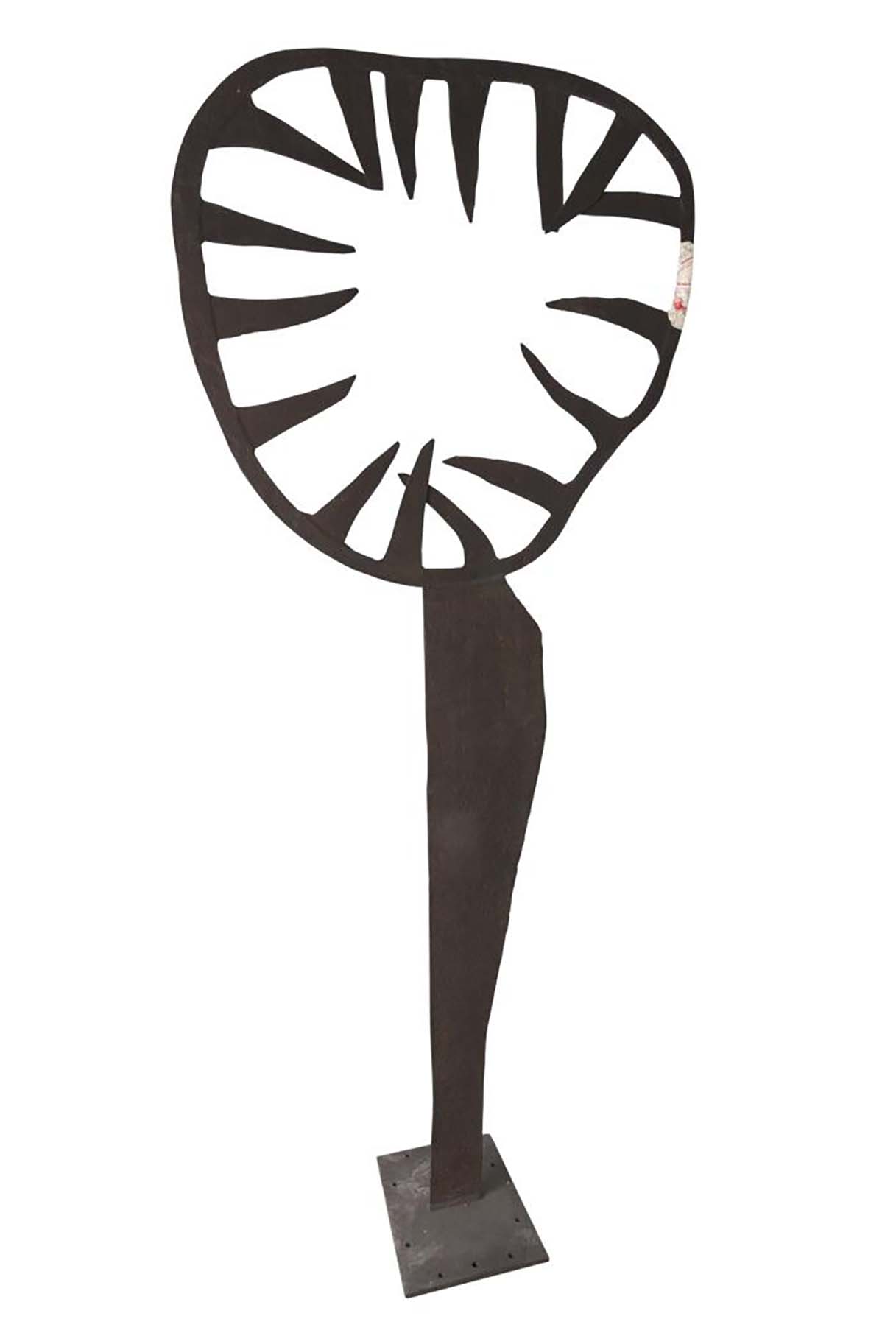
Casa o Escultura
Alberto Heredia (1924 – 2000)
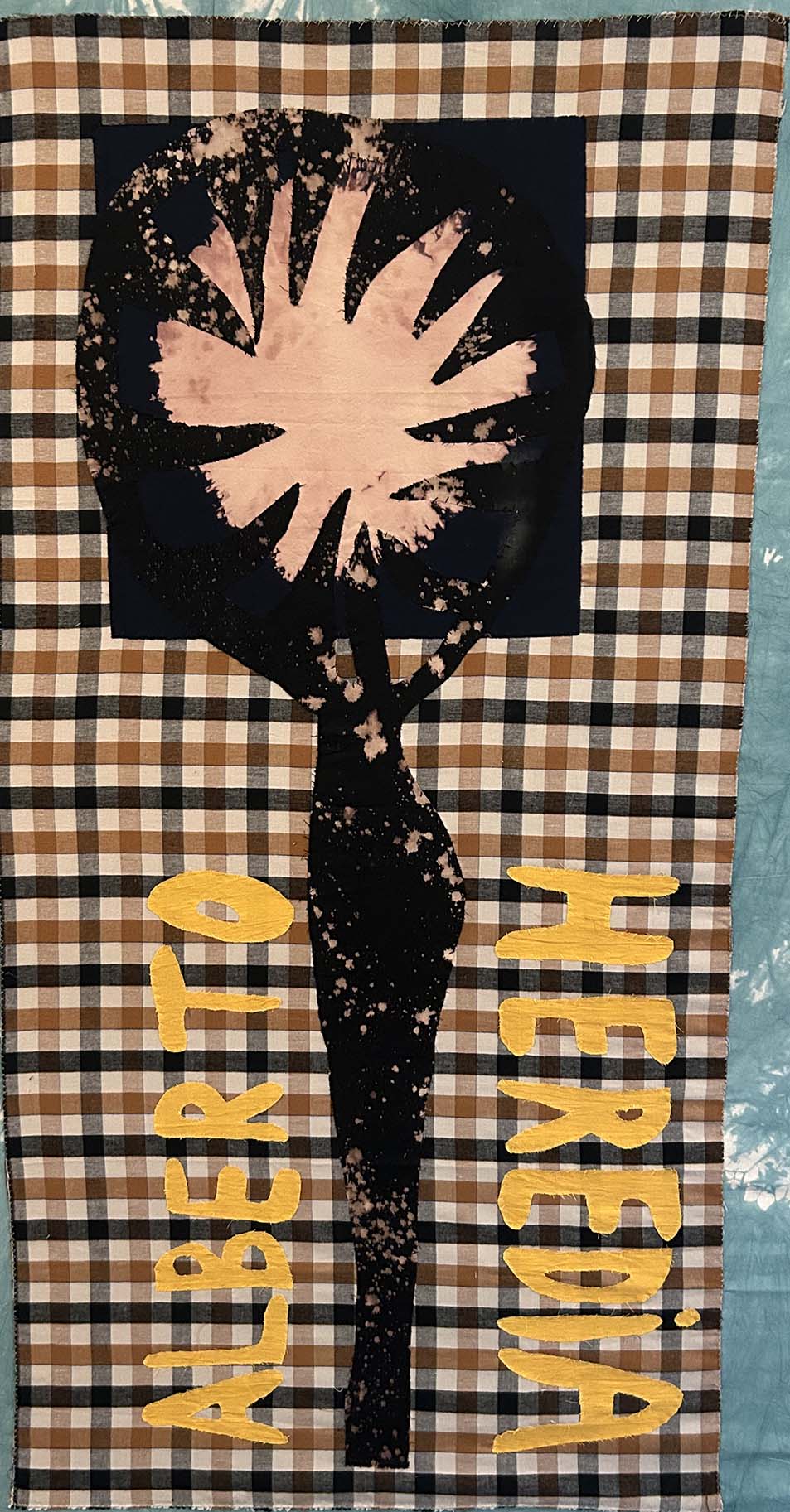
This artwork grew from Heredia’s traumatic experience of undergoing several surgeries and being left immobile, covered in plaster casts for two years after having fallen from a horse in 1963. In his sculptures, heavily influenced by his bodily experience with the casts, he deals with violence and healing as two forces that come together in his art and body. The sculpture’s dangerous spikes show his painful trauma, like a wound opening up.
Metal and enameled iron
300 cm
Museo de Arte Moderno de Buenos Aires coleccion.museomoderno.org/index.php/Detail/works/13284
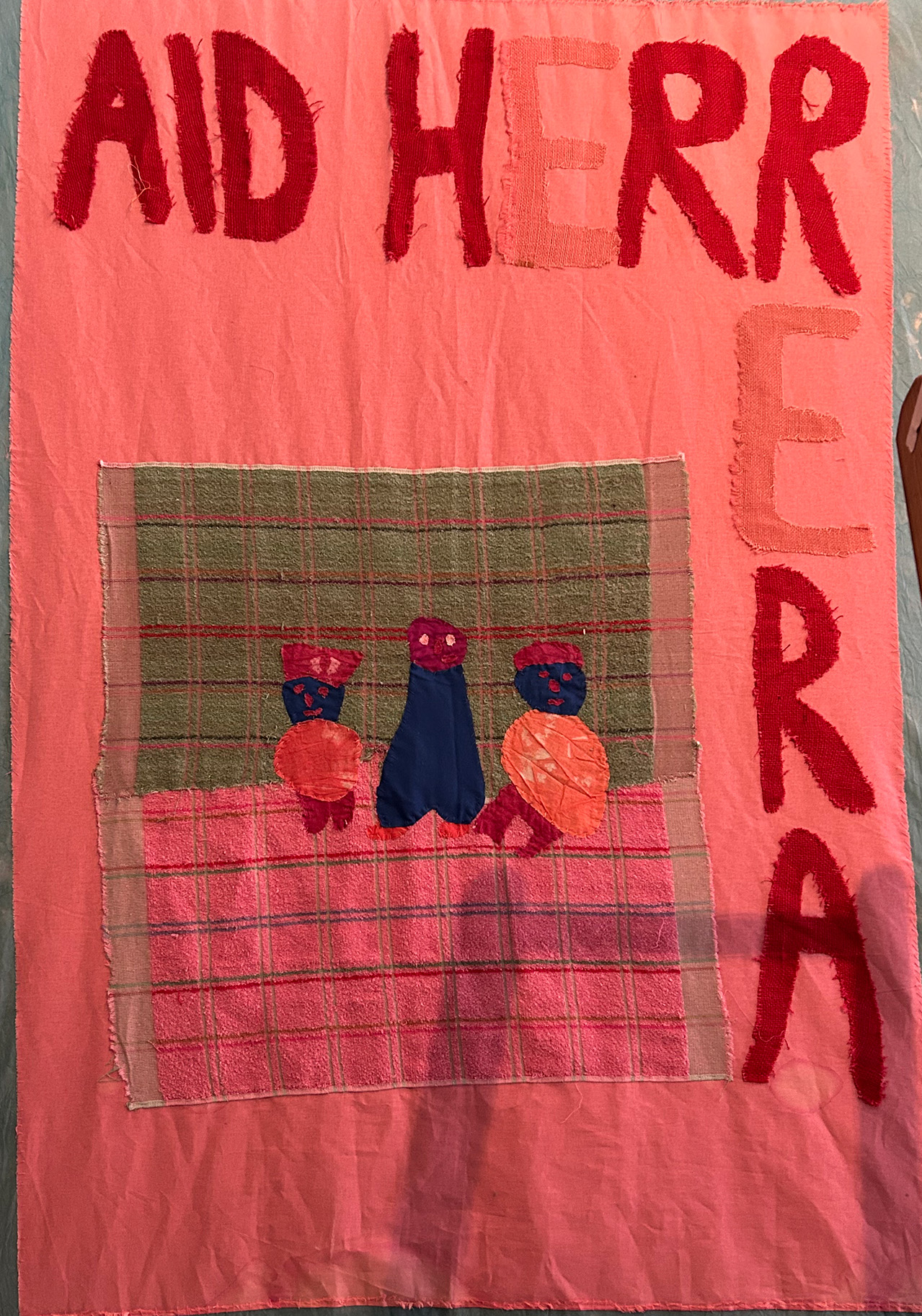
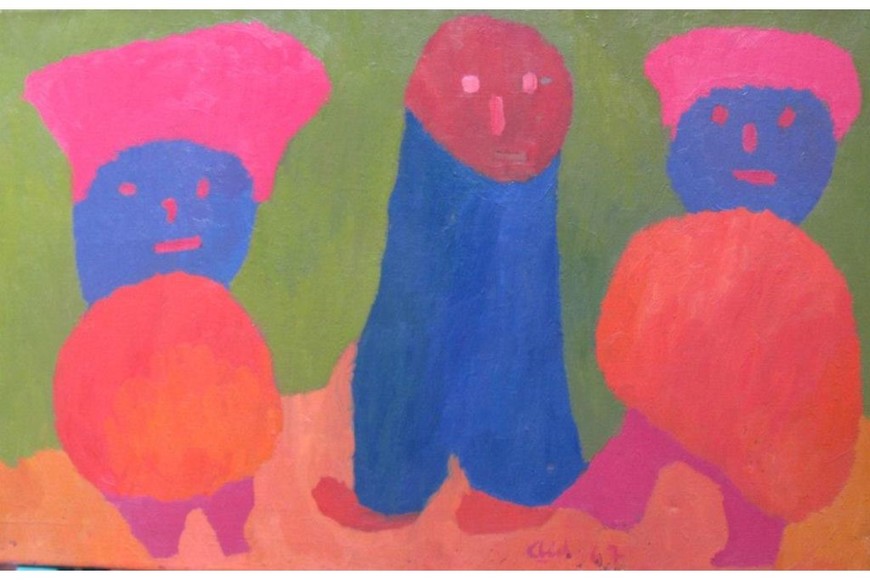
Untitled, 1967
Aid Lea Herrera (Argentina, 1905 – 1993)
Aid Herrera was an influential, self-taught Argentine painter, draftsman, and engraver. Her artwork is highly regarded for its spontaneous nature and poetic integration of organic forms. She honed her talents in the workshop of her husband Juan Grela, and she painted murals with her husband in the northern area of Rosario in the late 1950s. While he gave classes, she quietly developed her own style and artistic journey. “I would draw objects on whatever piece of paper I could find. For example, I would take off my glasses and draw them, and then use them to make a face, eyes, all kinds of things. During the day I would sit in the courtyard and look at the walls, where the paint had fallen away, and see all kinds of shapes: faces, birds, plants. I would draw them in a notebook.” From the 1970s onward, Herrera gained widespread recognition. She had prominent solo exhibitions, showcasing her specialized work in colored woodcuts, engravings, and pastel drawings. Herrera famously prepared her fine colors and then applied them directly onto the canvas or engraving plate without any preliminary sketches. Her compositions often feature birds, plants, butterflies, and abstract human figures intertwined by soft, undulating lines. In her woodcuts (xilografías) and etchings (aguafuertes), she used colored pencils over the prints. When working with pastels, she left the underlying paper exposed, turning the raw support texture into an active part of the artwork.
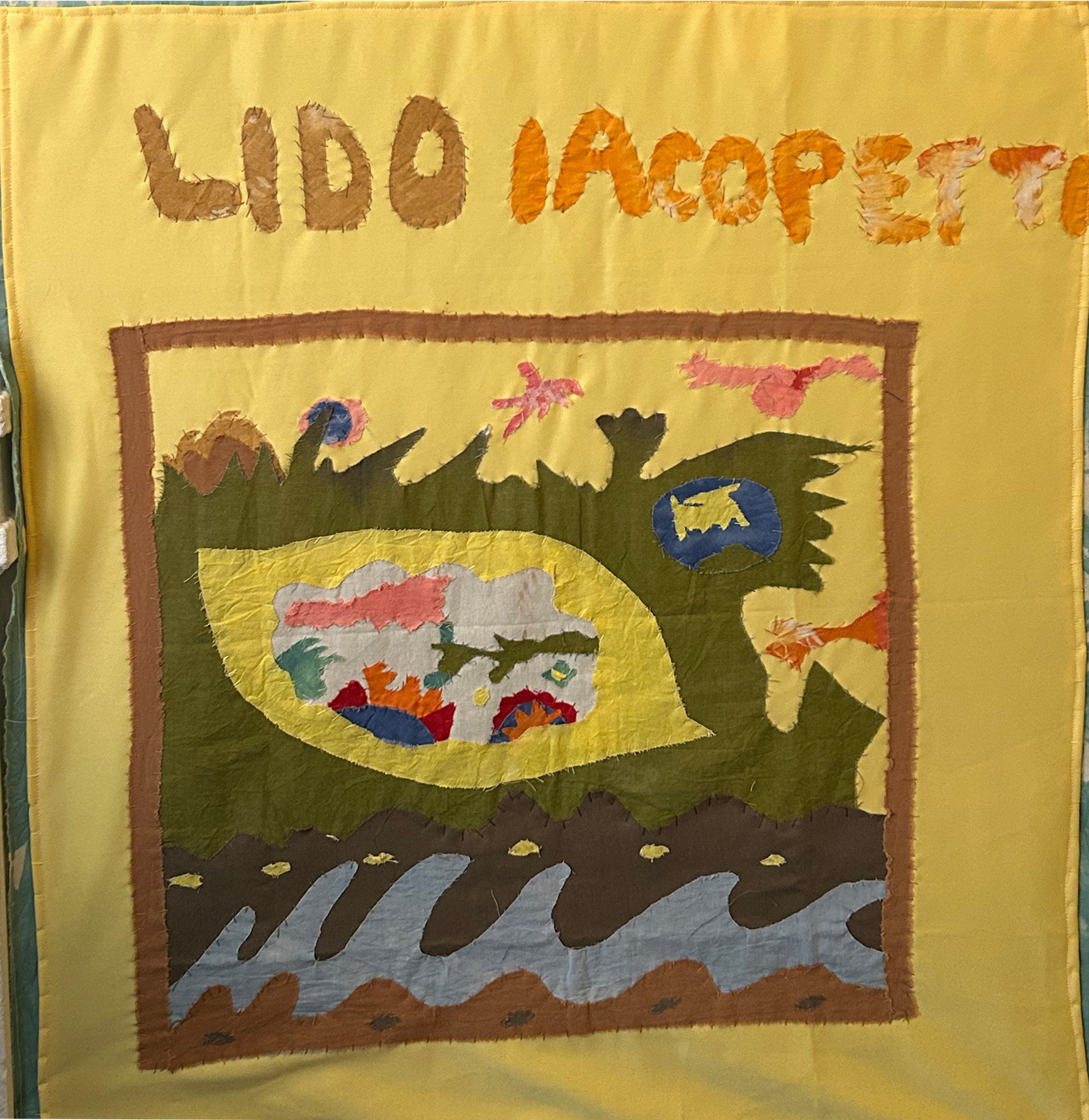
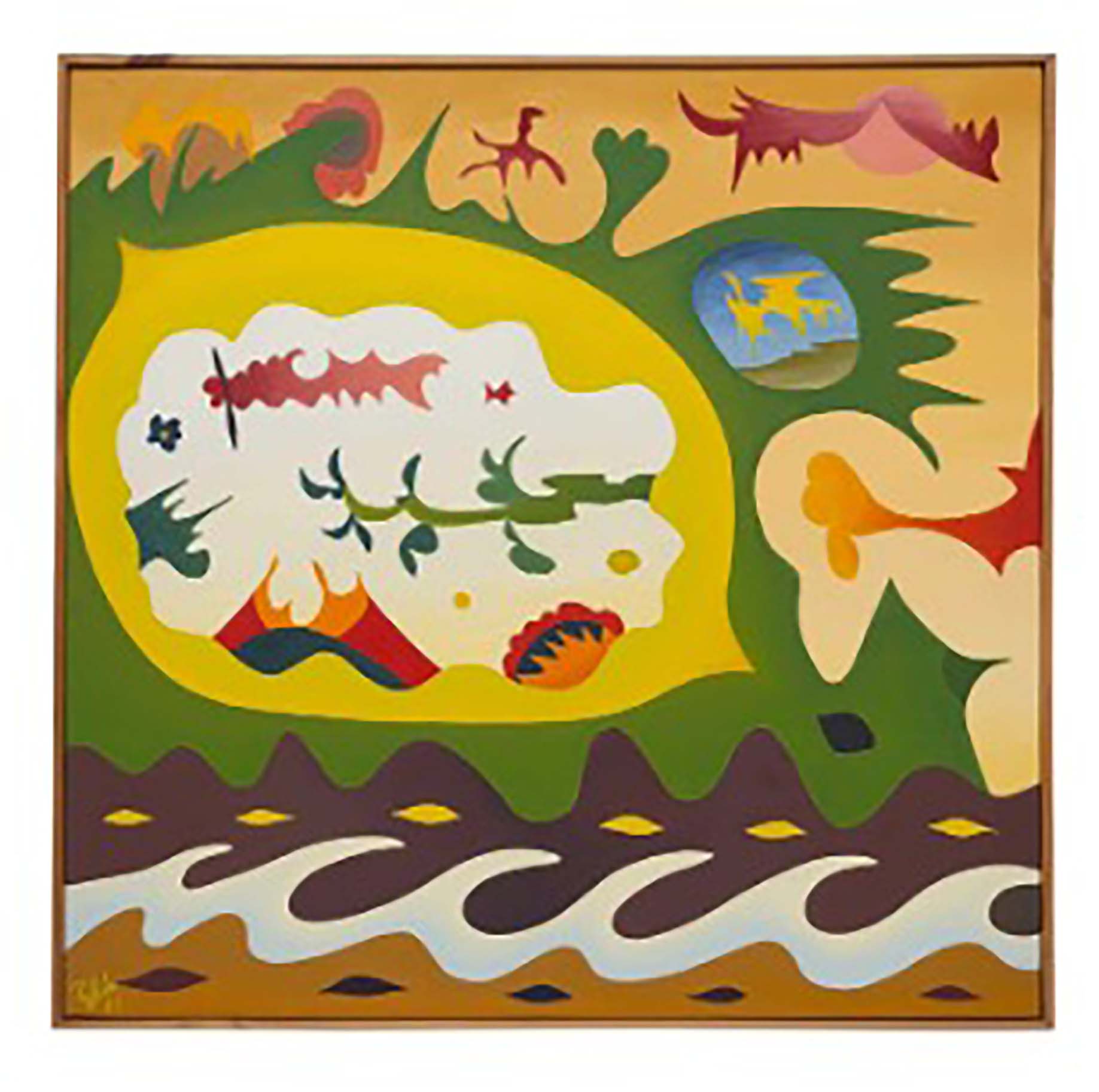
Pint 934 Limoesjos, 1985
Lido Iacopetti (Argentina, 1936 -2024)
A self-proclaimed popular painter, Iacopetti´s artistic career did not follow the usual path. Instead of exhibiting in large museums or fashionable galleries, he held exhibitions in non-traditional spaces, such as local shops, schools, bars, parks or even the streets. In 1969 he wrote a manifesto entitled Nueva Imaginación [New imagination], where he asserted his art as a means of transformation and freedom, and explained the pictograms that would populate his painting from that time onward, as symbolic representations of a new world. In his words: “these PICTOGRAMS are aggressive, dissonant, anti-pictorial for those who still handle a retrograde and expired vision. It is a painting that demands a new attitude, it is the NEW IMAGINATION, representative of a new world inhabited by love, freedom, dignity, peace, and the joy of living.” A devoted art teacher for several generations, he firmly believes in art and culture as an essential tool for social justice and growth. The title is an invented word.
Oil on canvas
100×100 cm
Museum of Modern Art of Buenos Aires. Acquired through the Acquisitions Committee, 2023.
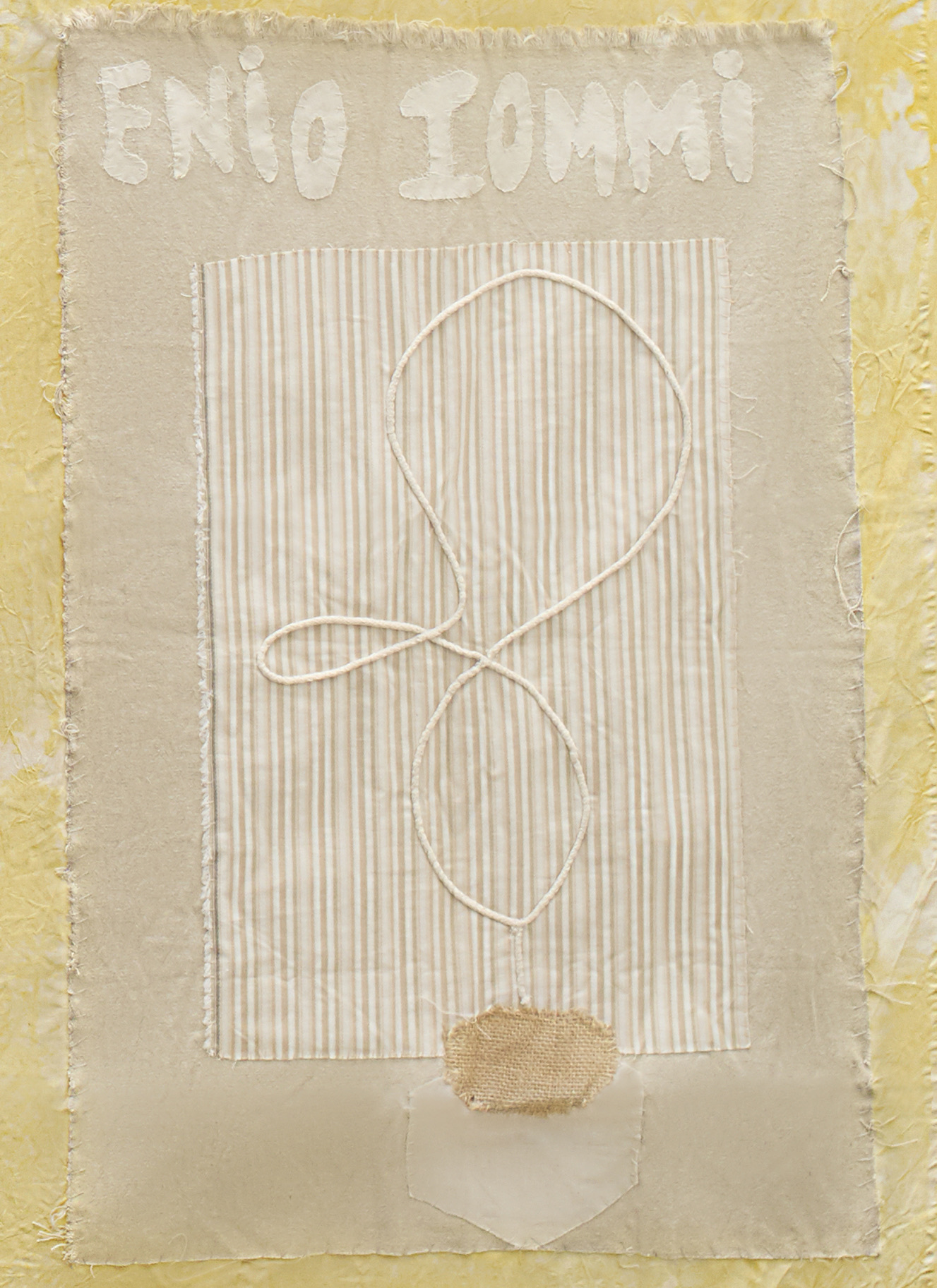
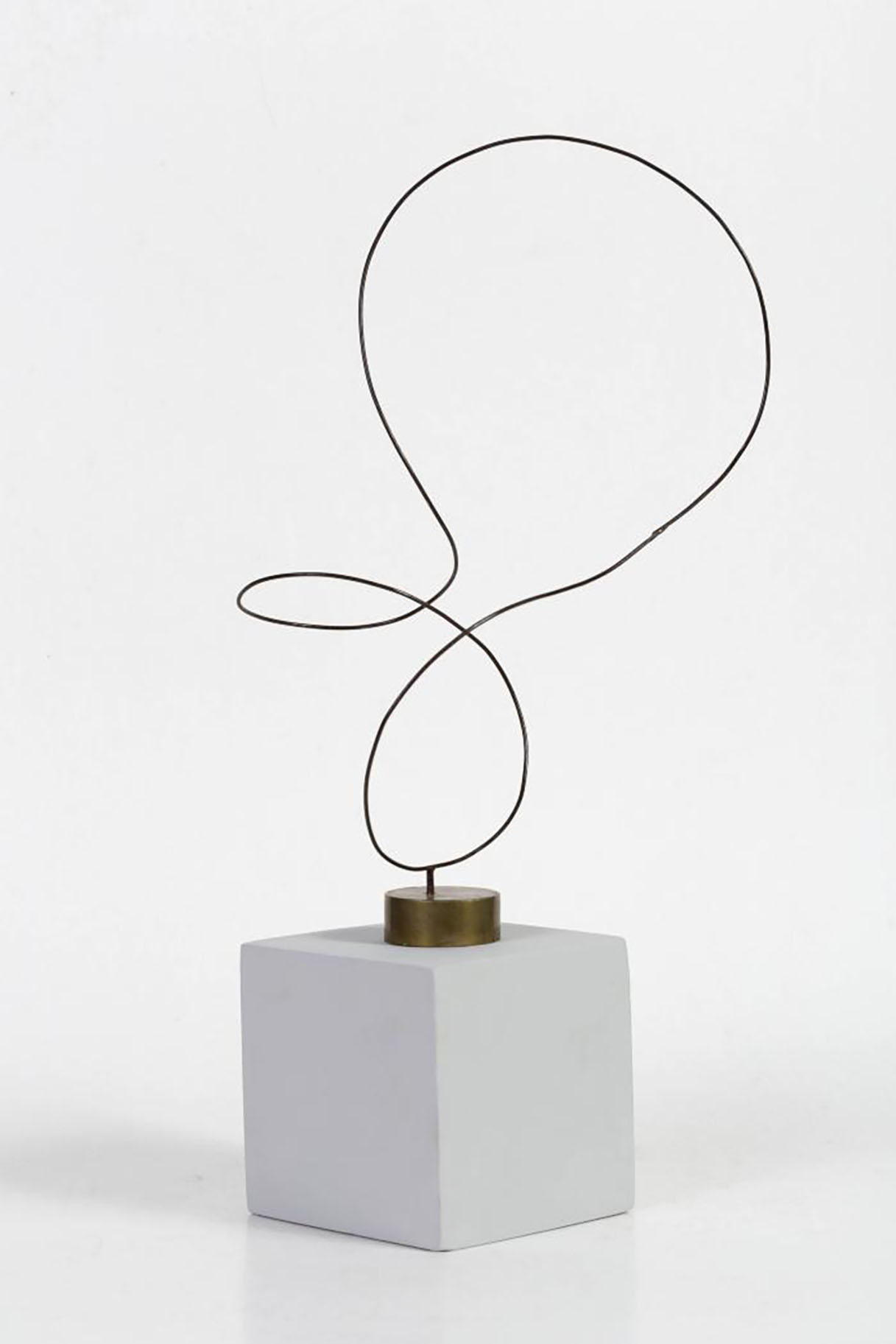
Línea continua, 1948
Enio Francisco Girola Iommi (Argentina, 1926 –2013)
Enio Iommi was an Argentine artist particularly well known for his work as a concrete sculptor. In 1946 he co-founded the Argentine branch of the international concrete Art Movement. “Whenever I find a material that is appealing to me, I look for it and save it at home for some time. After a while, I employ the material because I’ve already pondered on it. I envisage how the material appears in my mind and how my mind adapts to the material. I strive towards what I want to do. If an image appears, so be it. If nothing shows up, then off to trash. Beware! Because trash is also good! ” His sculptures emerge from simple shapes, circles, squares, triangles and ellipses, lines that desire to be a sculpture – or a sculpture that wishes to be a line in space. – Enio Iommi’s Línea continua (1948) winds flows in space, establishing its own way of existing.
Steel and bronze wire
26x15x18 cm
Museo de Arte Moderno de Buenos Aires www.enioiommi.com/biografa-1
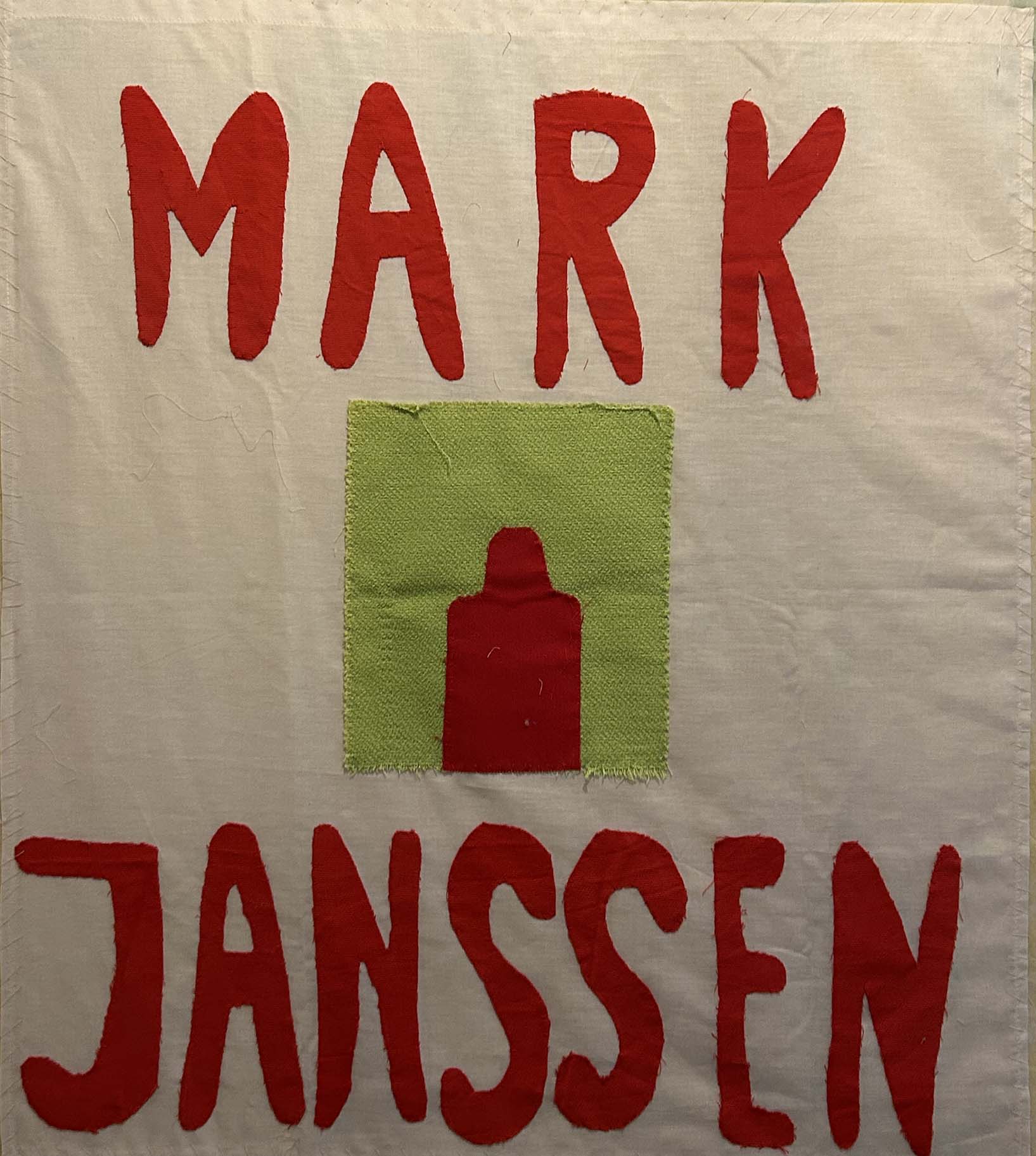
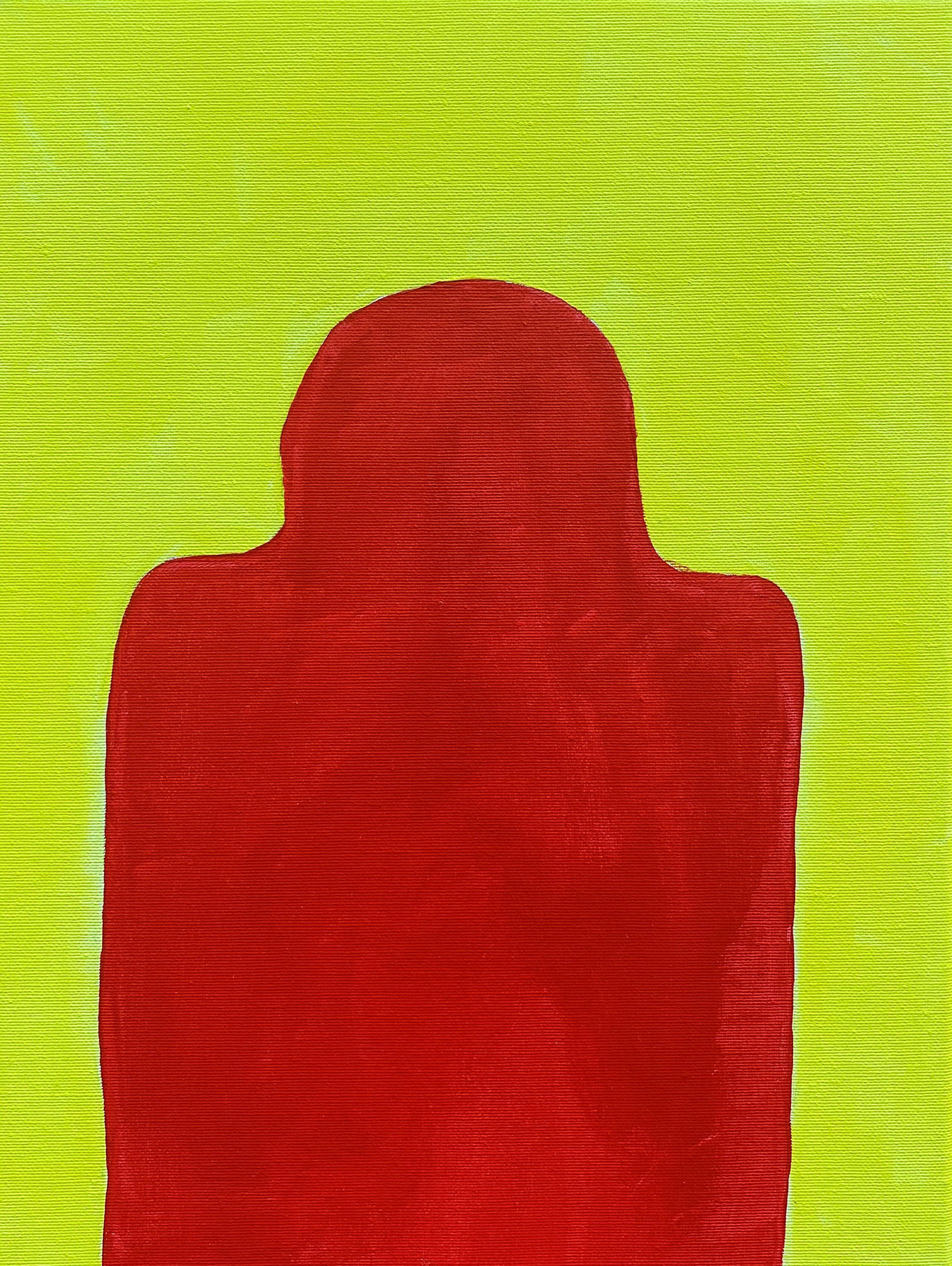
Rood Figuur, 2020
Mark Janssen (Netherlands, 1974)
“Usually, I have an idea of what a work will look like and then I develop that idea. But for my submission to the Limburg Biennale, I decided to make something without knowing beforehand what it would look like. I made the work very intuitively, simply developing whatever came to mind at that moment. This process was also quick: not too much thinking, just put the paint on! I’ve realised that speed is essential for me to get something done. I try not to overthink things, because that slows down the process. The viewer can form their own thoughts and ideas about it.” Eceiza was charmed by the abstract lines in which she could still recognize the human body.
Limburg Biennale, Marres, 2020
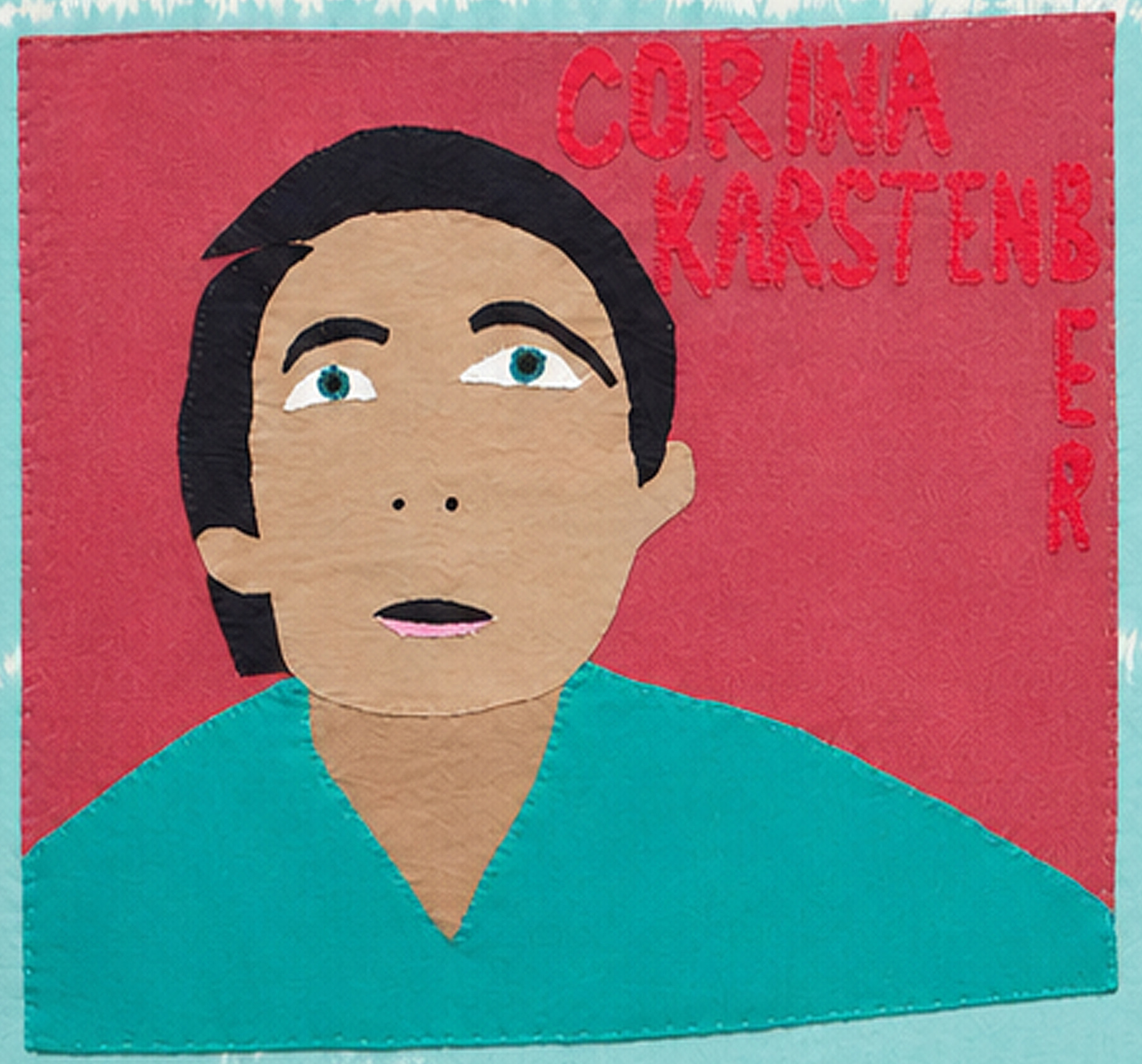
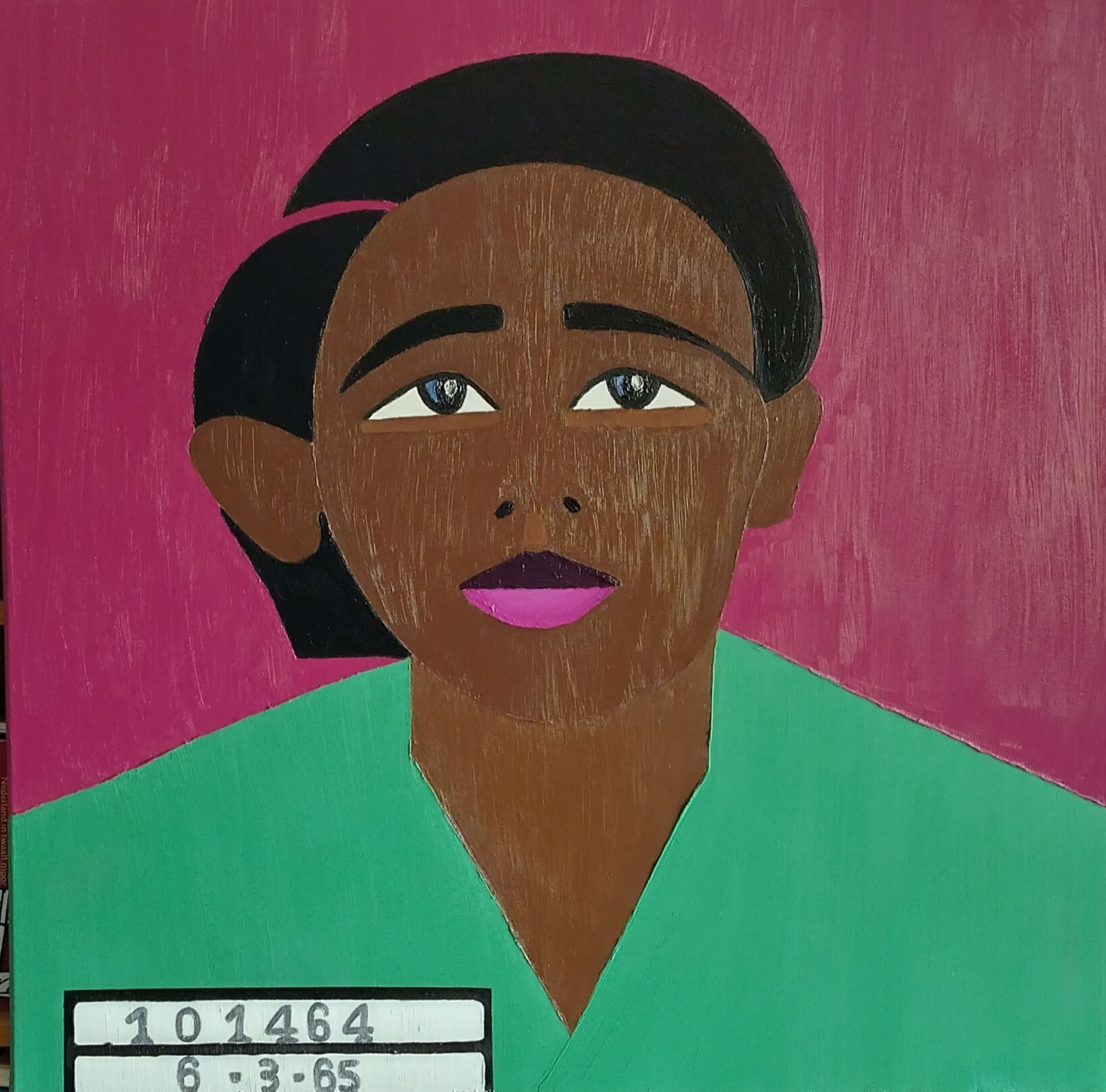
I am not Sorry – Doris Payne, 2024
Corina Karstenberg (Netherlands, 1967)
Karstenberg is a contemporary Dutch artist, cultural historian, and human rights advocate whose work focuses heavily on global human rights, cultural identity, and social justice. Her art functions as visual storytelling, typically incorporating distinct cultural and religious symbols to highlight the personal narratives and struggles of her subjects. This work portrays Doris Payne, a criminal whose whose career spanned six decades full of stolen diamond rings, spectacular arrests and multiple identities. In 2013, a documentary film was made about her life, entitled The Life and Crimes of Doris Payne (2013). In it, Payne describes in detail many of her crimes, from the earliest thefts in her youth, up to her arrest in 2011, at age 80, for stealing a diamond ring from a Macy’s department store. Eceiza found her work in the booklet of the 2024 Limburg Biennale and was drawn to the attitude suggested by the title I am not Sorry – Doris Payne.
Limburg Biennale, Marres, 2024
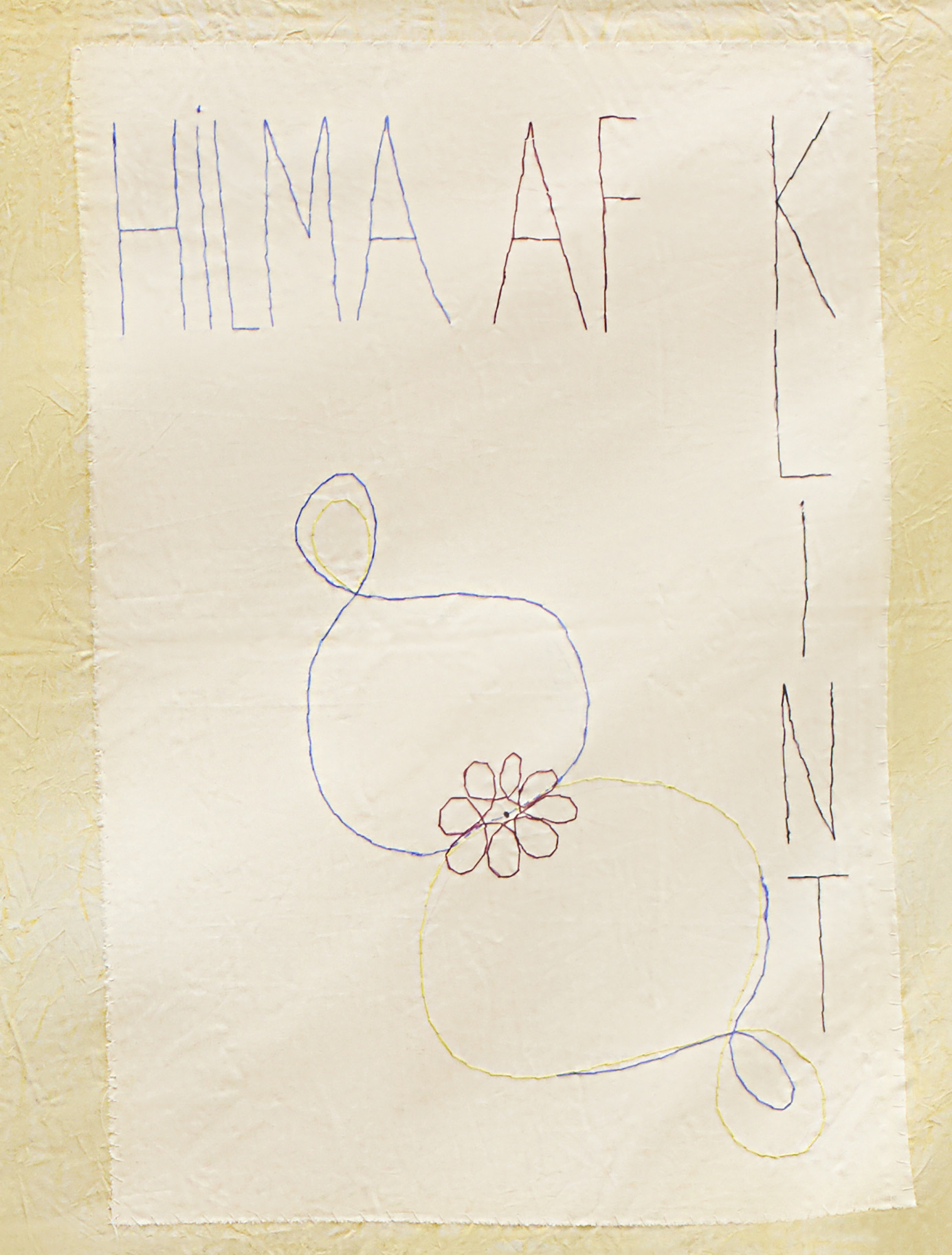
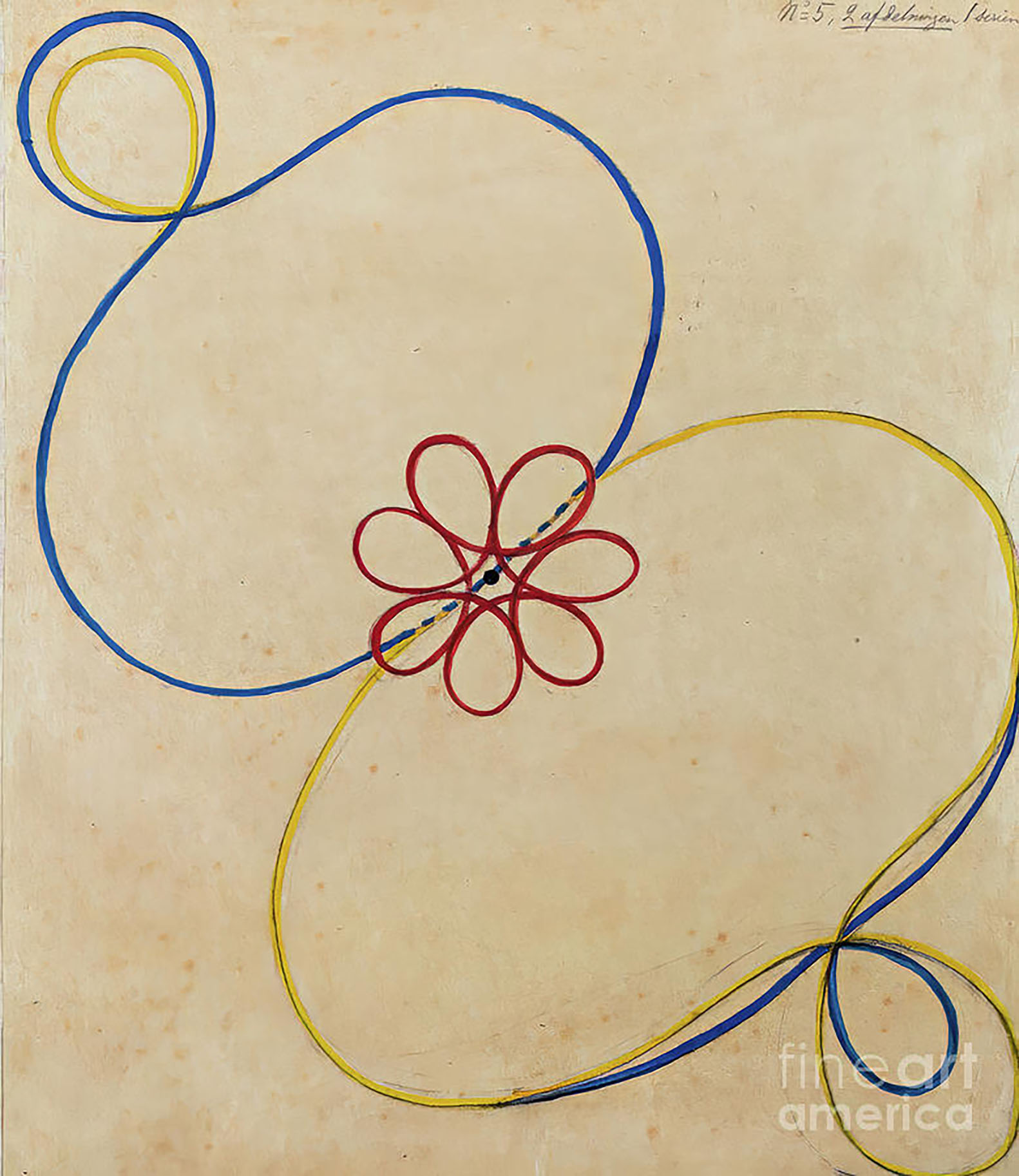
The Seven Pointed Star (Sjustjärnan) no 5., 1908
Hilma af Klint (Sweden, 1862-1944)
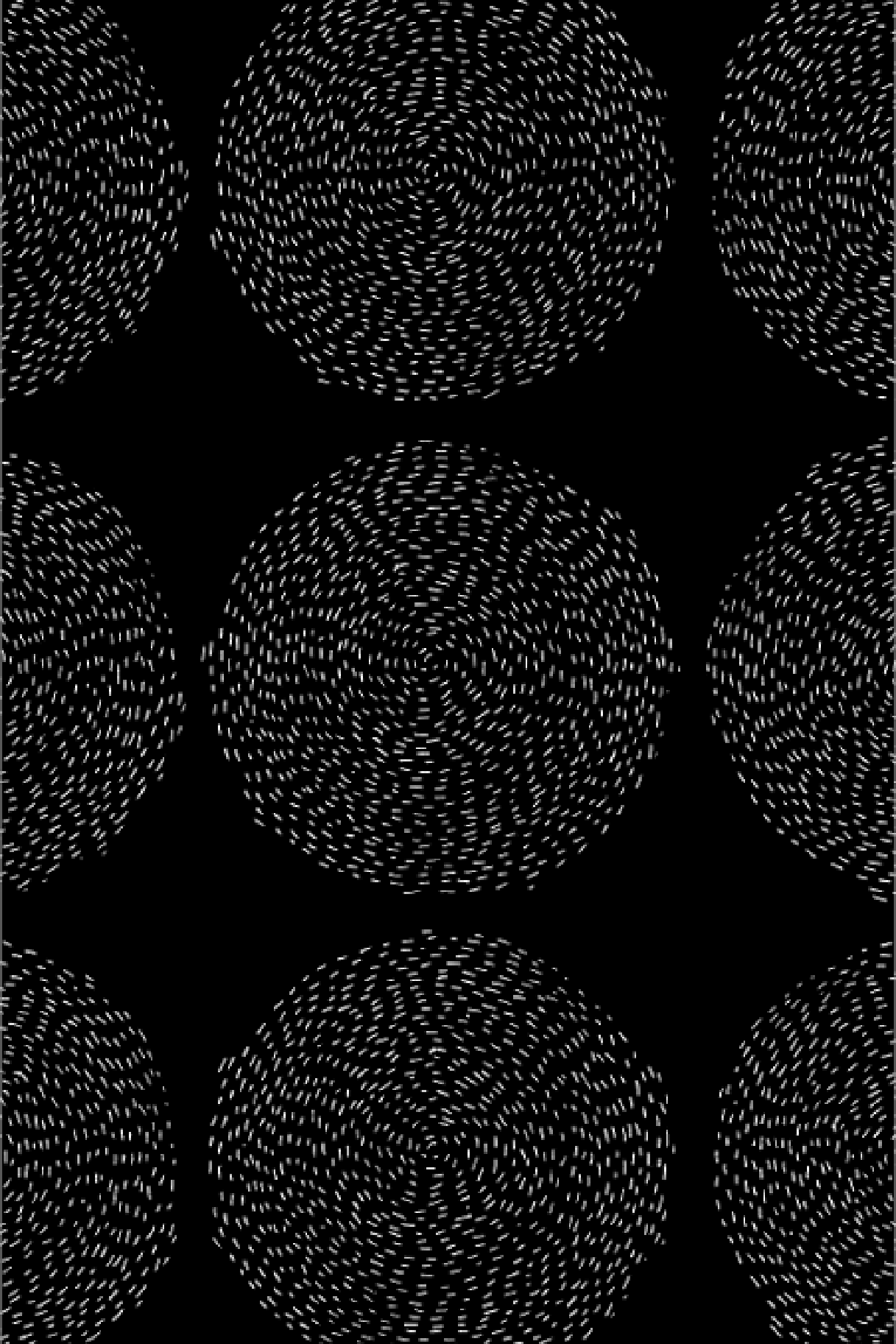
The Swedish painter Hilma af Klint is regarded as a pioneer in abstract art, as well as an extraordinary female artist of the 20th century. Her lucid lines and soft colors condense energy in minimal lines and reveal her love for nature, mathematics and spirituality. The artist stipulated in her will that her large body of work consisting of over one thousand works and 125 notebooks was not to be shown until 20 years following her death. In the 1980s, her work gained new appraisal. Eceiza views Af Klint’s circular shapes as mirroring the precision of the hand of a compass, now sewn into the fabrics with equally fine needles.
Tempera, gouache, and graphite on paper mounted on canvas
75.5×62 cm
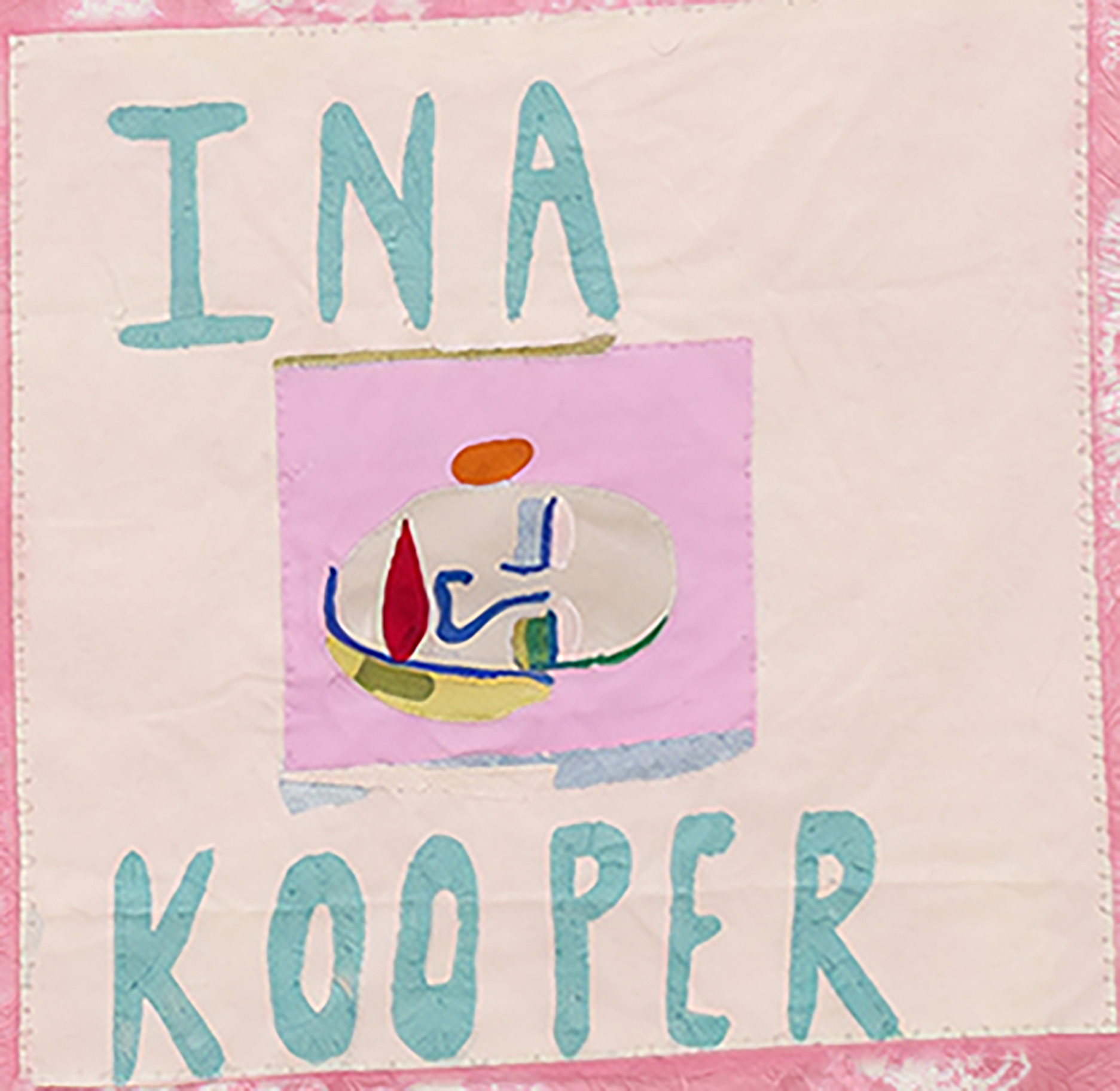
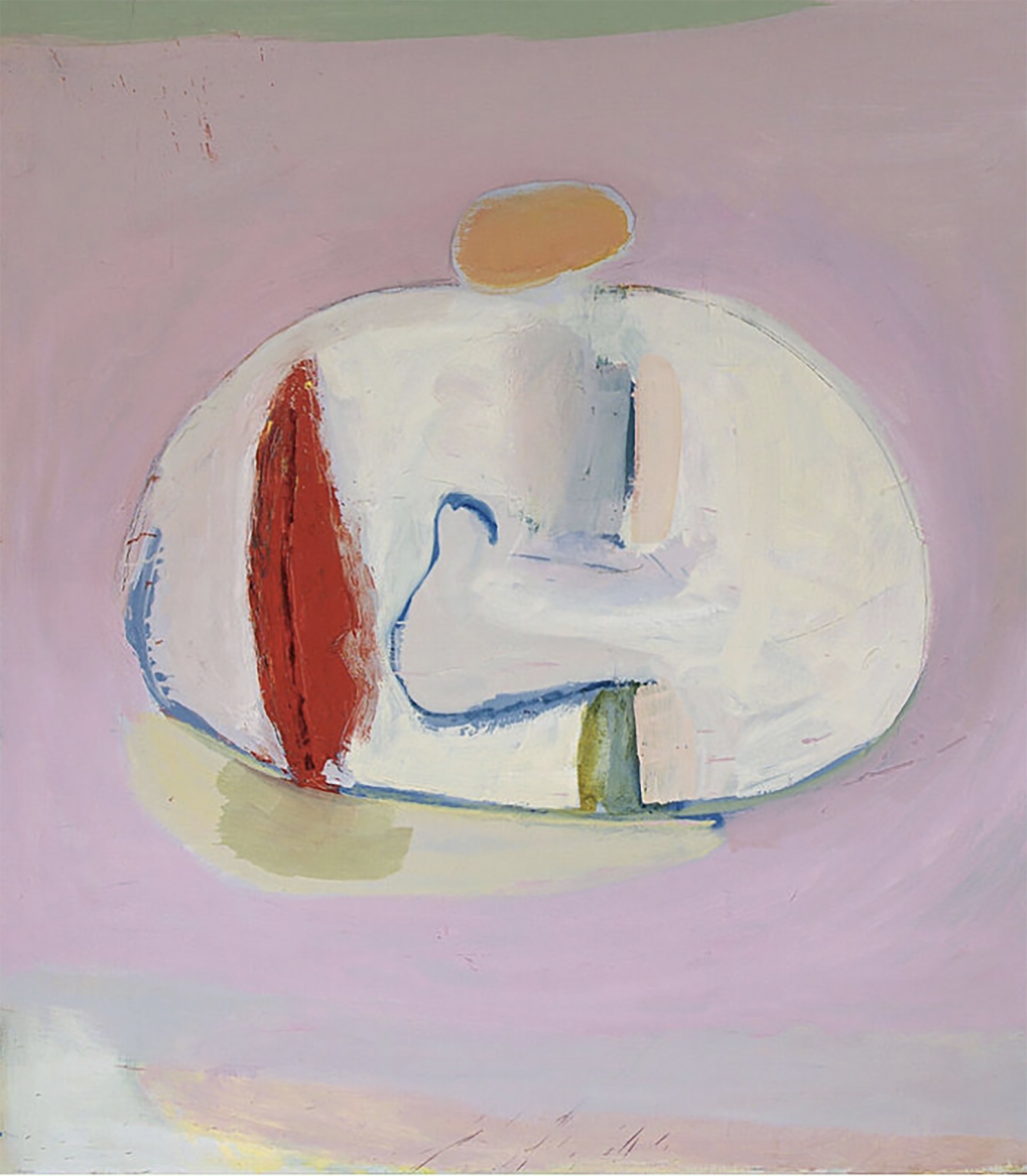
Let it Be, 2005
Ina Kooper (Netherlands, 1945)
Ina Kooper’s paintings are devoted to fragility. They are about fear, insecurity, but also human strength, and resilience. Eceiza chose this work for its sculptural quality and static and simple shape. It reminds her of the heads by Aldo Paparella’s, which is why she placed the work sideways on the textile hangings. The work also suggests a counterpoint to Tarsila do Amaral’s Abaporu whose feet are grounded, whereas here the head is trying to touch something.
Oil on canvas
125 x 110 cm
Limburg Biennale, Marres, 2024 www.kooper.nl
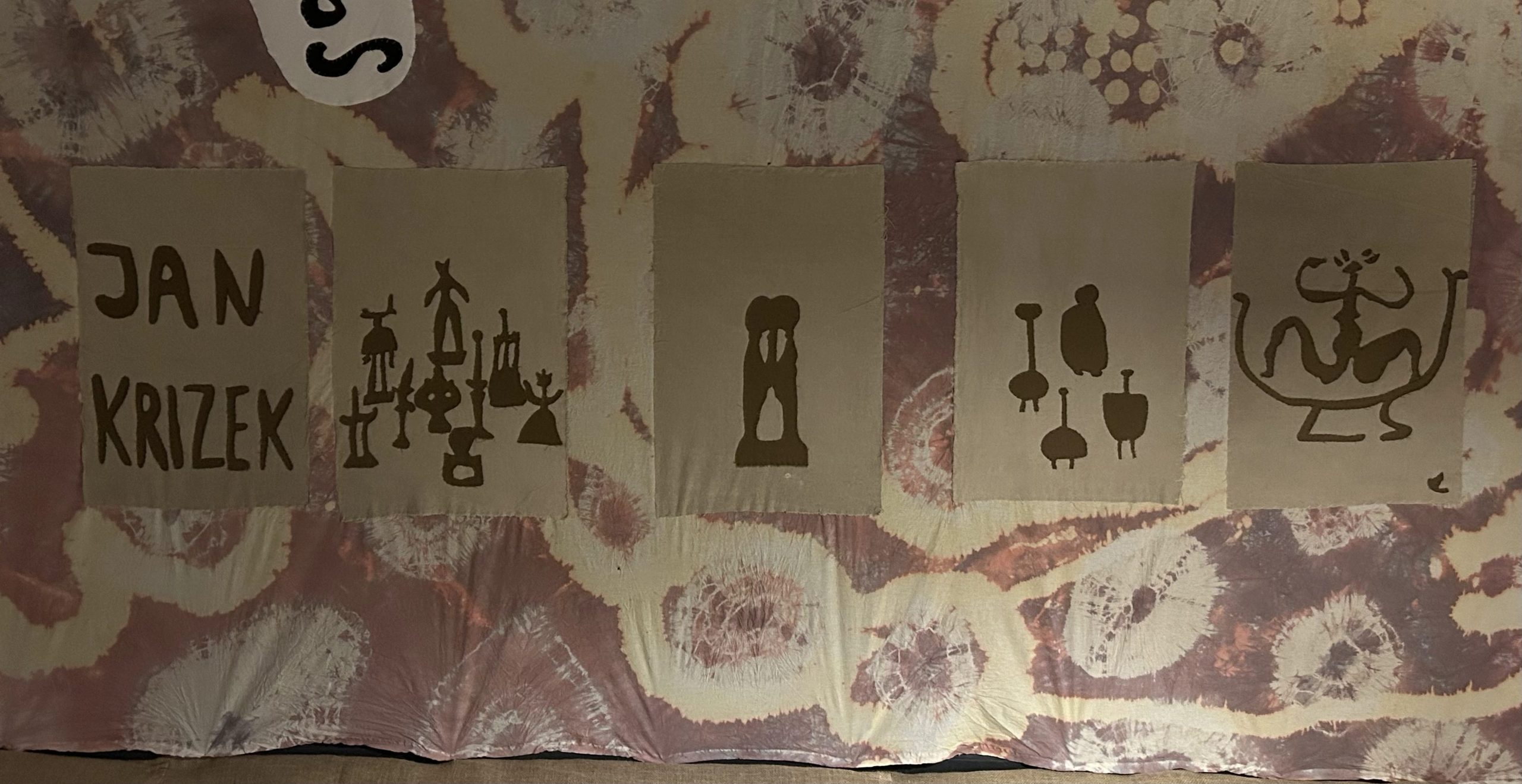
Untitled
Jan Křížek (Czech Republic, 1919 – 1985)
Jan Křížek was an exceptionally original and solitary Czech-French sculptor, painter, and printmaker. Though initially trained academically, he is best known for his raw, highly individual contributions to the postwar Parisian Art Brut and Surrealist scenes. During the World War II years, he worked with stonecutters and engaged in dense self-directed study. His interests spanned an incredibly wide range of subjects, from anatomy and architecture to religious art and molecular physics. Lacking funds and a proper studio, Křížek collected rubble and demolition stones from Parisian construction sites to carve raw, totemic figures. His primitive stone carvings caught the eye of Jean Dubuffet, who exhibited them in 1948 in the basement of the Galerie Drouin under his Foyer de l’Art Brut. His distinctively raw aesthetic also attracted praise from prominent avant-garde figures like Pablo Picasso (with whom he worked in Vallauris), André Breton, and Charles Estienne. Křížek participated in surrealist group activities and exhibitions bridging contemporary art with Celtic and archaic spirits. When space or material constraints prevented him from sculpting in stone, Křížek pivoted to drawing, gouache, linocuts, and lithographs. These works featured fleeting, expressive silhouettes and faces—particularly female forms—treated with the structural mindset of a sculptor. In 1962, following a denunciation regarding his irregular immigration status in France, Křížek and his wife were forced to flee Paris. Deeply shocked, he destroyed a vast portion of the artwork he could not carry. The couple eventually settled in a remote, modest wooden house in Goulles (Corrèze), where Křížek lived a highly isolated life working as a beekeeper. He shifted into what he termed “speculative sculpture” (sculpture speculative): “I have managed to move things to the point that I no longer have to make sculptures, paintings, and drawings.”
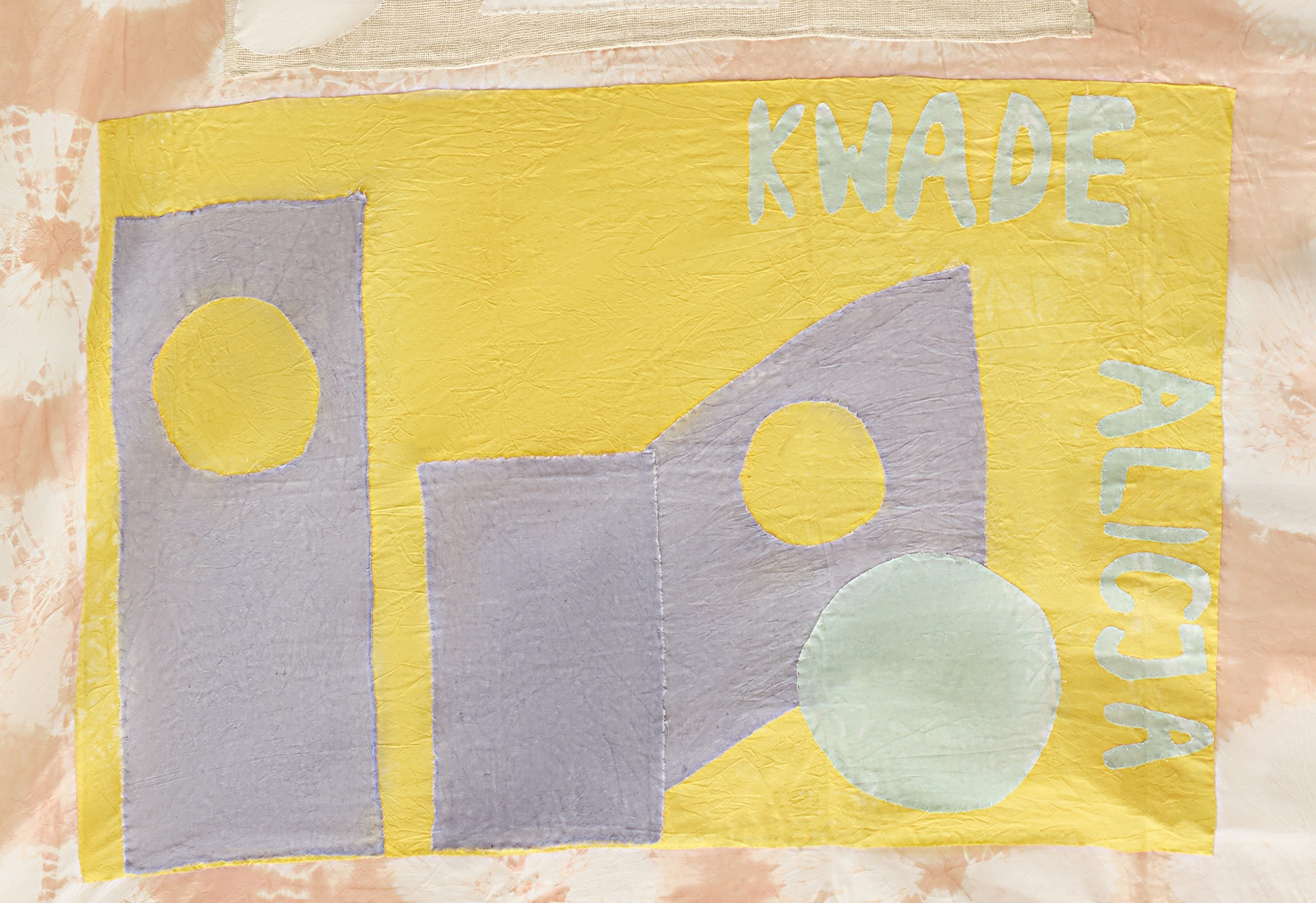
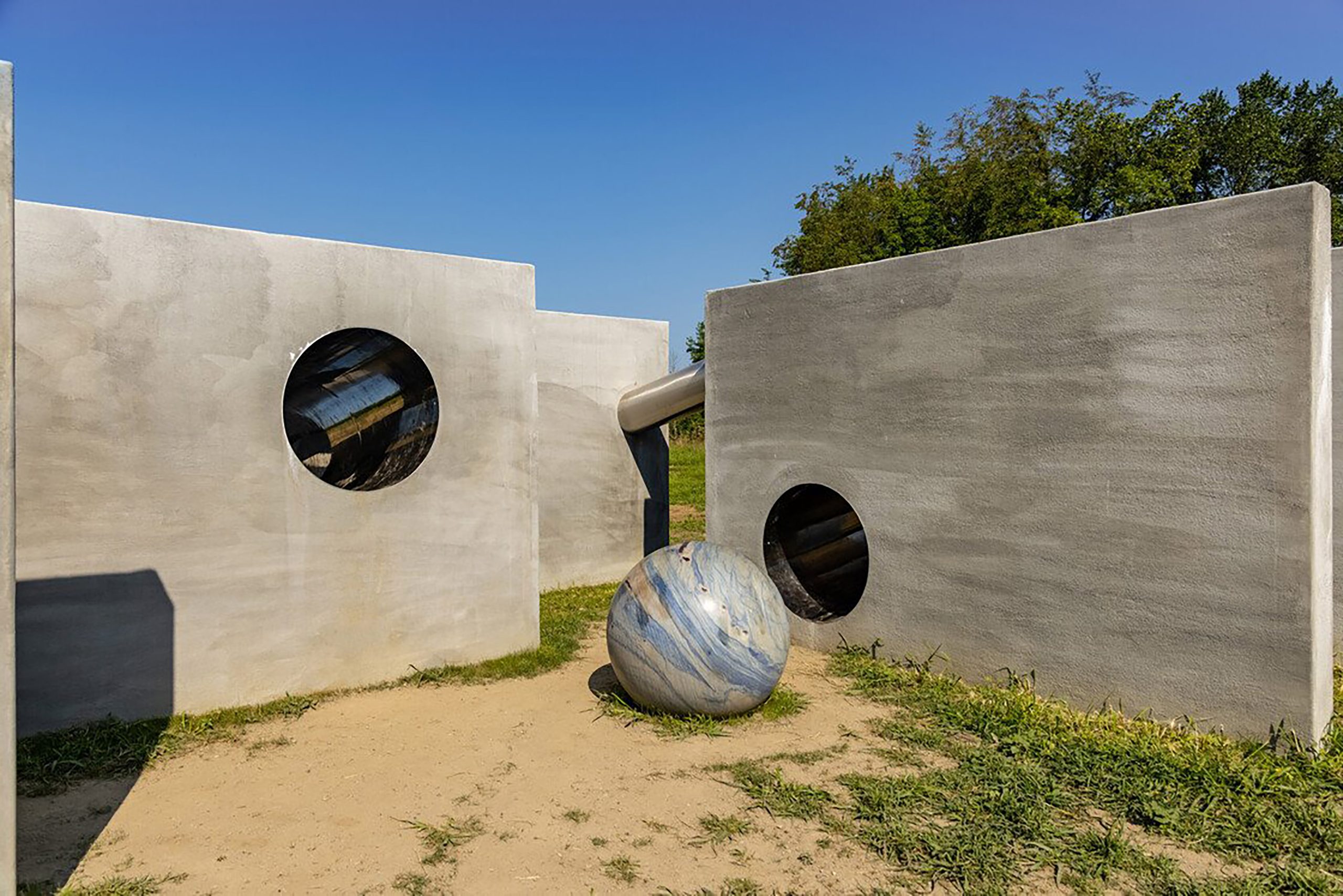
Tunnel Teller, 2018
Alicja Kwade (Poland, 1979)
Kwade is a Polish-German contemporary artist, whose sculptures and installations focus on the subjectivity of time and space. She made TunnelTeller in 2018. It is a maze-like installation, made from smooth concrete and punctuated with stainless steel large tubes. Large stone marbles are strewn around it. Celina Eceiza encountered the work when she was in residence at the Art Omi Museum in Ghent, New York.
Stainless steel, concrete, natural stone
243x1828x1300 cm
Art Omi, Ghent, New York alicjakwade.com/works/tunnelteller#image-7
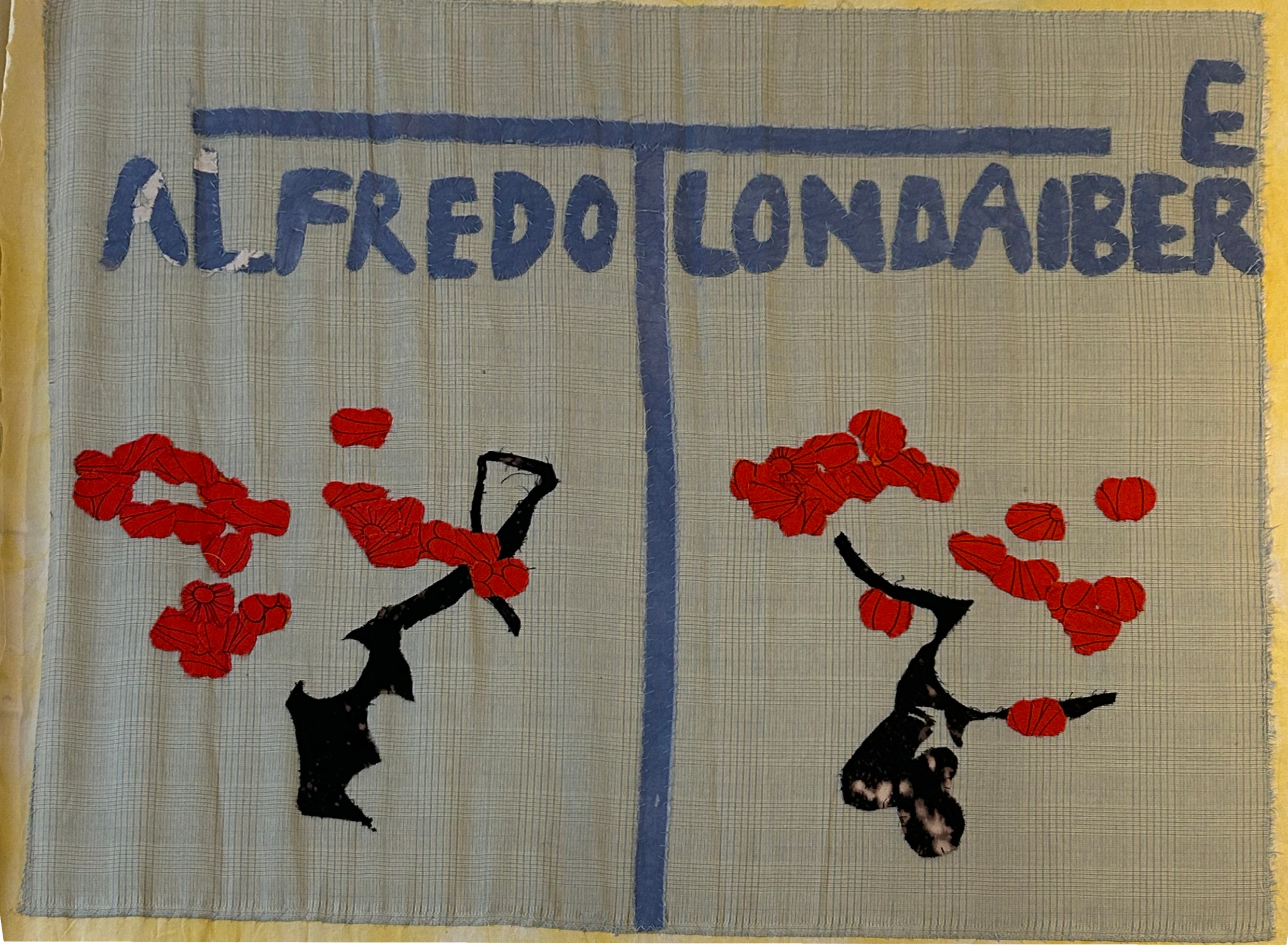
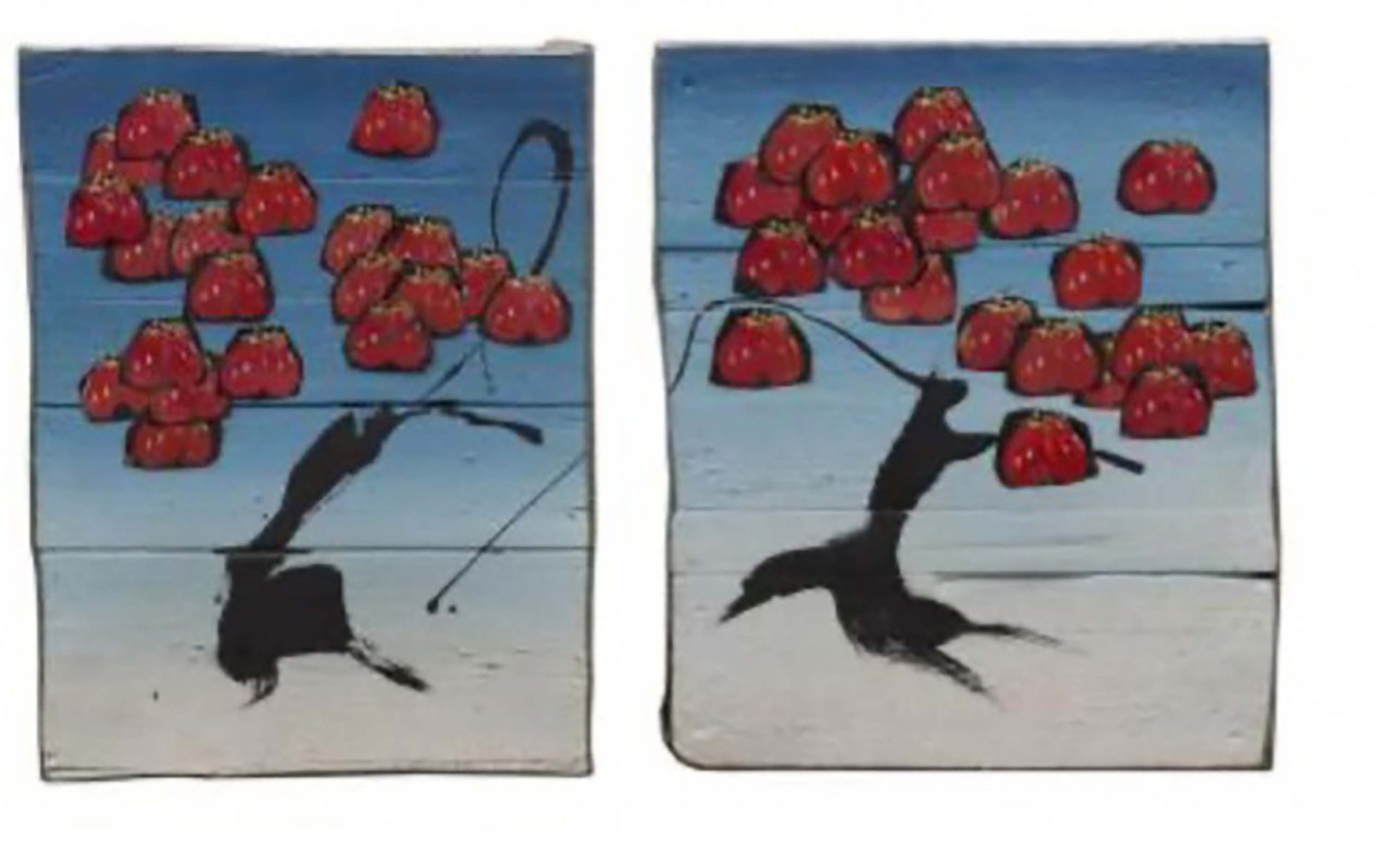
Sin título
Alfredo Londaibere (Argentina, 1955-2017)
Londaibere was an artist who searched for the spiritual in very common places. He did not adhere to a traditional, dogmatic religious institution, but his artistic philosophy and life’s work were centered on the sacred. His works were an eclectic mix of classic European art, primitive Christianity, baroque colonial painting, and pagan, Catholic and Afro-descendant beliefs. Painting gave him a field of research that he explored through diverse techniques and materialities which he used to revisit traditional genres. At the same time, he would produce very practical small works, including small, illustrated calendars. This practice offered a path to reach a spiritual state that became increasingly explicit in his themes and his vision of the world. Londaibere ultimately made painting a personal religion and a daily procession.
Synthetic enamel, acrylic, scraps of tin cans, and nickel silver edges.
39×61.5 cm
Museo de Arte Moderno de Buenos Aires. Gift of Fabián Burgos, 2002
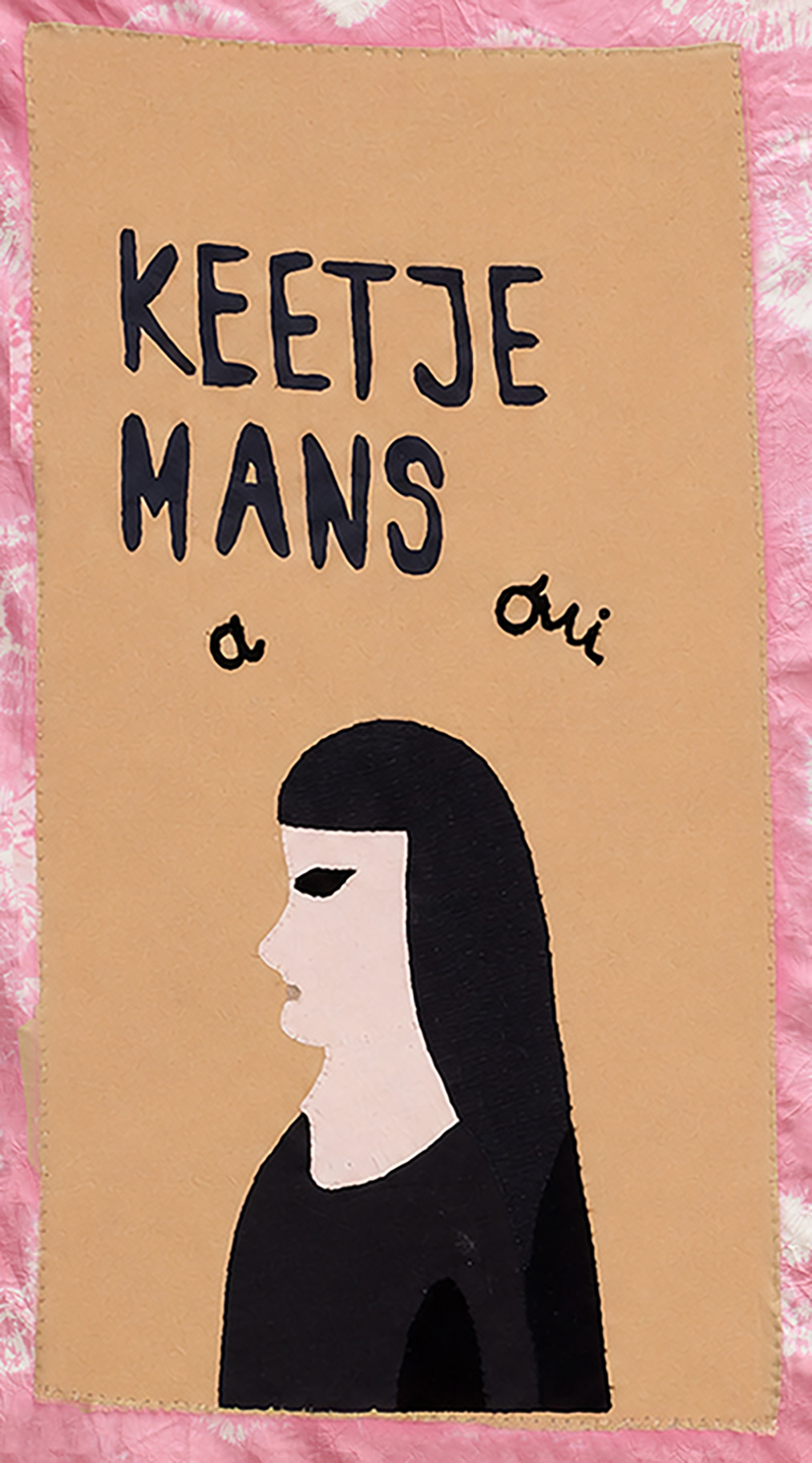
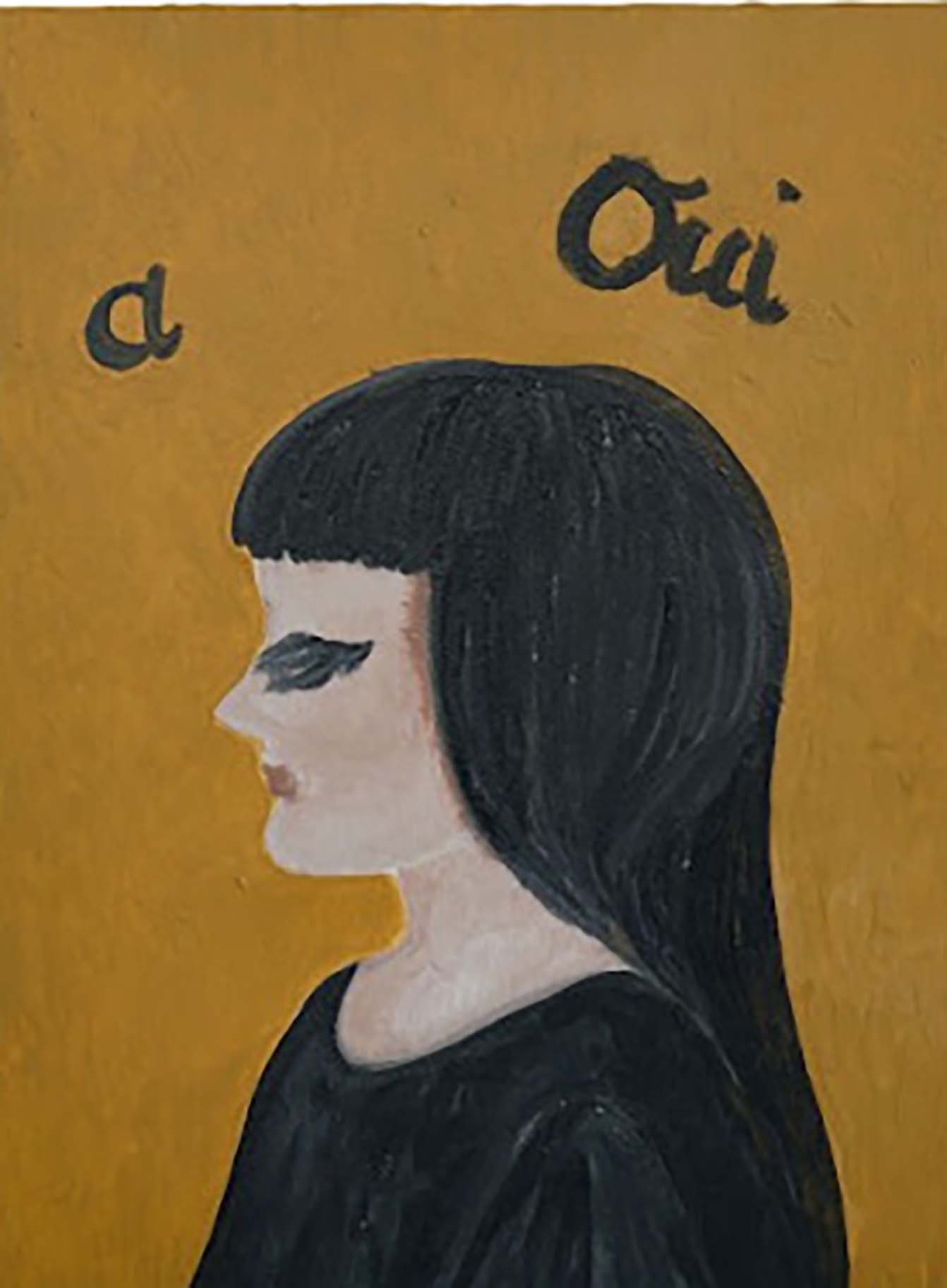
A oui, 2019
Keetje Mans (Netherlands, 1979)
The Maastricht artist Keetje Mans is known for works that combine the domestic with the mysterious. Mixing her pastel colors with black, her works hold some dark portent, prefiguring some dark foreboding or unknown danger. Her artistic process is intuitive, and messy: she paints directly on the canvas, without preliminary sketches. Eceiza admires A Oui for its psychologcal edge and atmosphere..
Acrylic on canvas
40×30 cm
Limburg Biennale, Marres, 2020 keetjemans.nl/work/a-oui-2/
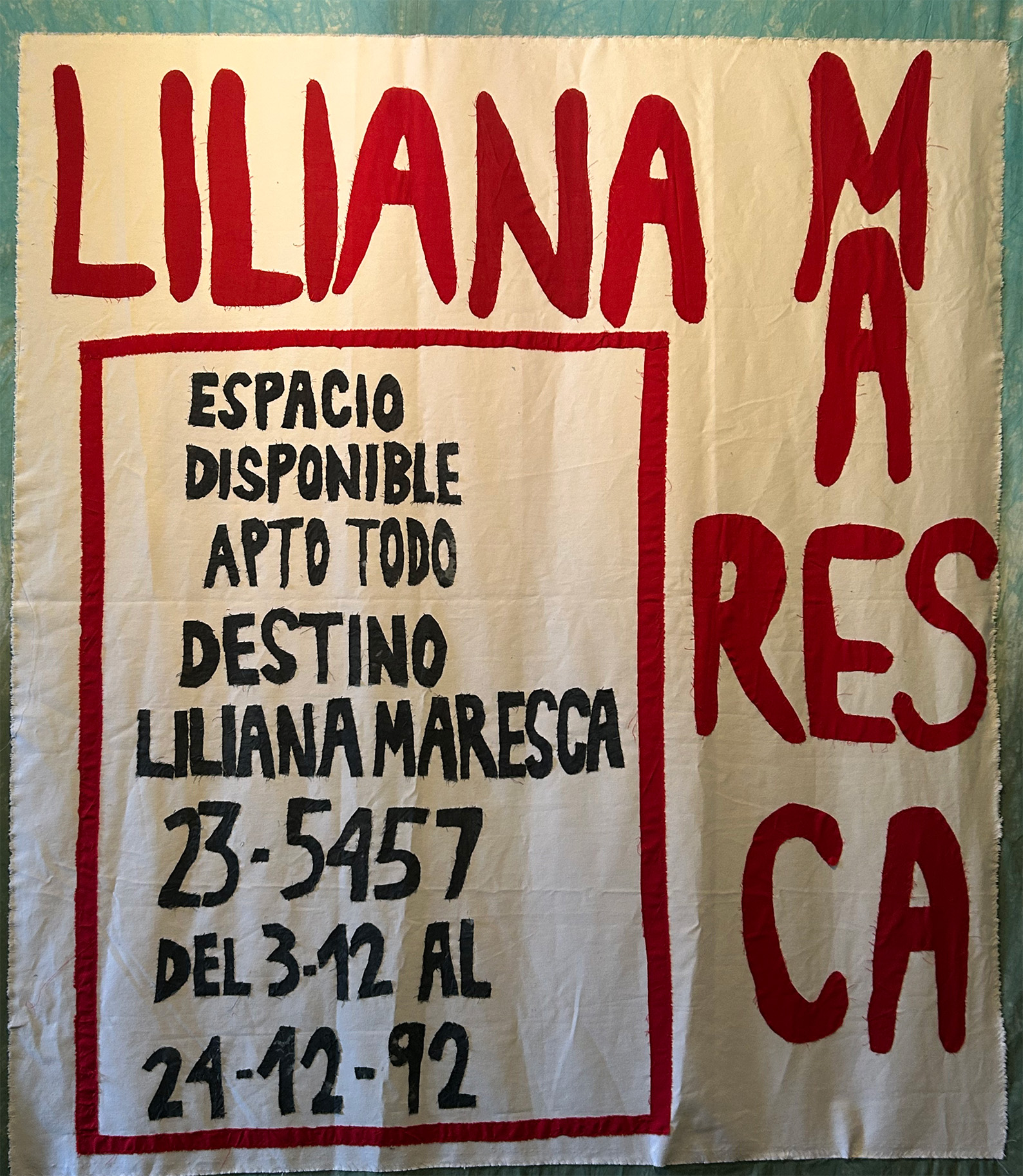
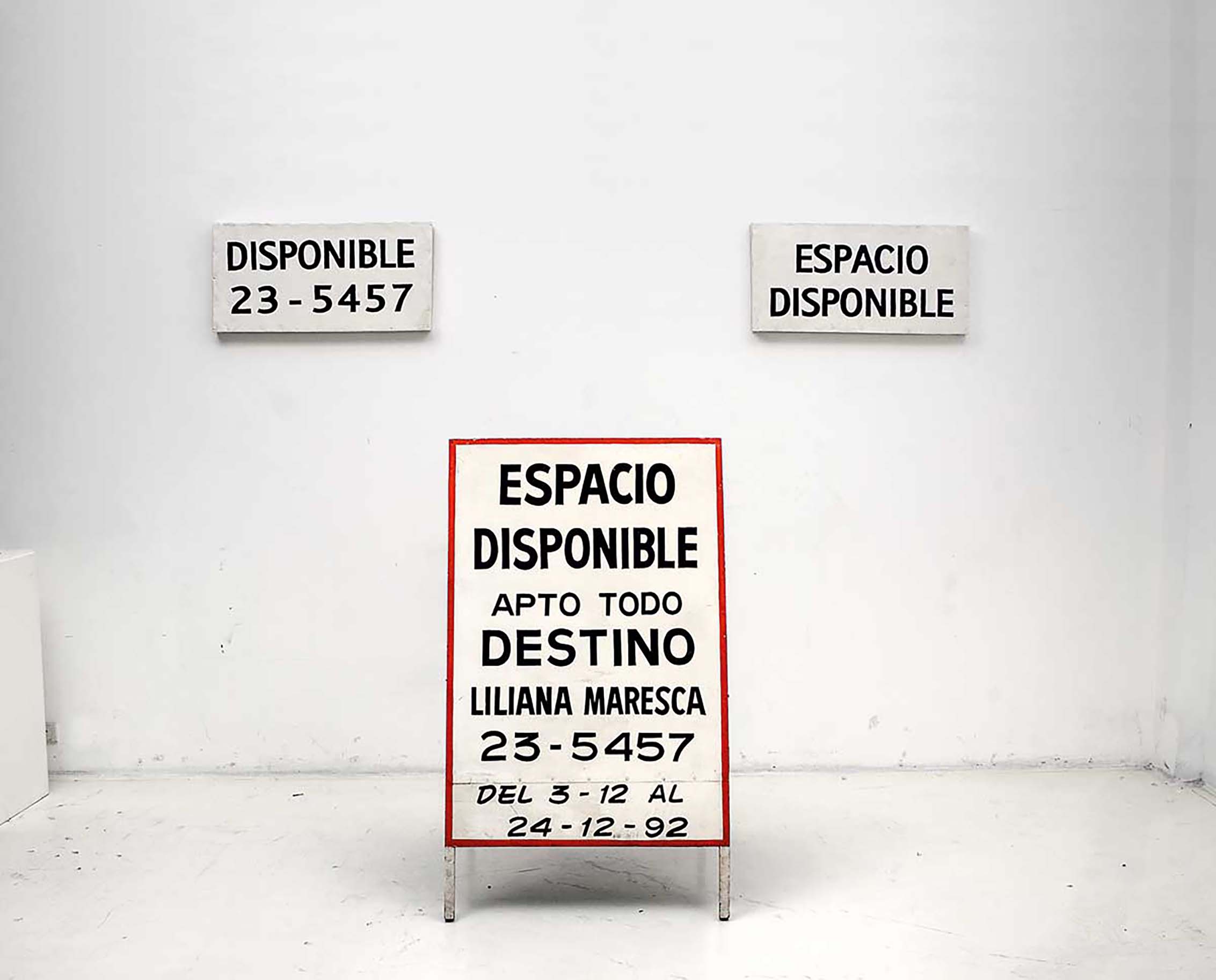
Espacio disponible, 1992
Liliana Maresca (Argentina, 1951 – 1994)
The works of Maresca cover a variety of styles including sculpture, painting, graphic montages, installations and performances. Having studied at the Escuela Nacional de Cerámica, she became a key figure in the artistic scene in the early 80’s. In 1985, she organized a group show entitled Lavarte meaning “wash yourself” in an automatic laundrette in Bartolomé Mitre Street. In 1990, the artist presented the installation Recolecta (Collects), which had the main theme of shopping carts like those pushed by vagrants on city streets. Painted all white or in gold and silver, the carts were meant to critique the suffering of the socially marginalized. In 1992, she created the installation of Espacio disponible (Space available). For this piece Maresca placed a signboard advertising the availability of the space ‘for any purposes’ and included her name and telephone number and two dates. By presenting an empty gallery, Maresca shifted the focus away from the artist as a mere manufacturer of tangible objects or consumer fantasies. The artwork became the open space itself. A few months later and with the help of colleagues, Maresca published in the magazine El Libertino 14 erotic photographs of herself under the title “Maresca se entrega – todo destino” (Maresca offers herself – for any use) suggesting a connection to the ad she had earlier presented and again including her telephone number. Both works revealed her interest in the performativity of the language of advertising and the expectations placed on the artist as a maker of objects and fantasies. The work remains one of the most iconic symbols of 1990s Argentine conceptualism and has been carefully recreated for retrospective exhibitions.
Installation of variable dimensions consisting of three signs
Private Collection
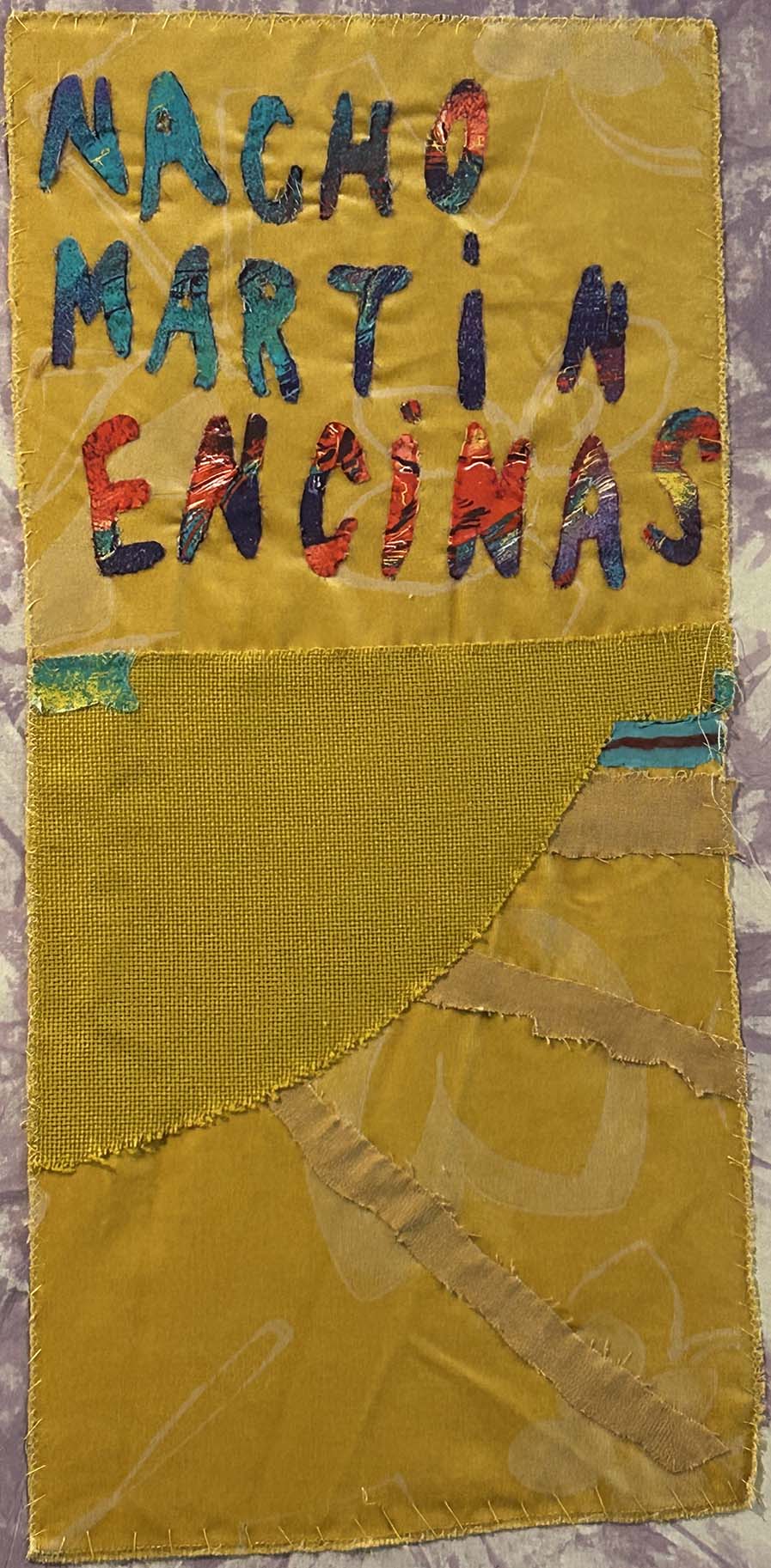
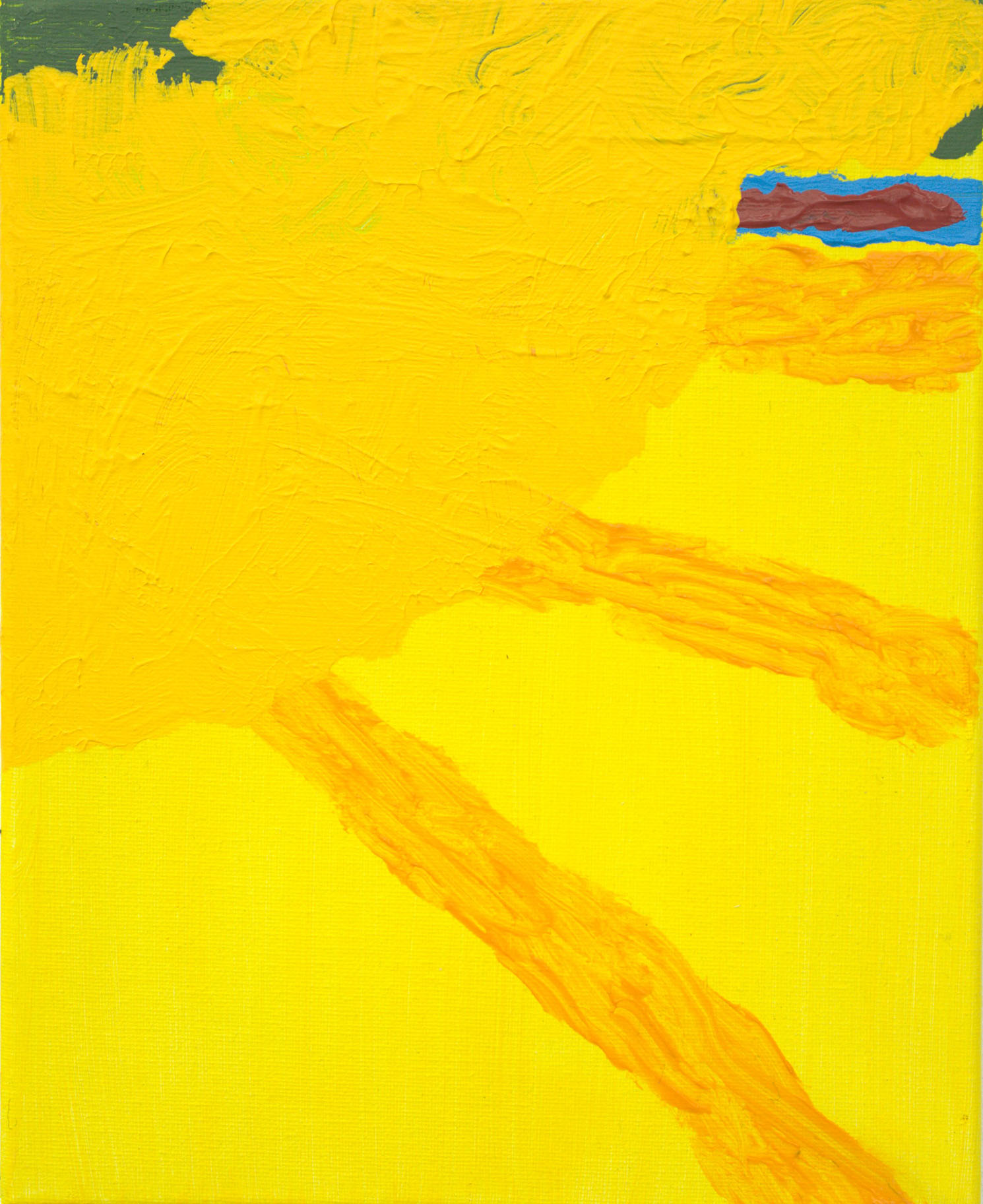
Untitled (Sunbath), 2022
Nacho Martin Encinas (Spain, 1994)
Nacho Martín Encinas (Madrid, 1994), studied Fine Arts at the Complutense University of Madrid and the University of Castilla-La Mancha. His work has been exhibited in TRACES (Kassel), Fundación Antonio Pérez (Cuenca), Kunsthhochschule (Kassel) and Espacio Kanoko (Cuenca. He has carried out several research residencies, including one at the Universität Kassel (2022-2023), during which he participated in the Documenta fifteen together with the research group Hypersituations. Since 2018 he has been a member of the collective Los Explayados, together with Ignacio Casero and Adrián Mena. Eceiza loved this image for its quality of making you feel the warmth of the sunbeams through the painting.
Limburg Biennale, Marres, 2022
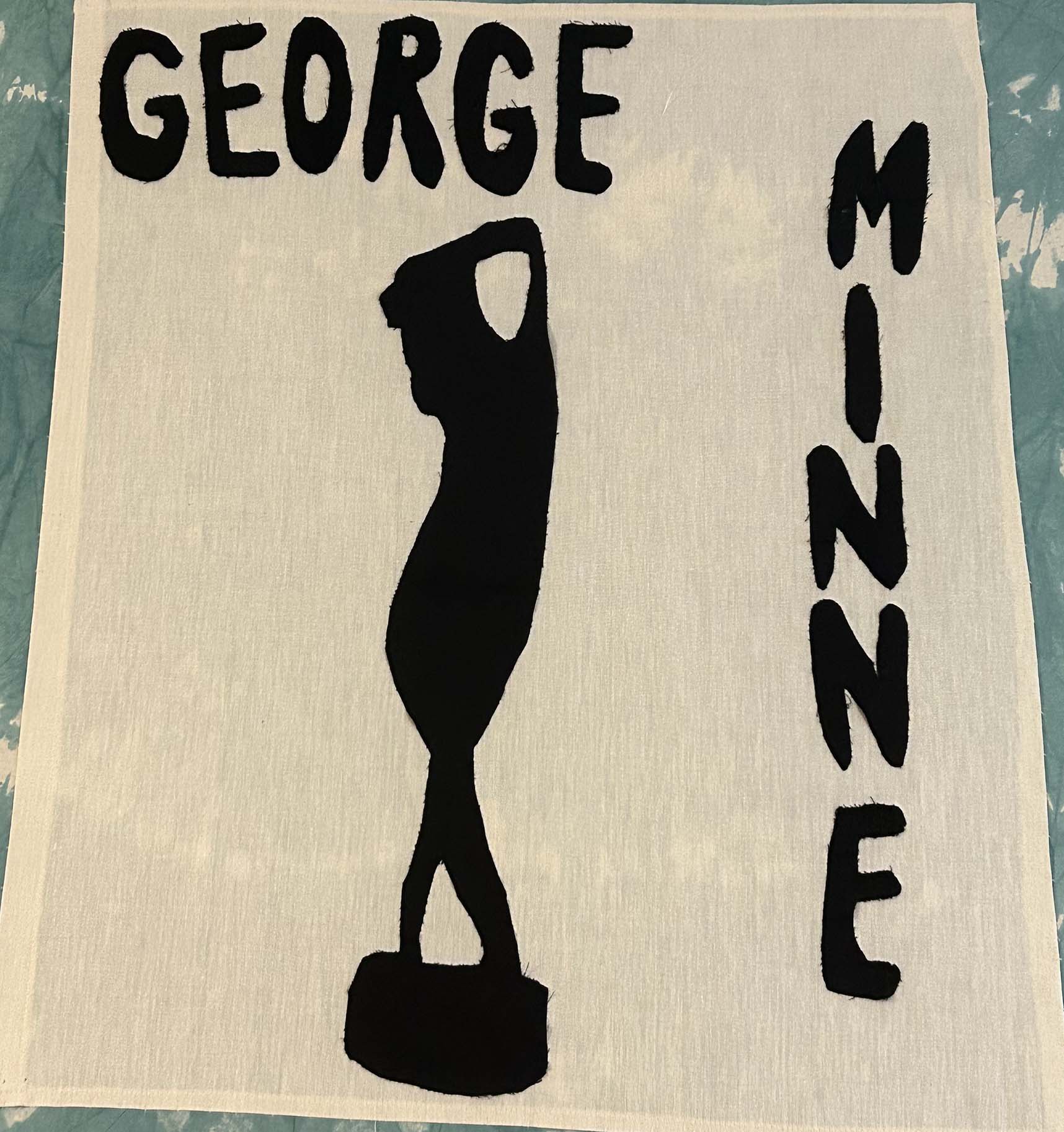
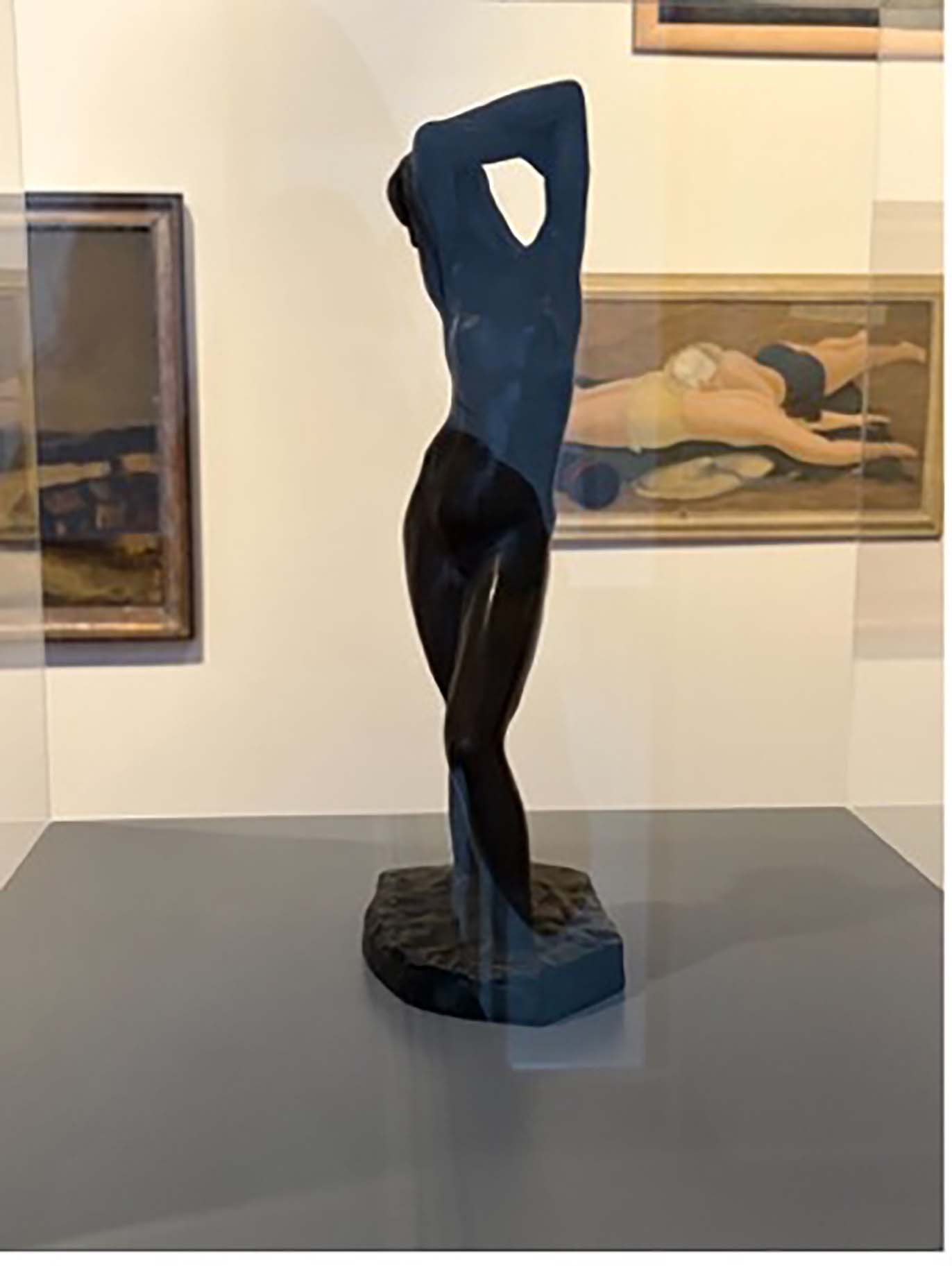
Bathing Woman, 1899
George Minne (1866–1941)
Minne was a highly influential Belgian symbolist artist whose portraits, busts, and figurative works capture profound inner emotional states. Rather than seeking literal realism, Minne used elongated forms, subtle gestures, and stylized features to convey themes of spirituality, grief, motherhood, and vulnerability. In his three-dimensional portraits and busts, Minne often focuses on pure, somber expression. He frequently used bronze, marble, and plaster to create hauntingly beautiful male and female heads that felt isolated, contemplative, or spiritually burdened. Eceiza chose this work for its beautiful representation of women in art as well for its dark silhouette.
Bronze
39,6 ×23,5 × 15 cm
Bonnefantenmuseum
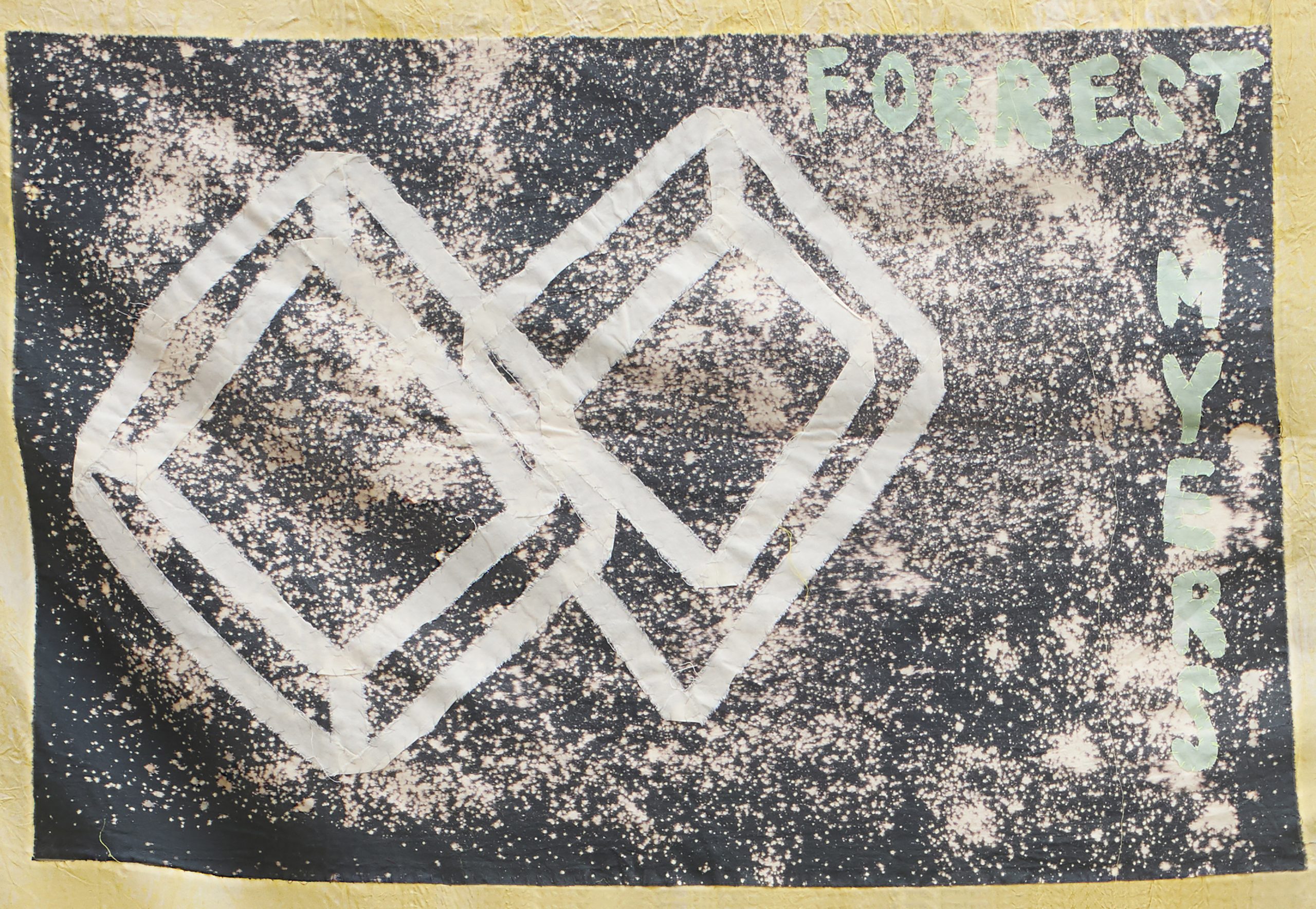
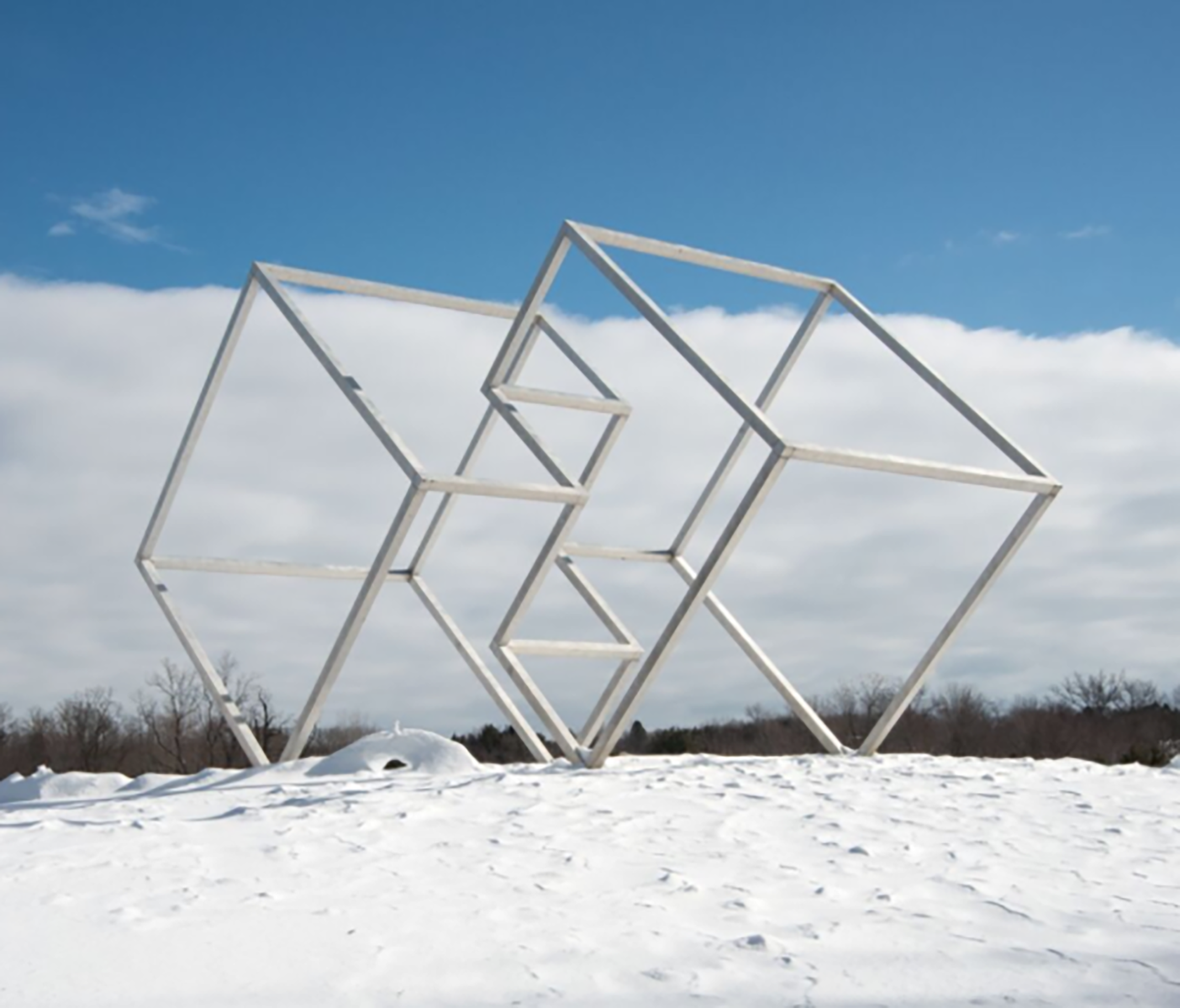
Valledor, 2007
Forrest Warden Myers (USA, 1941)
Forrest Myers has been exhibiting his large-scale outdoor sculptures and public installations since the 1960s. He uses materials that range from concrete and plastic to aluminum and steel. Later in his career he began to focus on abstract furniture, and is well-known for his chairs and lounges of unique minimal forms and tangled nests of varied materials. Valledor is a large aluminum sculpture which exploits the principles of human vision and perspective. The piece can be viewed as a compact cube, but its slim lines change shape depending on the viewer’s perspective. Simultaneously it serves as a window to view the space behind it.
Aluminum and steel on wooden base
Art Omi, Ghent, New York
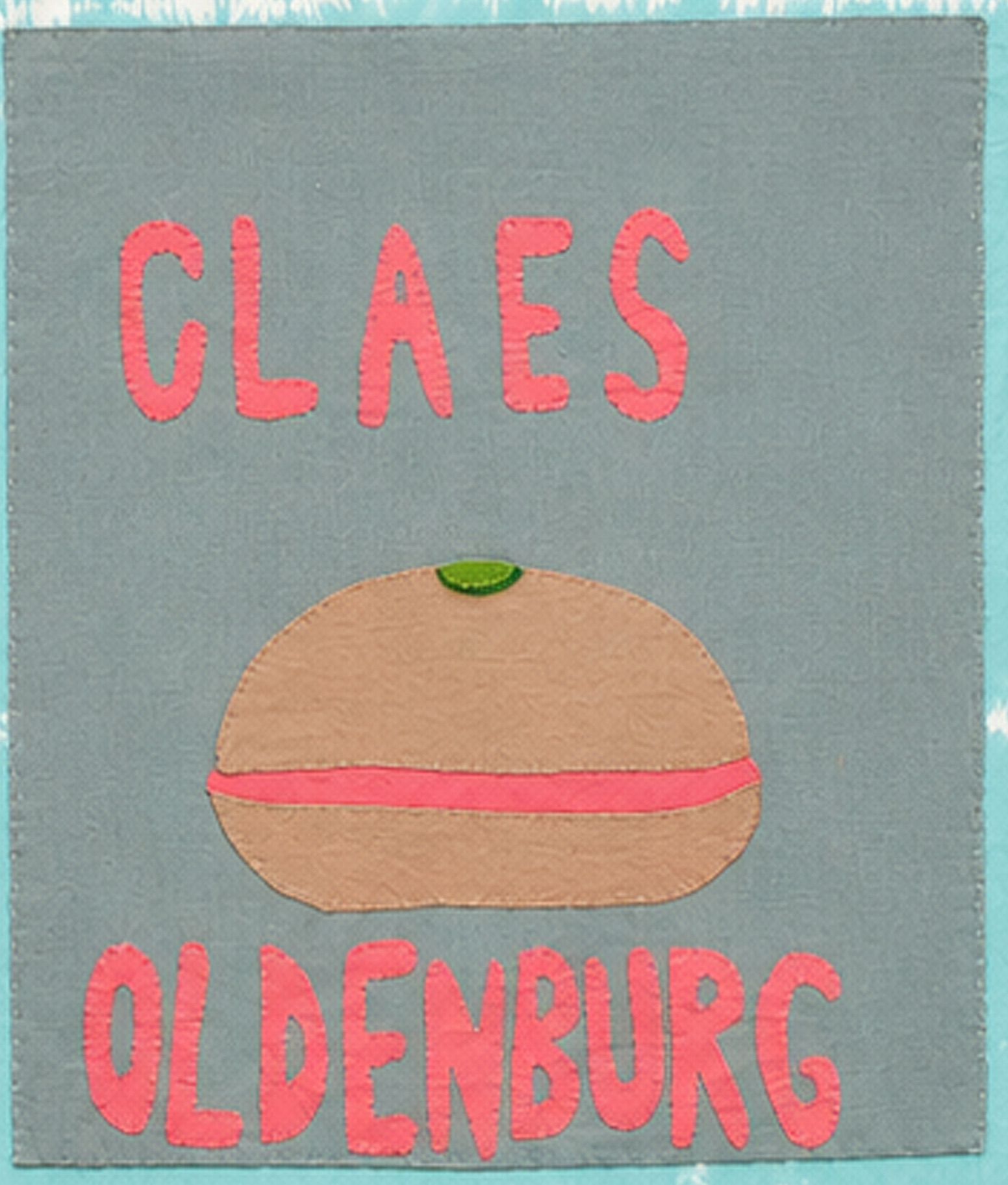
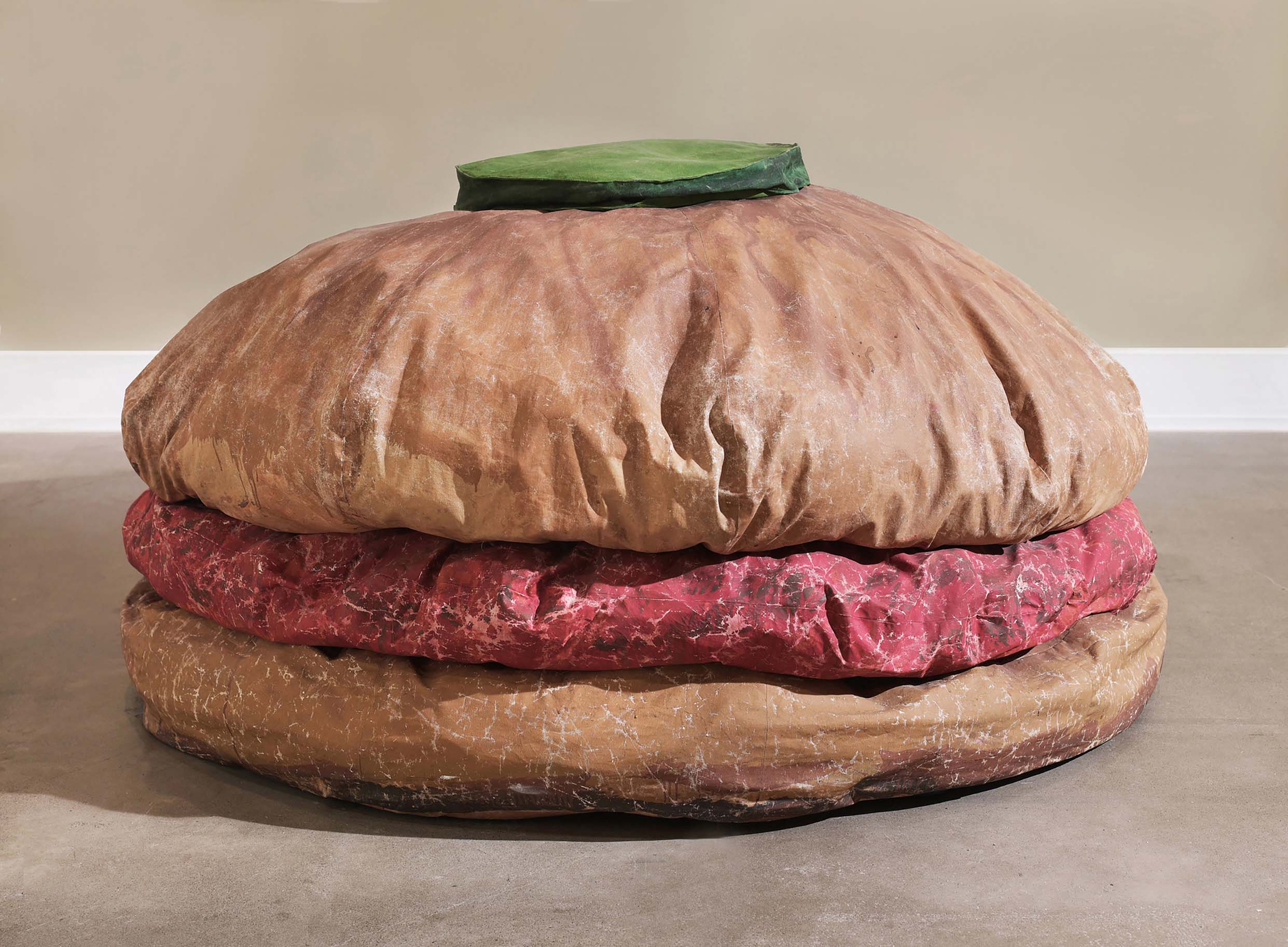
Floor Burger, 1962
Claes Oldenburg (1929 – 2022)
Claes Oldenburg was a Swedish-born American sculptor and representative of the Pop art movement best known for his public art installations. These installations typically featured large replicas of everyday objects, including a shovel, a spoon and a chair. The last of these belonged to his series of so-called ‘soft sculptures,’ oversized sculptural replicas of everyday objects made with soft materials. In 1961, Oldenburg published the influential Pop art manifesto “I am for an Art… that is political-erotical-mystical, that does something other than sit on its ass in a museum/I am for an art that grows up not knowing it is art at all/an art given the chance of having a starting point of zero/i am for the art of underwear and the art of taxicabs, as well as that of ice cream cones dropped on concrete”, teddy bears, and exploded umbrellas/ I am for all art that takes its form from the lines of life itself, that twists and extends and accumulates and spits and drips, and is heavy and coarse and blunt and sweet and stupid as life itself.” Eceiza’s sculptural work and attention to popular culture testifies to her indebtedness to Oldenburg’s work.
Canvas filled with foam rubber and cardboard boxes, painted with acrylic paint
132.1 x 213.4 x 213.4 cm
Art Gallery of Ontario, Toronto
© AGO
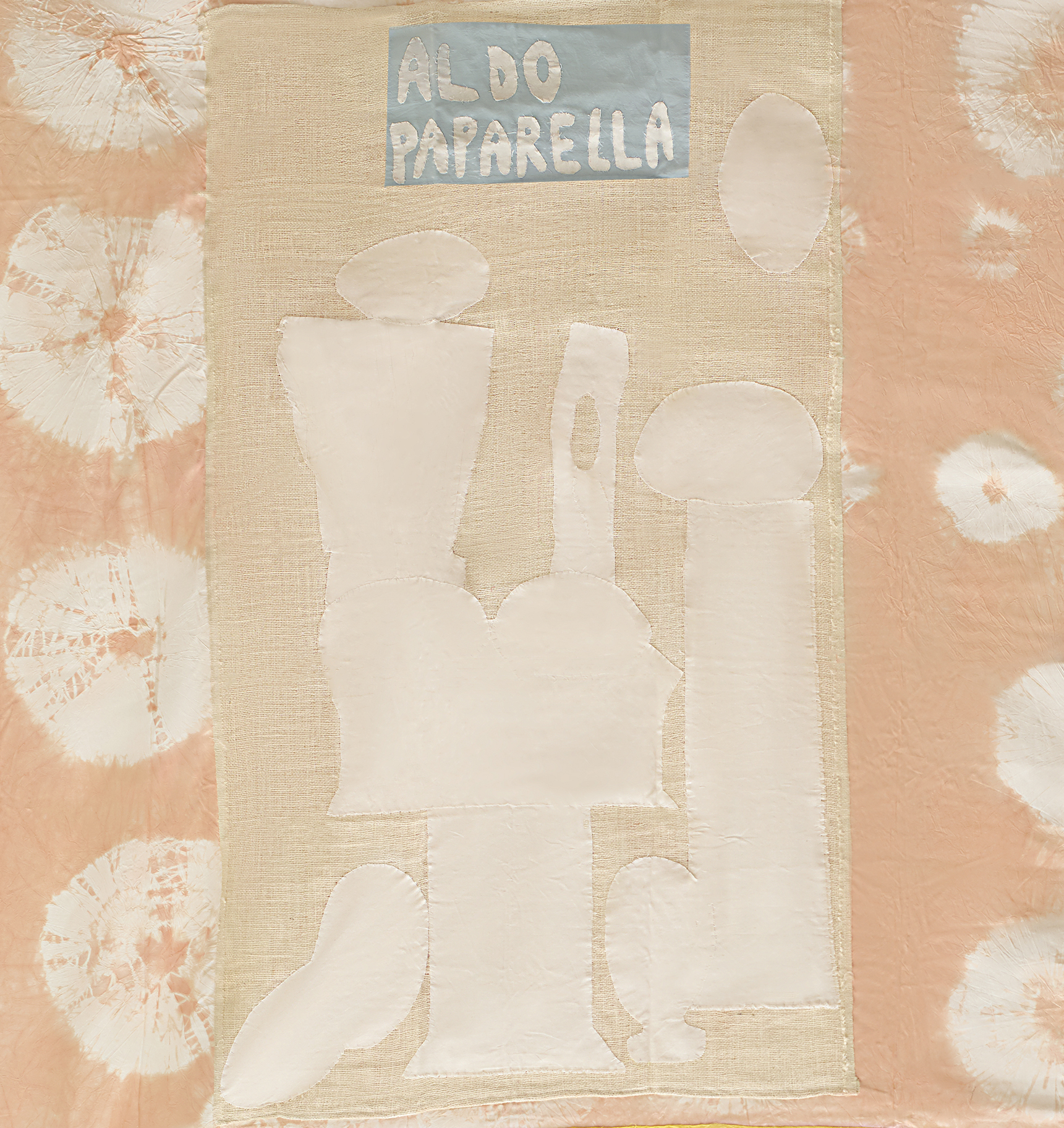
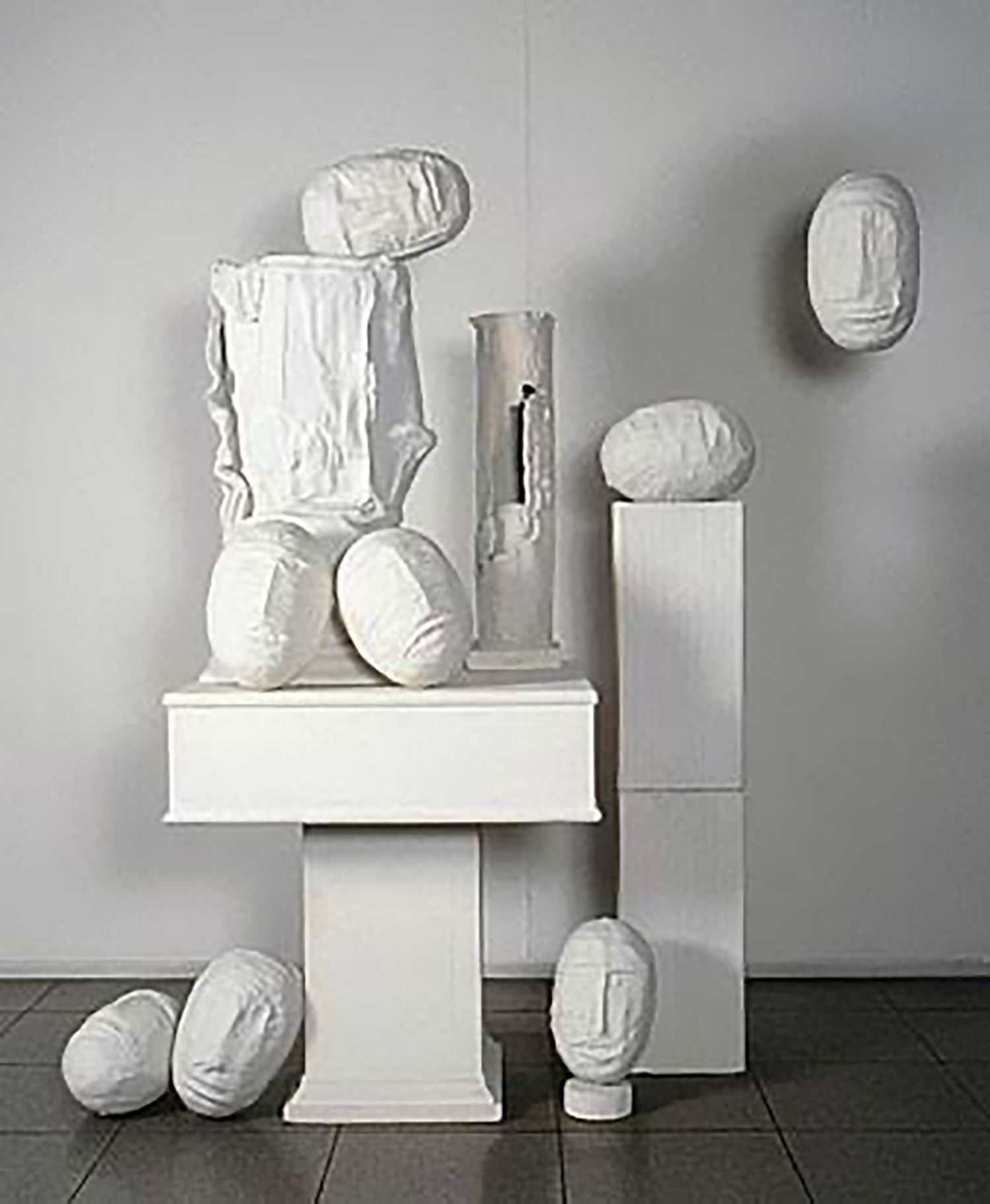
Energía apagada, 1971
Aldo Paparella (Argentina, 1920-1977)
Born and raised in Italy, Paparella became an artist only after he emigrated to Argentina. In his attempt to create a direct vocabulary with which to communicate his concern about modern humanity, he worked without sketches. Paparella viewed poetry as the only means to rescue the human race from consumerist alienation. Among his most famous works are the dazzling white Useless Monuments (Monumentos inútiles), a group of sculptures made of fragile materials including wood, cardboard, and plastered fabrics, all whitened with chalk. Eceiza was touched by this work titled Energía apagada (Extinguished Energy), where heads stand up straight or lie flat on their sides, and every dent and curve show the fingers of the artist.
Cardboard, wood, chalk, and glue
230x140x120 cm
Museo de Arte Moderno de Buenos Aires, Argentina cvaa.com.ar/04ingles/04biografias_en/paparella_en.php
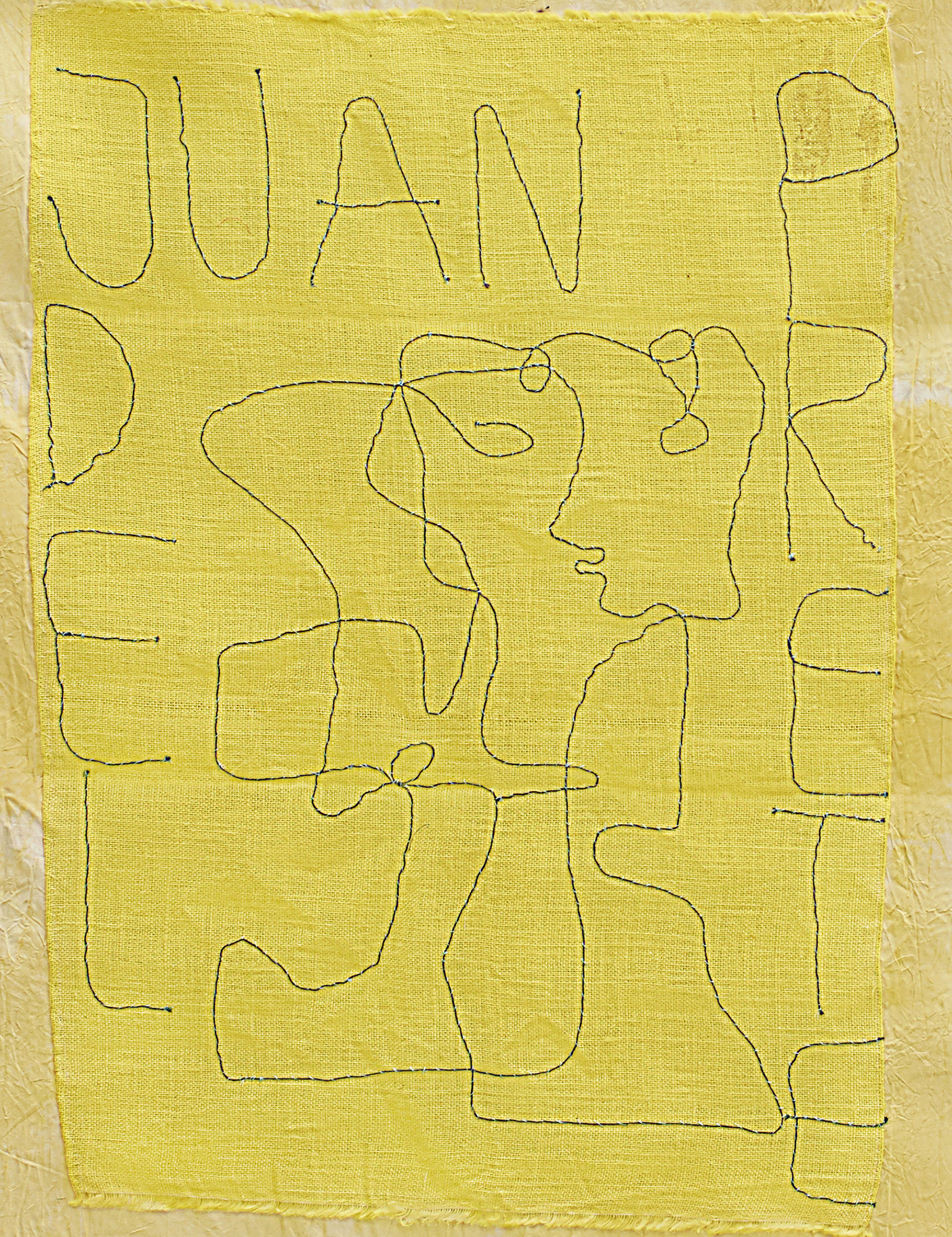
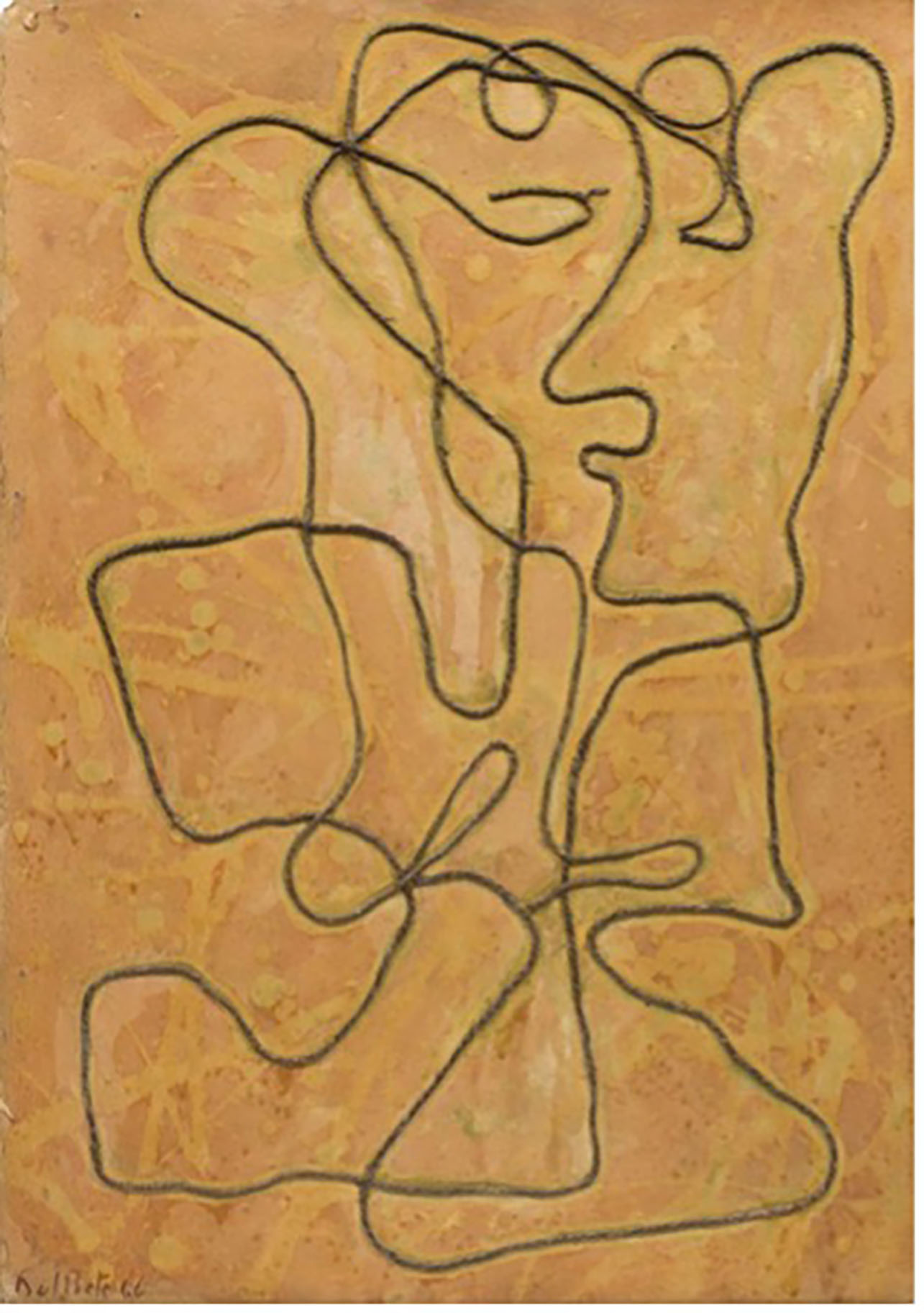
Cabeza de Señora, 1966
Juan del Prete (Argentina, 1897-1987)
Juan Del Prete was an Italian-born, self-taught painter, draughtsman, sculptor and teacher who migrated to Argentina in 1909. Following a journey to Paris, the artist embraced an abstract vocabulary that mixed dense fillings of pigments with discarded materials such as colored papers, strings, scraps of fabric, wires, and metal objects. Eceiza loves Del Prete compulsive practice. According to her, he “painted from the belly, he vomited paint, and destroyed work so he could endlessly rediscover new forms.”
Rope and oil on cardboard
79×57 cm
Museo de Arte Moderno de Buenos Aires. Eugenia Crenovich Donation, 1989 https://coleccion.museomoderno.org/index.php/Detail/works/12709
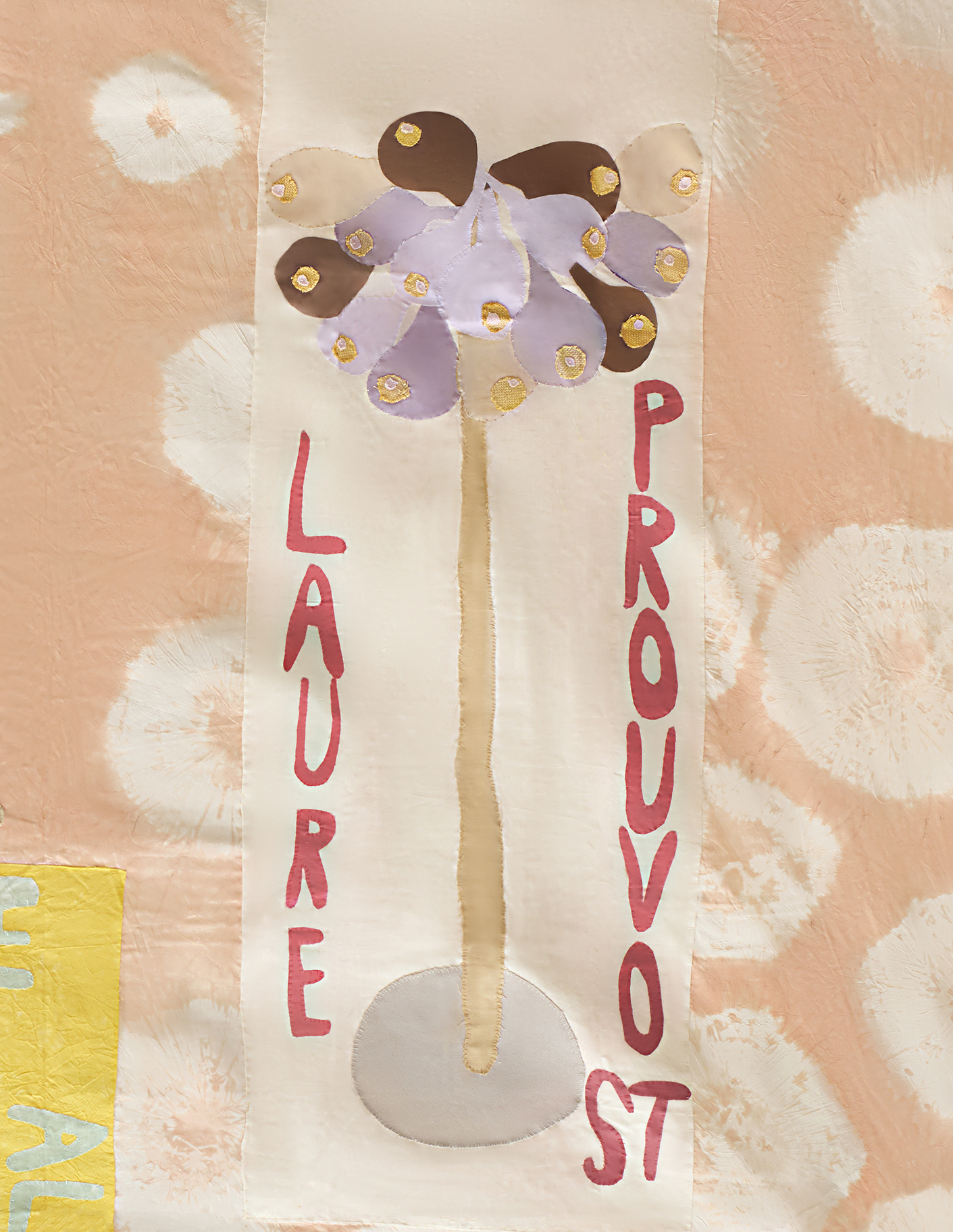
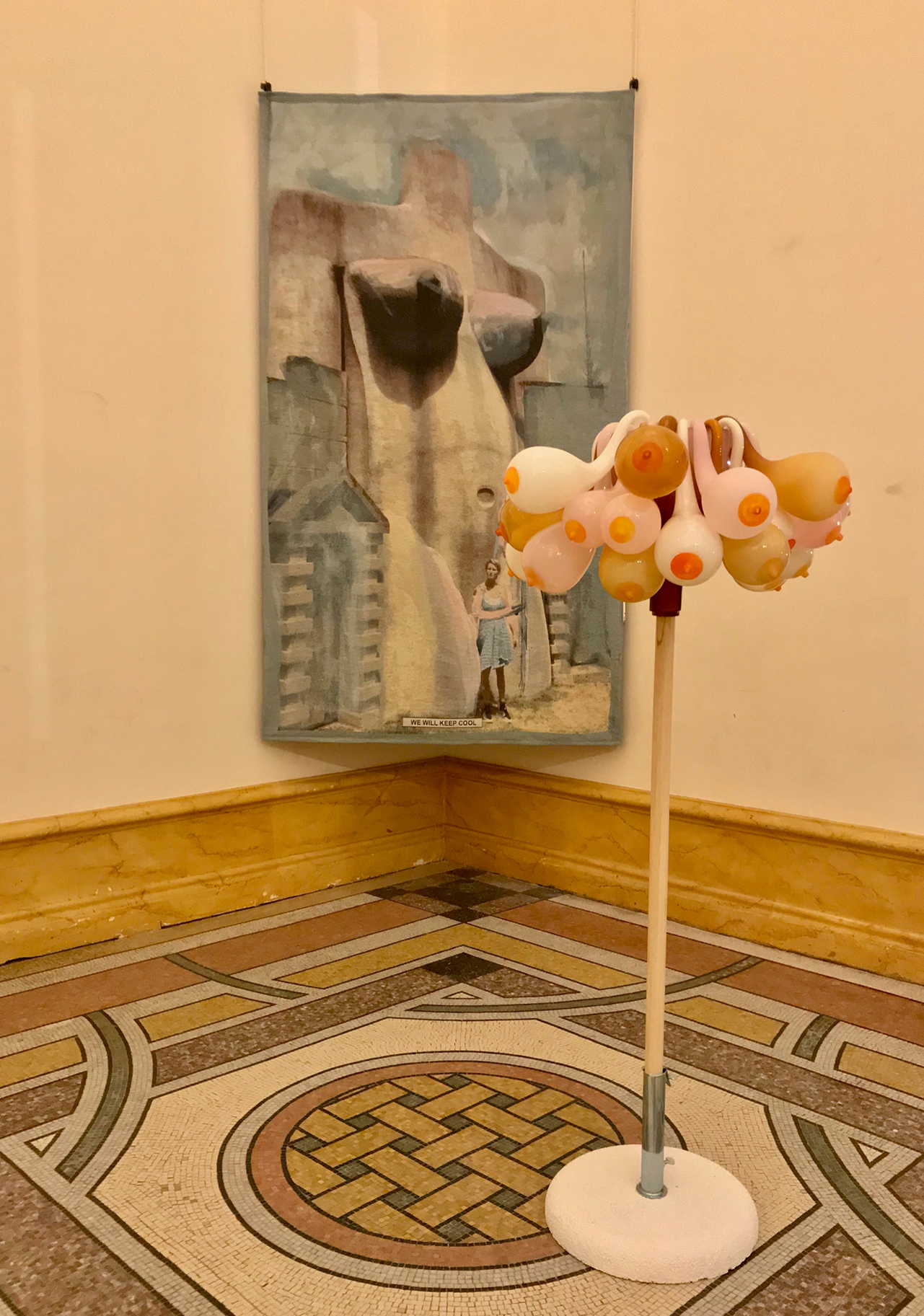
Cooling System 10 (for Global Warming), 2019
Laure Prouvost (France, 1978)
Prouvost is a French artist known for her witty and deeply layered film installations and objects. Celina discovered Prouvost’s piece at the Bonnefantenmuseum in Maastricht. The sculpture is part of a wider series of “cooling systems” imagined by the artist as absurd, humorous, and poetic proposals to fight global warming. Her works frequently feature signature blown-glass forms—such as breast-like shapes—symbolizing female strength, fluidity, and a connection to nature. Eceiza was struck by the resemblance between this mixed-media and glass work and the art work by the Argentinian artist Omar Schiliro’s. By re-making this work in textile, Celina wished to create a chain of affinities.
Paper, concrete, Murano, wood, watercolor
200x120x120 cm
Bonnefantenmuseum www.lissongallery.com/artists/laure-prouvost
© Isabelle Henricot
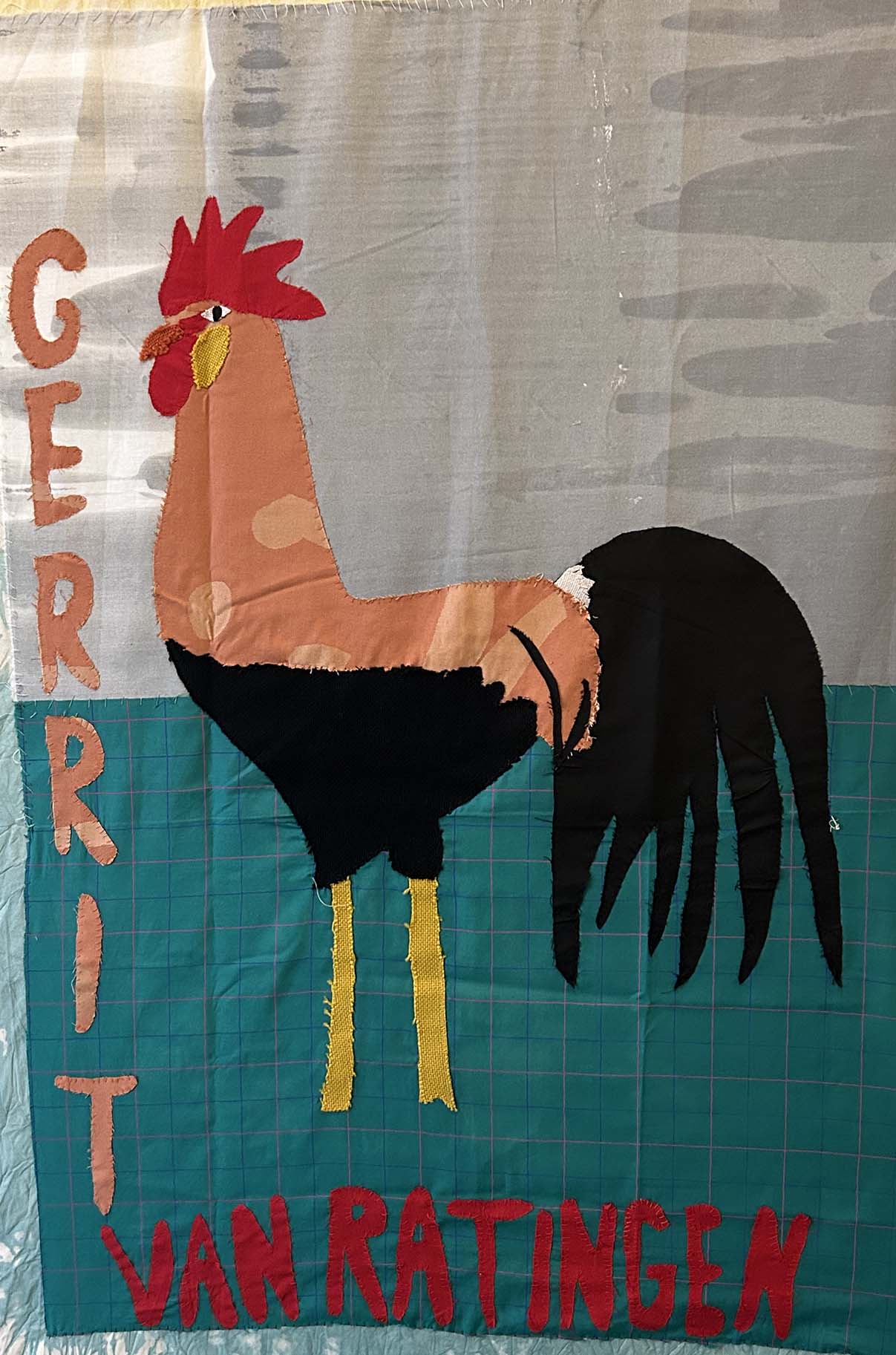
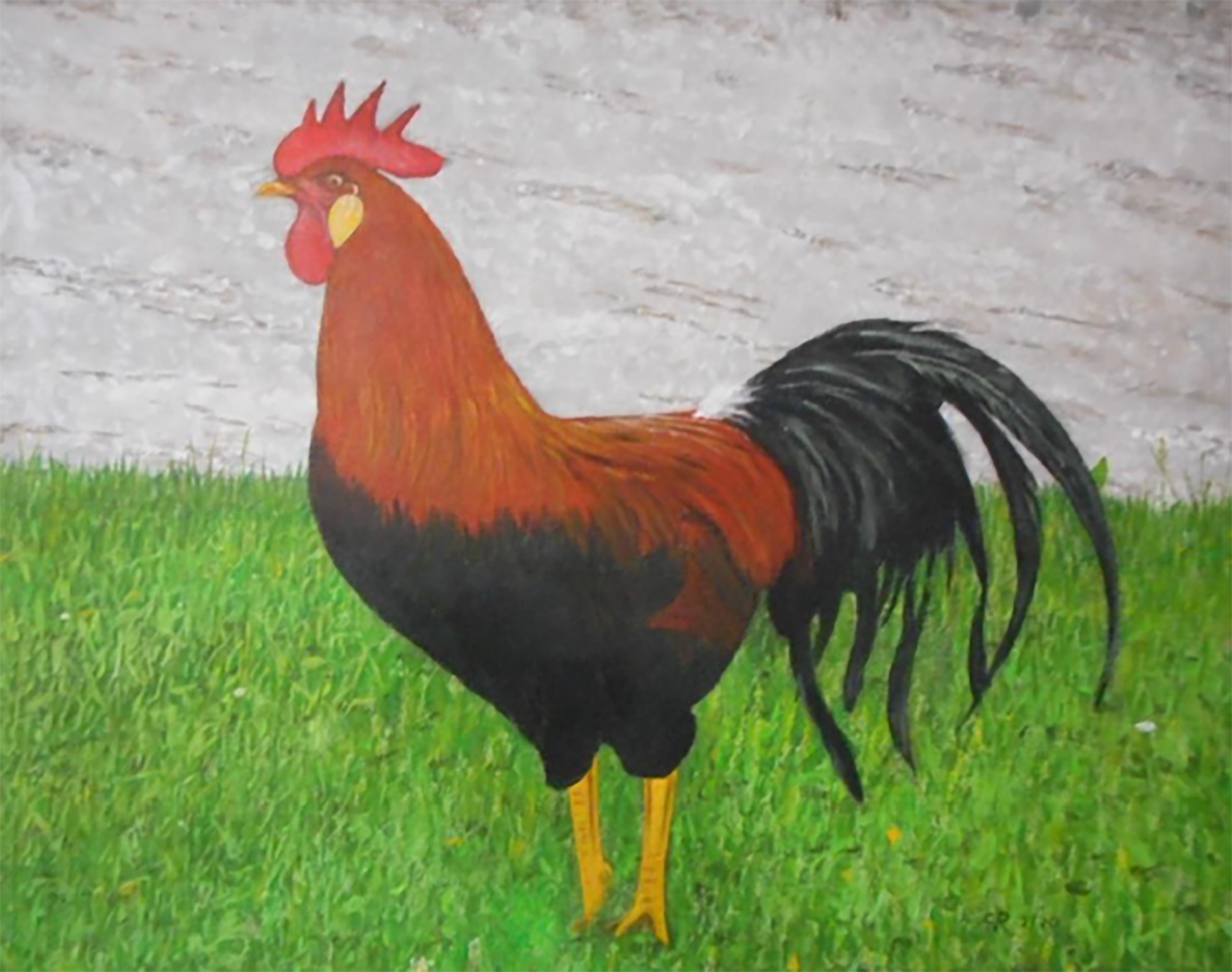
Trotse Haan, 2020
Gerrit van Ratingen (1940)
Van Ratingen is a Dutch amateur painter from Heythuysen (Limburg) who regularly exhibits his work in the region. He mainly works in oil or acrylic, using both brushes and palette knives to create texture and depth. His work ranges from nostalgic Limburg landscapes and portraits of local characters to lively interpretations of animals. Celina felt a special attraction for portraits of animals.
Limburg Biënnale, Marres, 2020
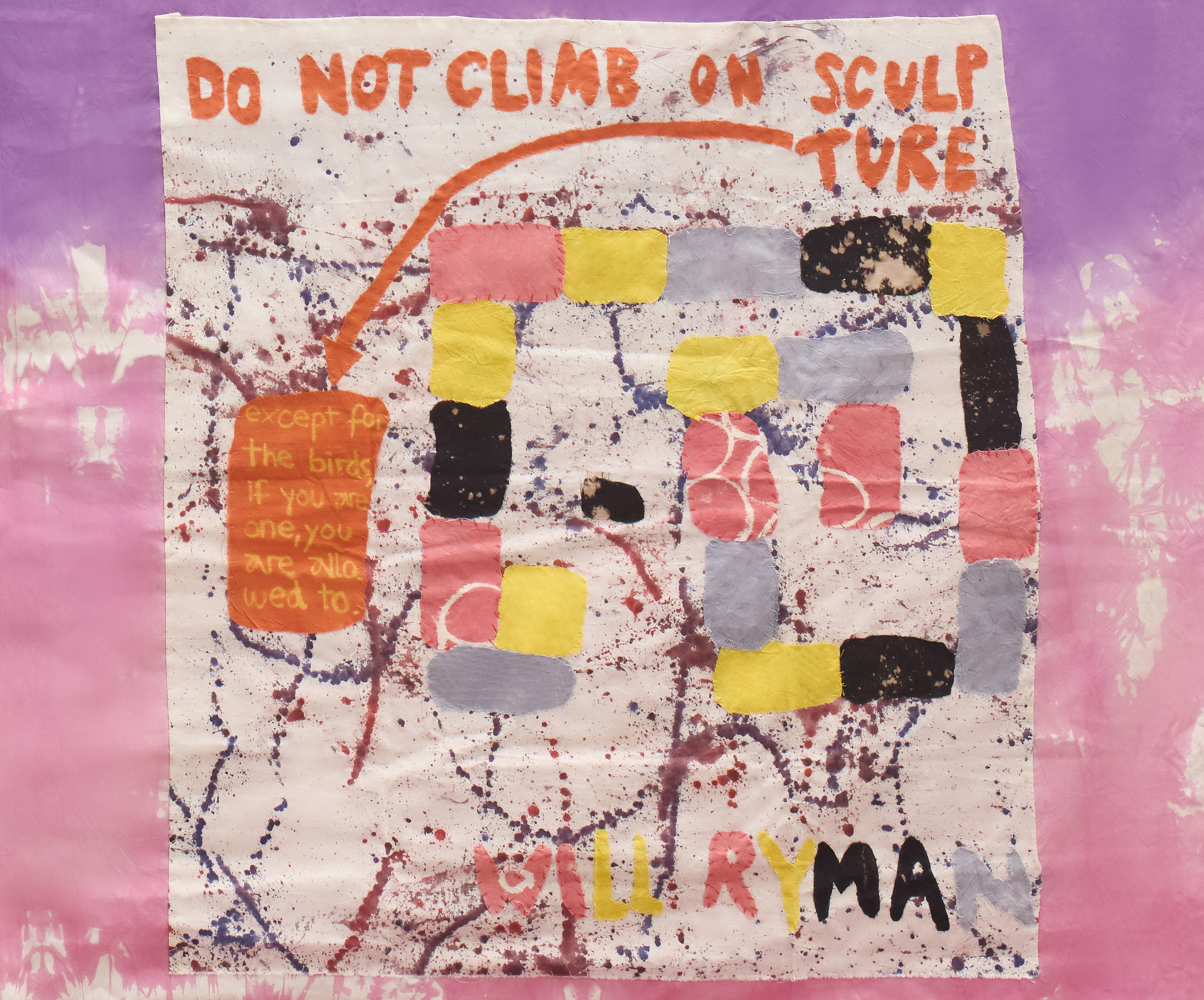
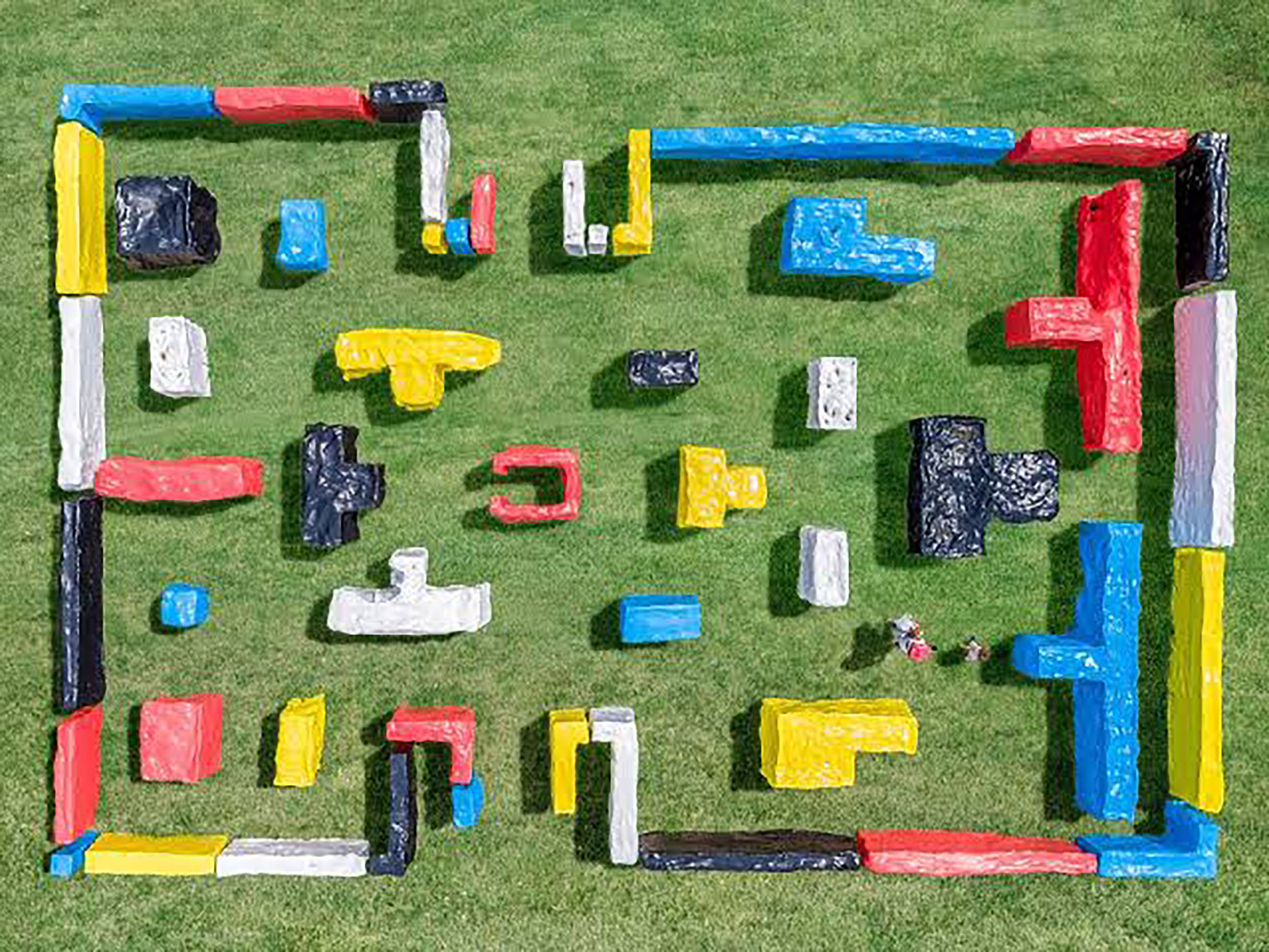
Pac-Lab, 2017
Will Ryman (USA, 1969)
Ryman’s Pac-Lab is a series of walls and pathways designed to mimic a video game maze, which visitors can enter and navigate. Ryman hand-sculpted the walls of the maze in clay, creating the effect of a primitive monument; each wall is painted a bold primary color (colors that recall our childhood associations of art-making, as well as the paintings of Piet Mondrian). While visually playful, Pac-Lab serves as a meditation on our contemporary consumer culture. Celina delighted in capturing the artist’s absurdist approach to the artist’s work by showing it with dozens of ravens sitting on top of a sign ‘do not climb on the sculpture.’
Cast resin, steel, paint
4×37,5×50 inches
Art Omi, Ghent, New York www.willryman.com/paclab-images
© Alon Koppel
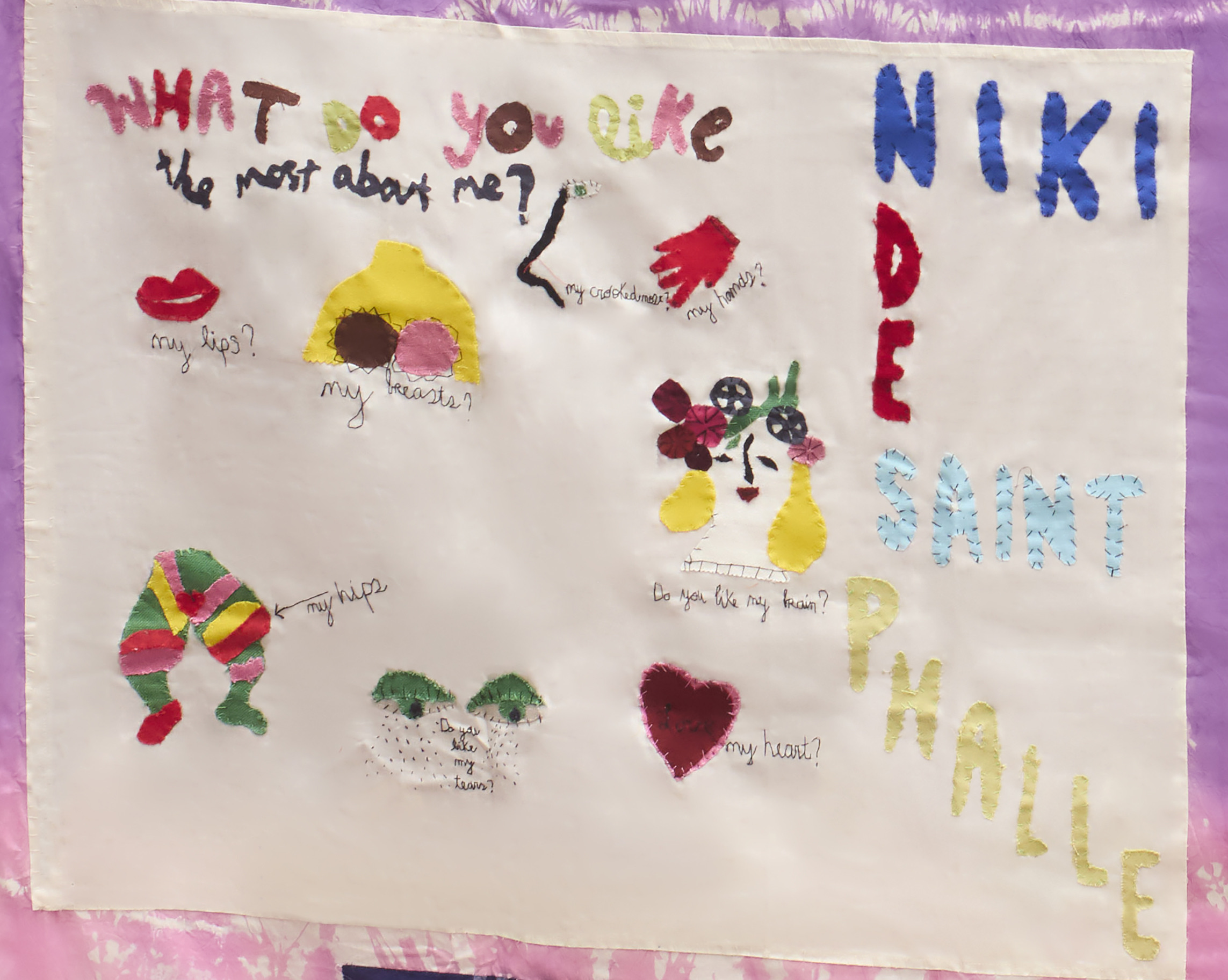
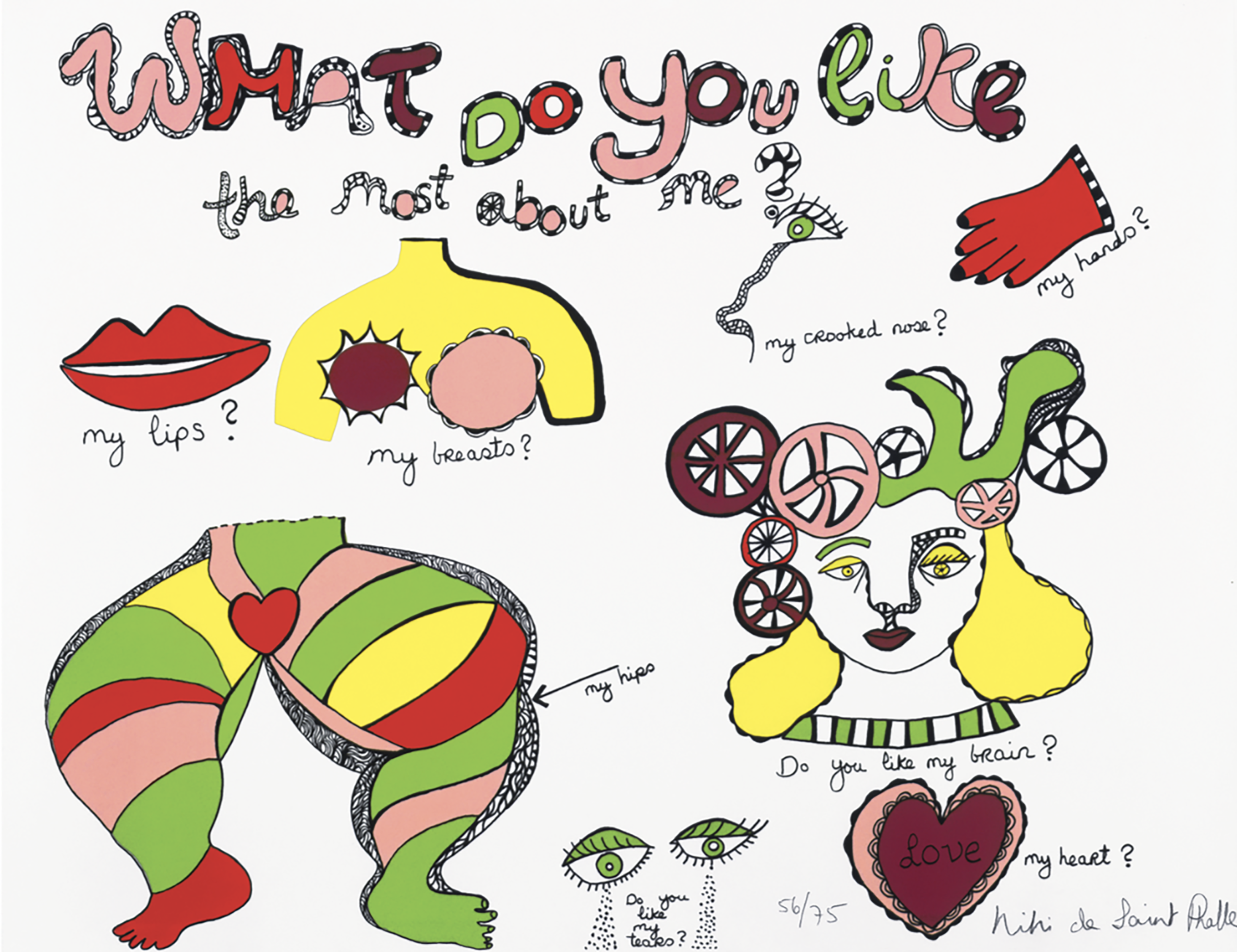
What do you like the most about me?, 1970
Niki de Saint Phalle (Switzerland, 1930-2002)
The French-Swiss artist Niki de Saint Phalle’s exuberant and versatile practice emphasized femininity, performance, and collaboration as it rejected notions of the lone male genius. Saint Phalle is perhaps best known for her “Shooting Paintings”—canvases she made by firing a rifle at paint-filled balloons—and her sculptures of enormous colorful and voluptuous feminine forms, which she dubbed “Nanas.” Tucked away behind her globally known sculptures, Eceiza found this visual poem that reflects the artist’s poetry of romance, love, and (the need for) happiness.
Color lithograph on paper
49×65 cm
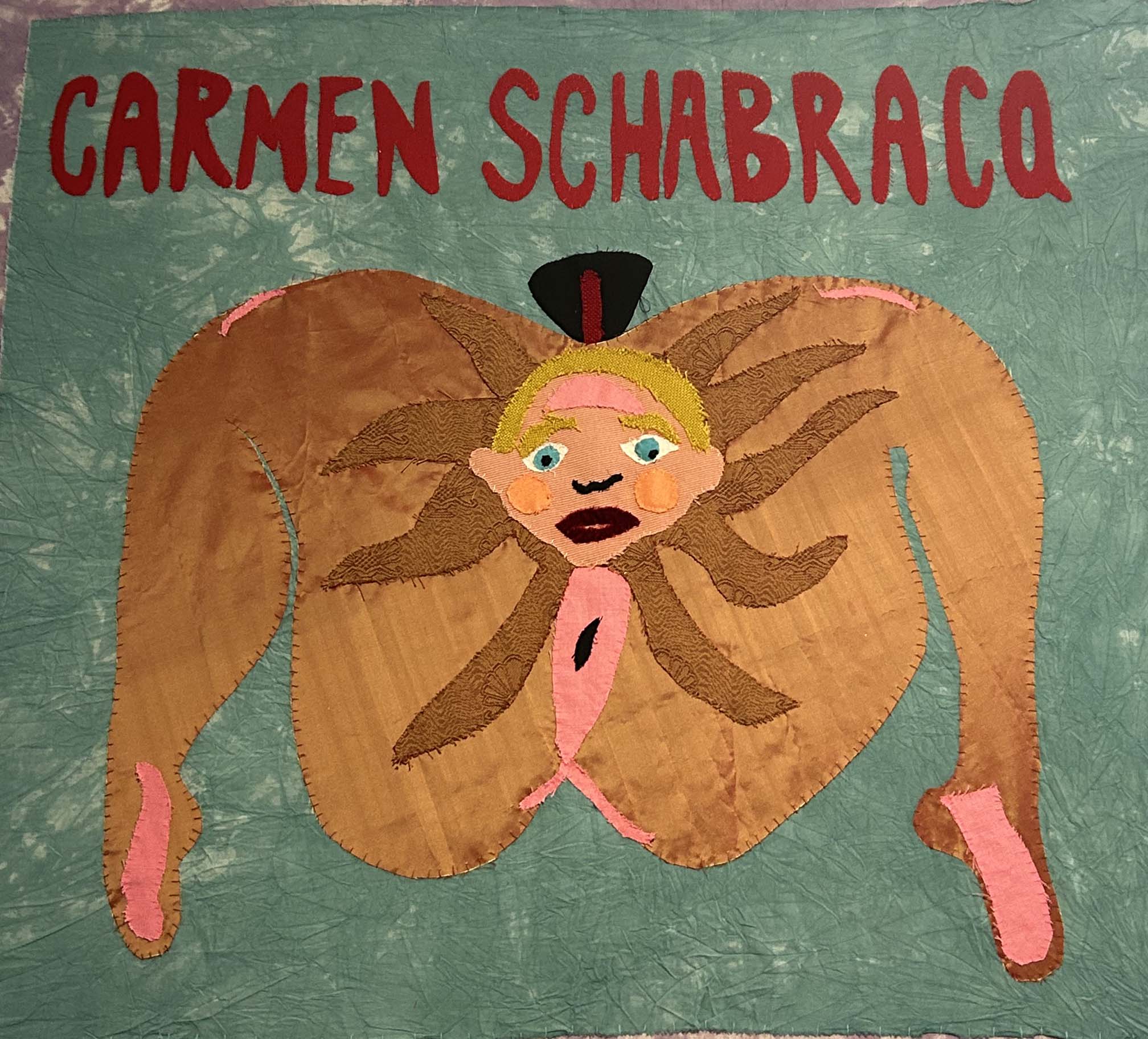
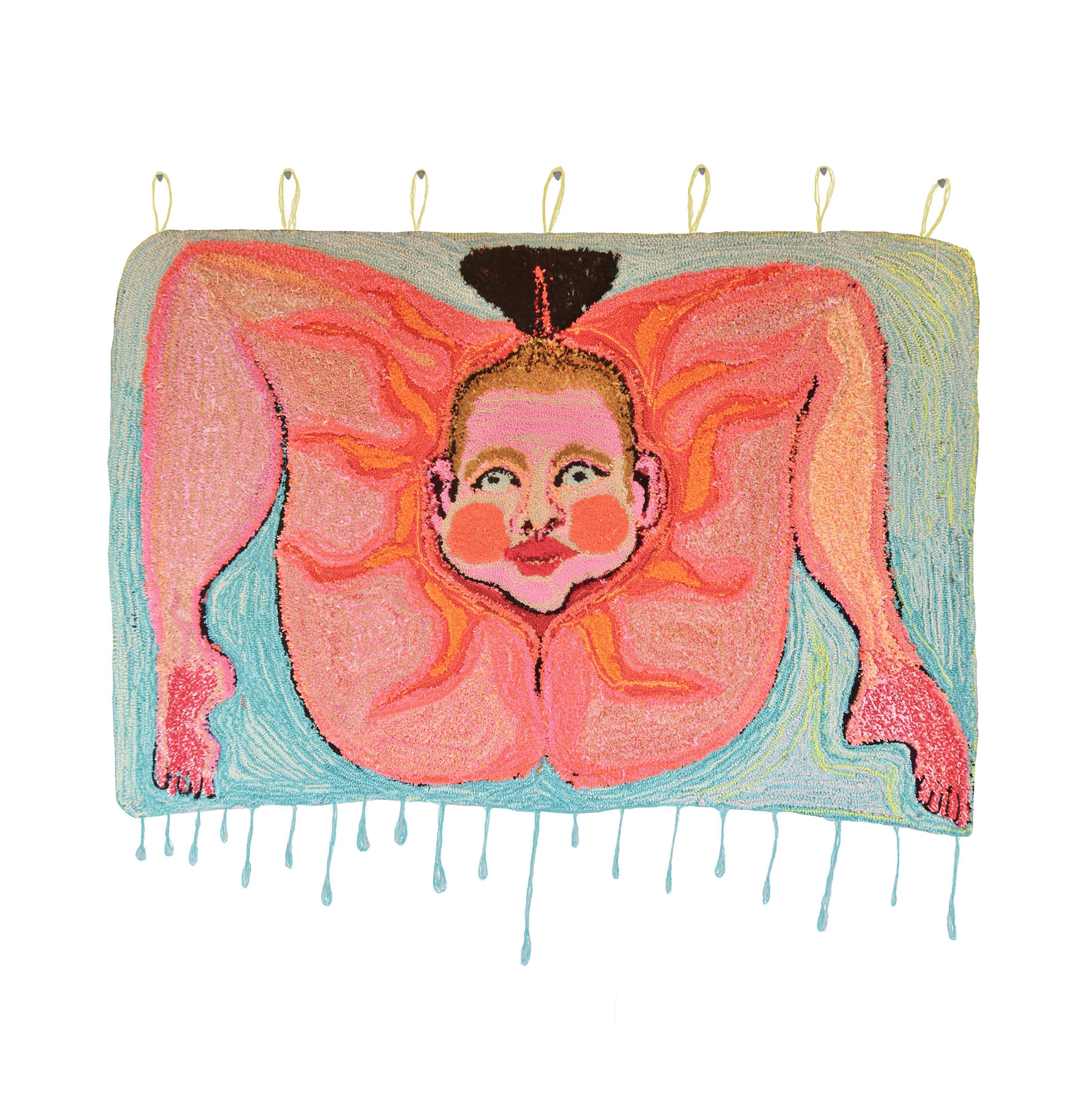
Ring of Fire, 2024
Carmen Schabracq (Netherlands, 1988)
Carmen Schabracq creates paintings, sculptural installations, and performances in which the theatricality of life plays an important role. She combines myths, traditions, and personal experiences to create collage-like stories. She often uses the mask, a tool used in rituals or performances to become ‘the other.’ Her work offers a way to escape and imagine oneself in another world, full of color, playfulness, and humor, as a way of dealing with the realities of life and death.
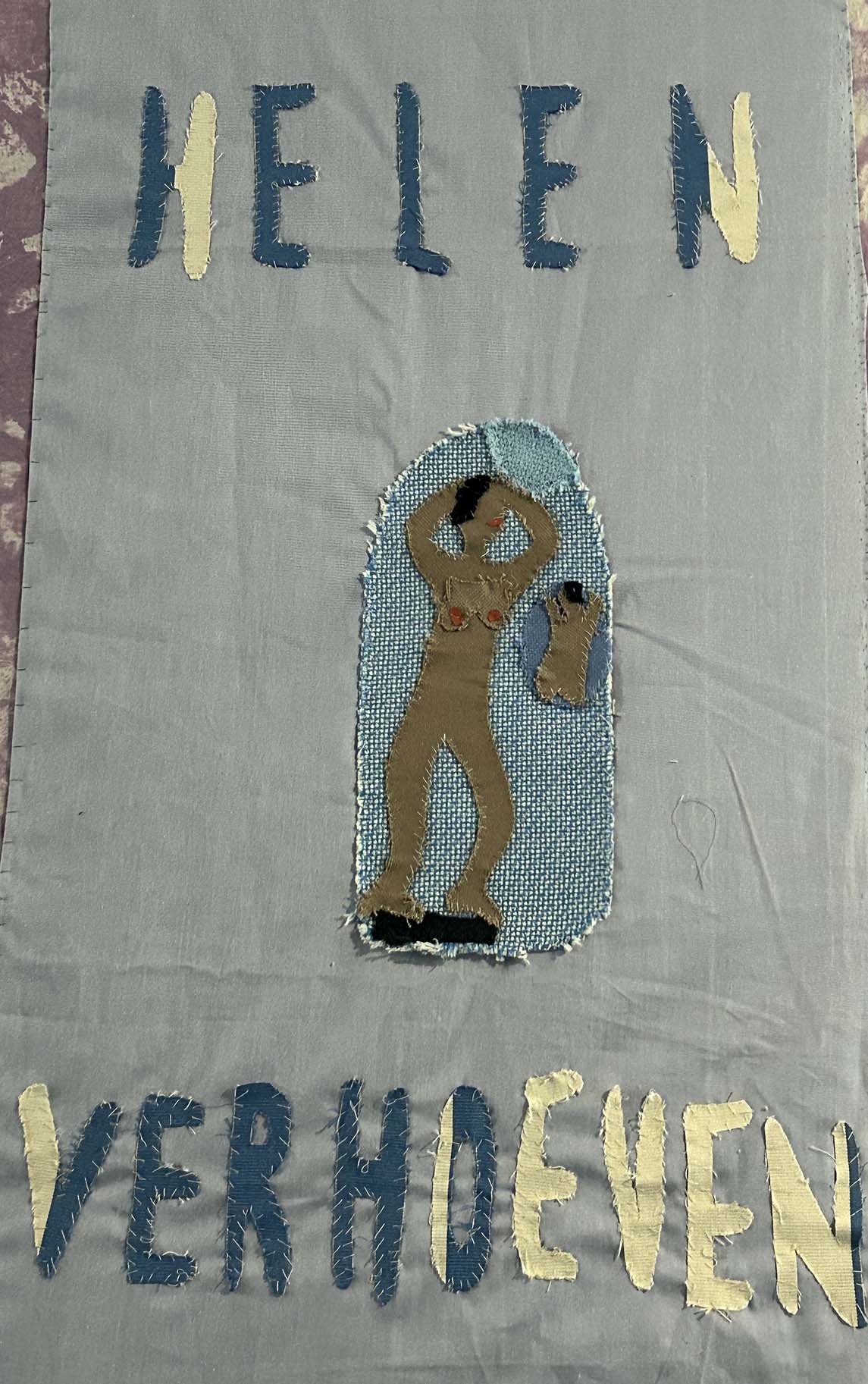
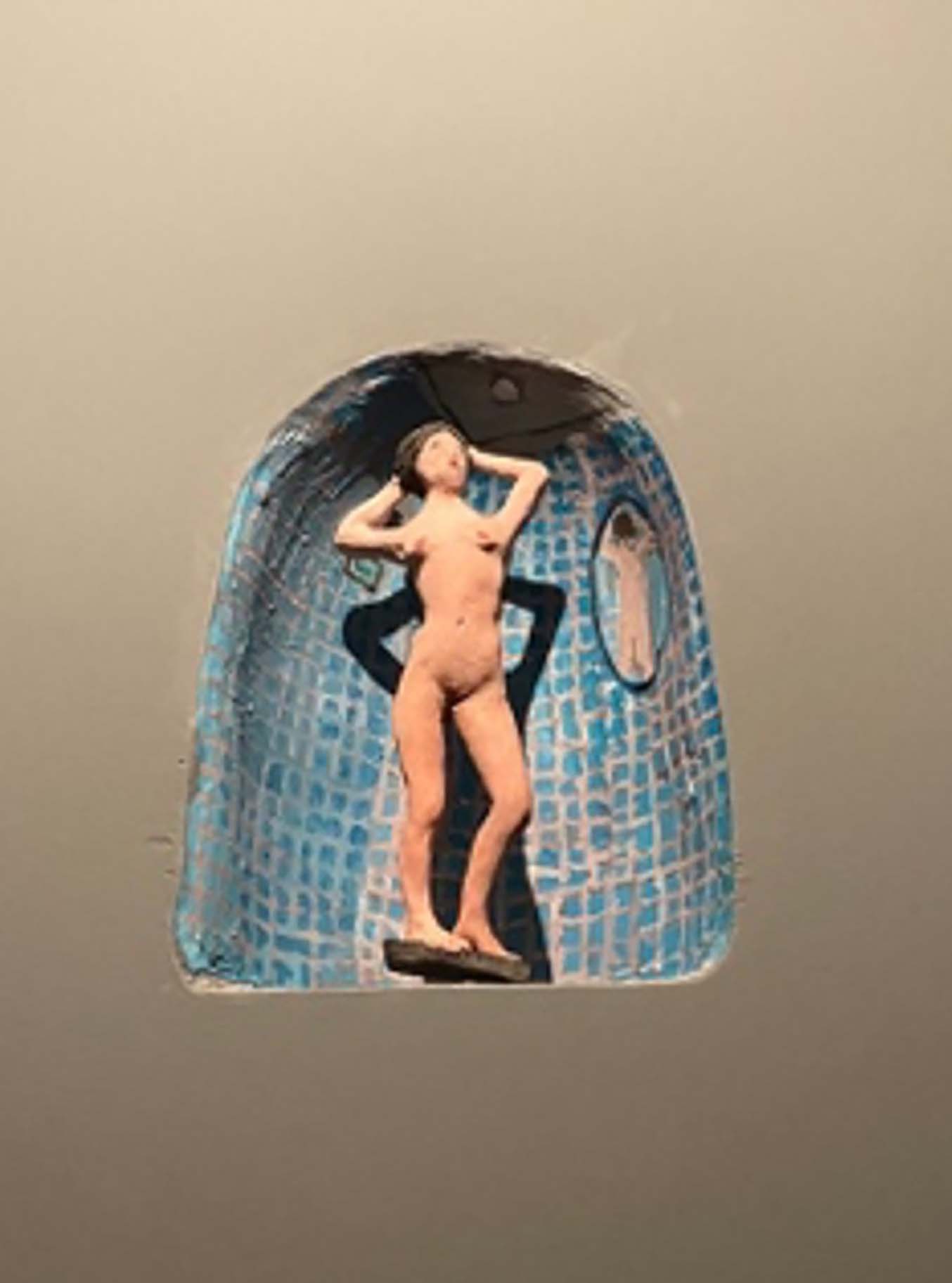
Church, 2018
Helen Verhoeven (Nederland, 1974)
Helen Verhoeven is a painter and sculptor based in Berlin. Her paintings are sometimes accompanied by ceramic work, stained-glass windows, printmaking and film. In her work that ranges from very small to monumentally large, she uses different textures and patterns, giving the whole an almost collage-like effect. Thematically, she connects autobiographical elements with universal themes such as fertility, beauty, lust, aggression and death. “My paintings often depict unpleasant things, but hopefully, with a certain lightness, because humor is ultimately the best antidote to all misery.” Her work has been exhibited around the world and is held in numerous collections. In 2008, she received the Royal Prize for Painting, followed by the Wolvecamp Prize in 2010. Eceiza has a self-proclaimed fetish for houses and loved this ‘house’ by Verhoeven as a beautiful sanctuary for femininity.
Wood, plaster, textile
285 x 540 x 310 cm
Bonnefantenmuseum
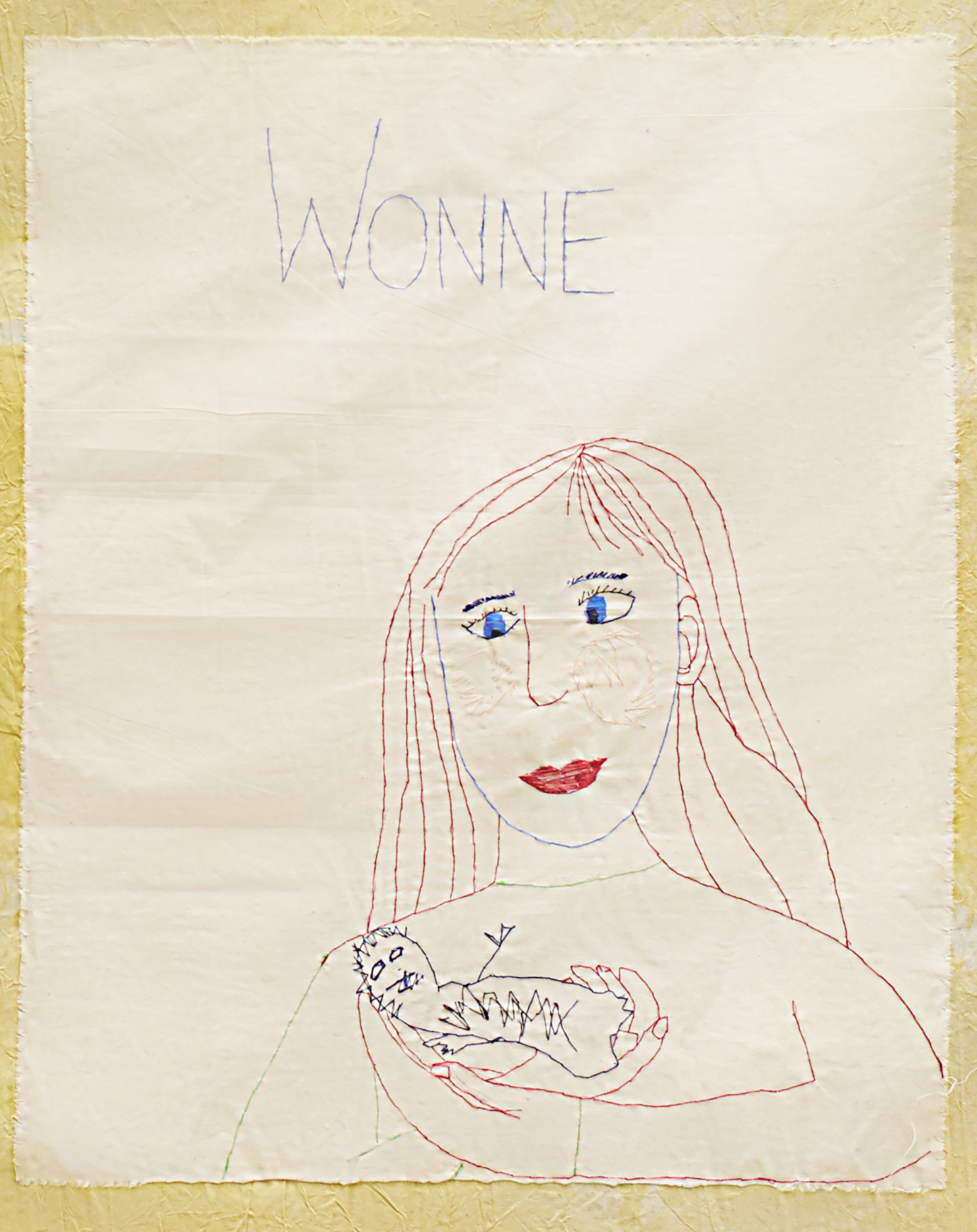
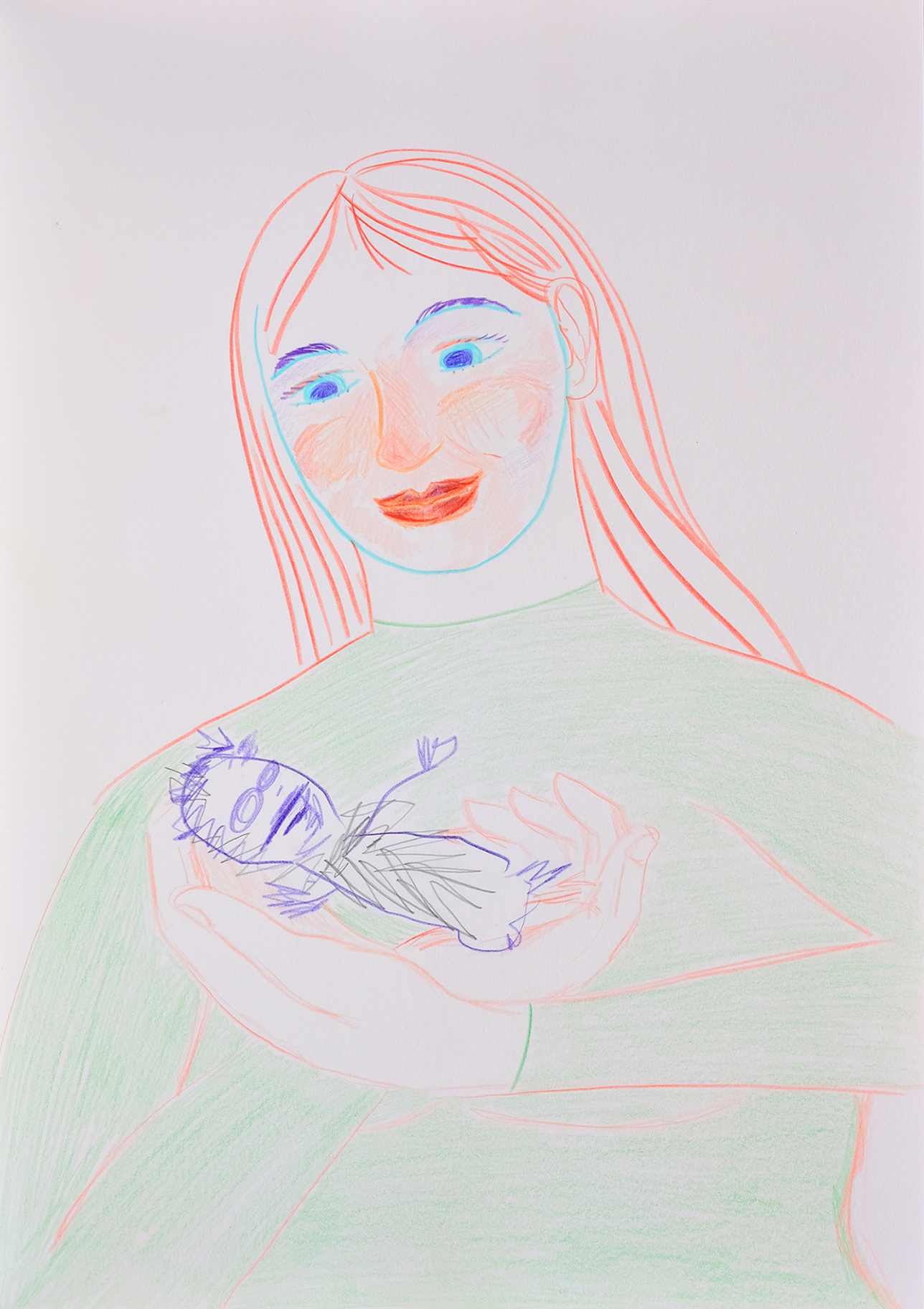
Lieve Moeder, 2026
Wonne (Netherlands, 1996)
Wonne’s art works are made from the same stuff as dreams and nightmares. His ceramic sculptures, drawings on paper, paintings and digital collages aim at opening up to the world. By using children’s perspectives and styles, he tries to avoid the reticence and distance that age brings. Eceiza admires the straight lines and simple colors that immediately expose how the drawing/painting is made. A soft smile toward a baby in crisis, two psychological energies that live in the same paint.
Ink, acrylic, and pencil on paper
21 x 30 cm
Limburg Biennale, Marres, 2026
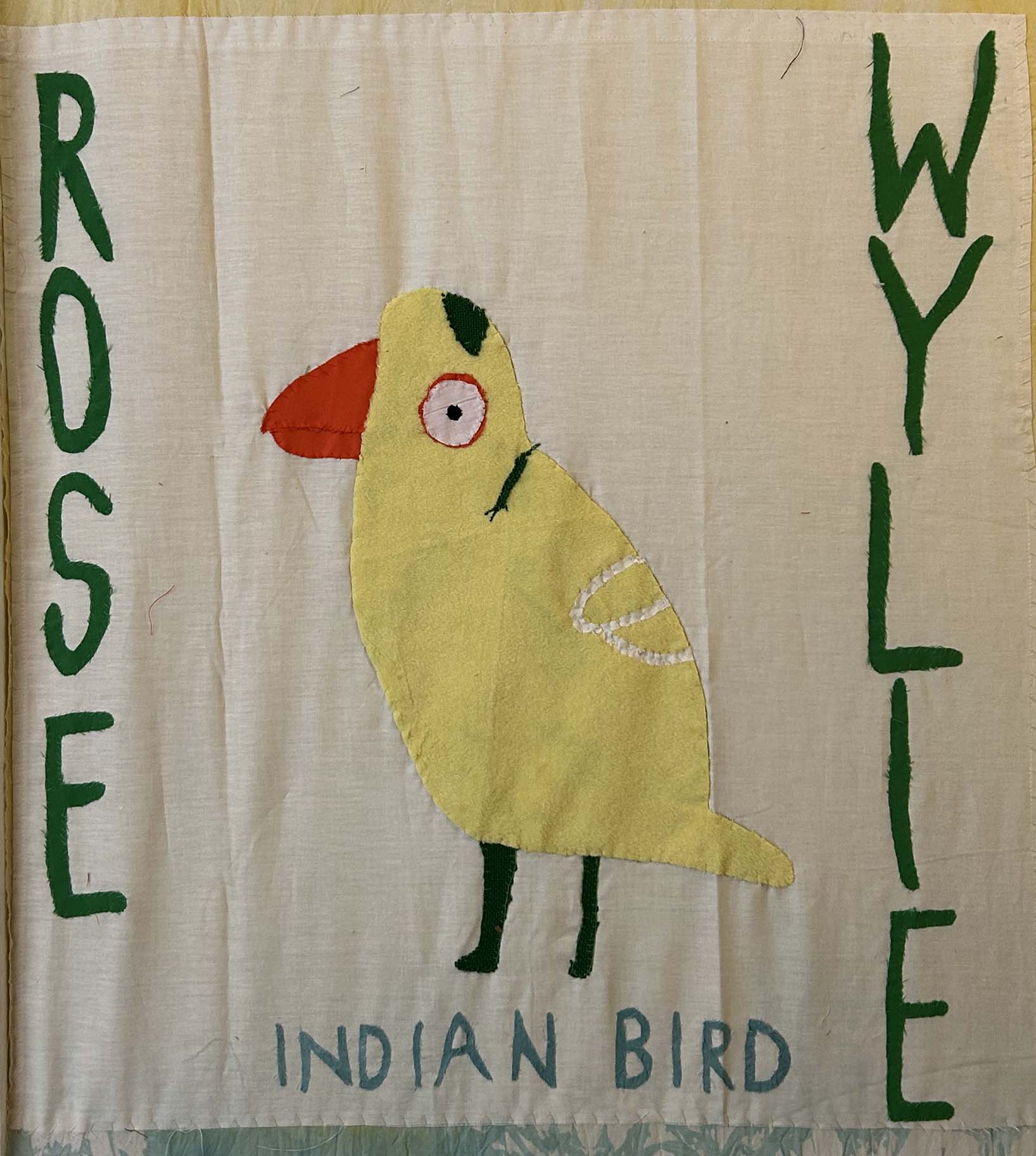
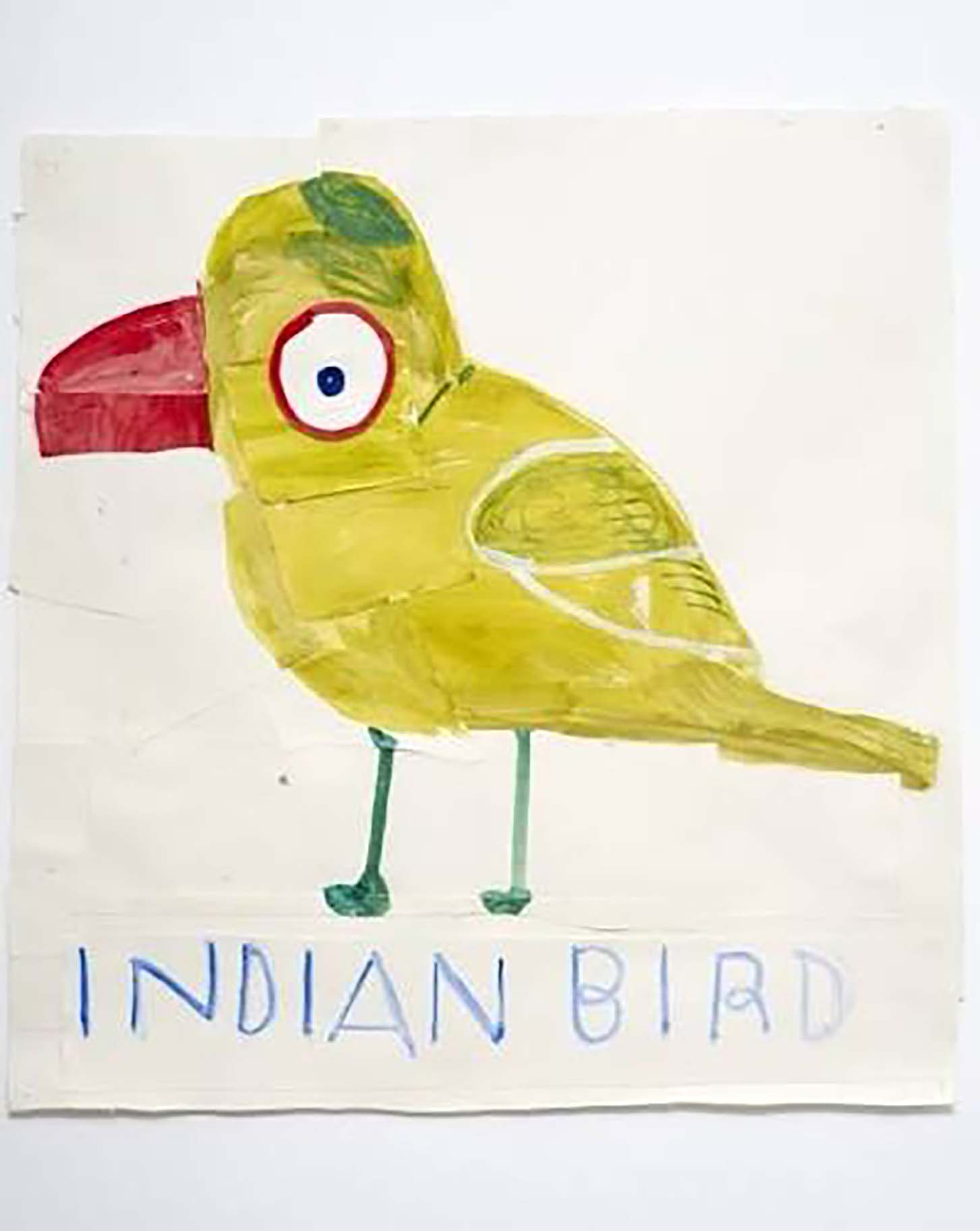
Indian Bird, 2013
Rose Wylie (UK, 1934)
Wylie creates large paintings on unstretched, unprimed canvas with “stubby brushes, like scrubbing brushes so I can push things around”. She also uses her fingers or applies paint straight from the tube. She often sticks, tacks and glues scraps onto the canvas to give the painting texture, with smudges and drips left apparent. “I don’t mind imperfection at all,” she once said in an interview, “only I don’t call it imperfection—I call it “wearing out” or “it’s got a stain on it” or “it’s falling apart.” Wylie’s work is inspired by her daily life as well as popular movies, comic books, nature, animals, news, sports, and celebrity stories.
Watercolor and collage on paper
93.5 x 91.5 cm
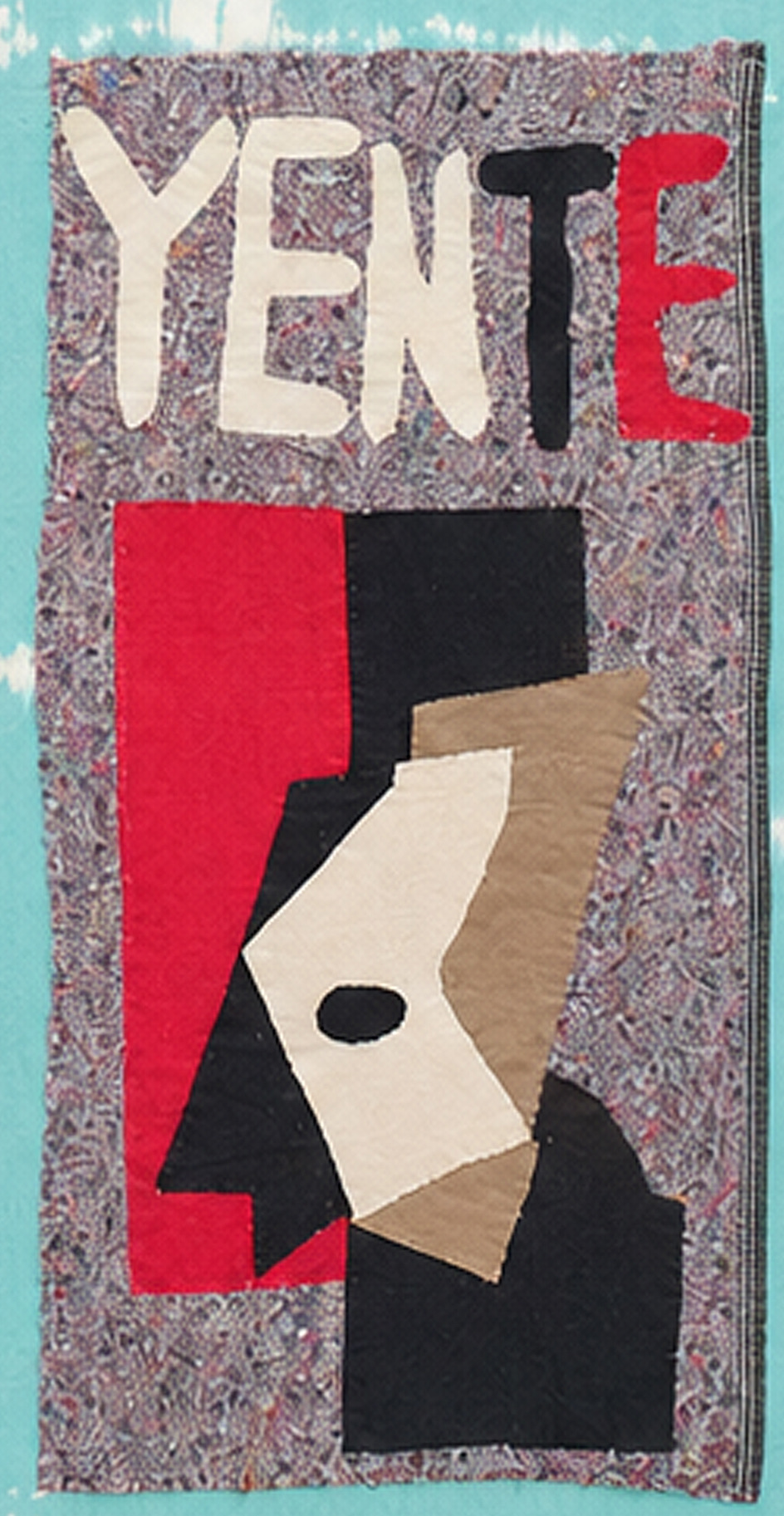
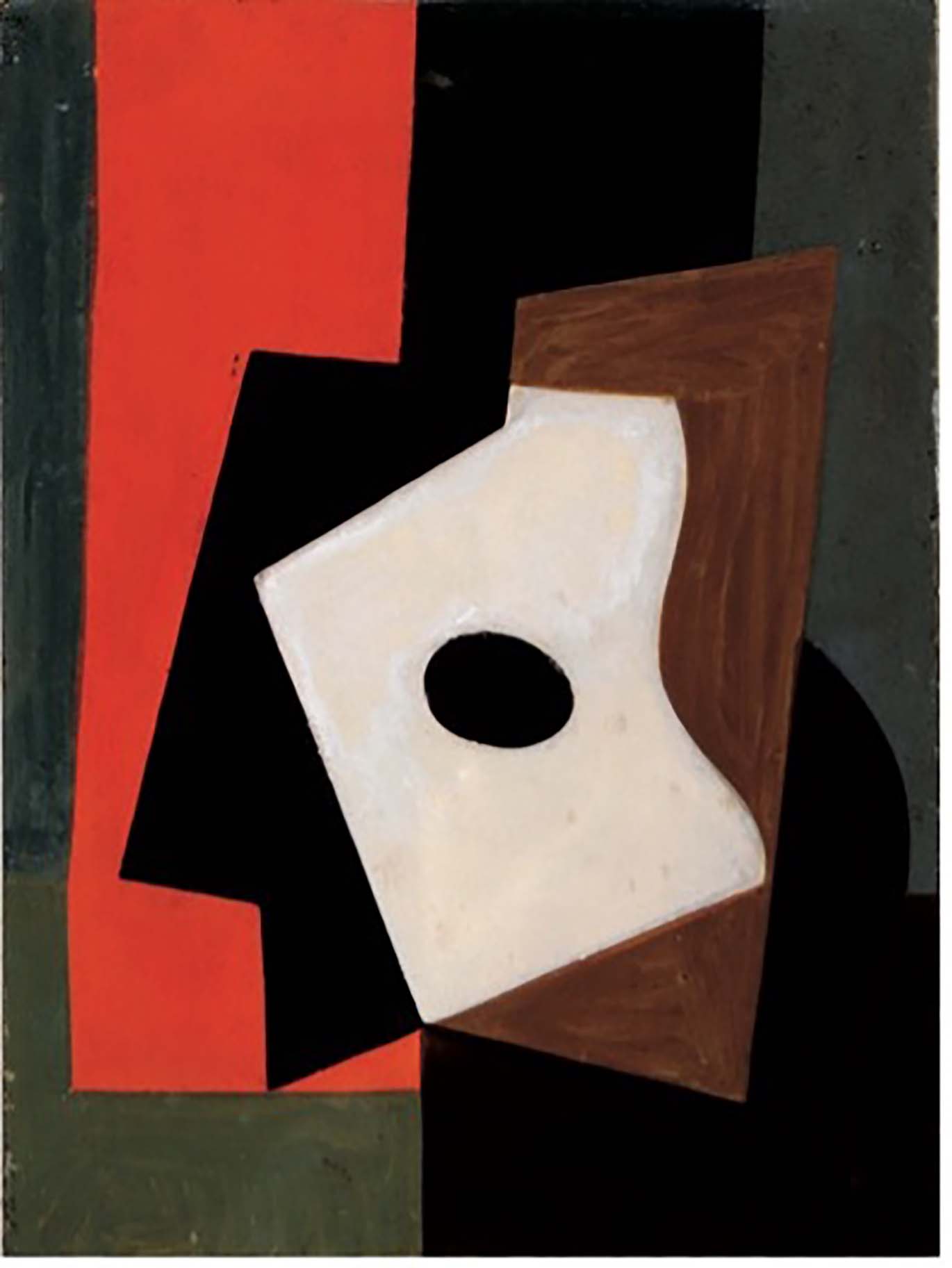
Composición, 1937
Yente (Eugenia Crenovich) (Argentina, 1905-1990)
Eugenia Crenovich, commonly known under the pseudonym Yente, was born in Buenos Aires in 1905. She graduated as a philosopher at la Universidad de Buenos Aires and did her art education at the studio of Vicente Puig and the school of fine arts at la Universidad de Santiago de Chile. A pioneer of abstract art in Argentina, she made not only paintings, but also explored sculptures, tapestries and illustrated books. In addition, she was a writer. Yente produced her work by laying out her canvases on the floor. For this reason, Eceiza lovingly remade her work on a cleaning rag.